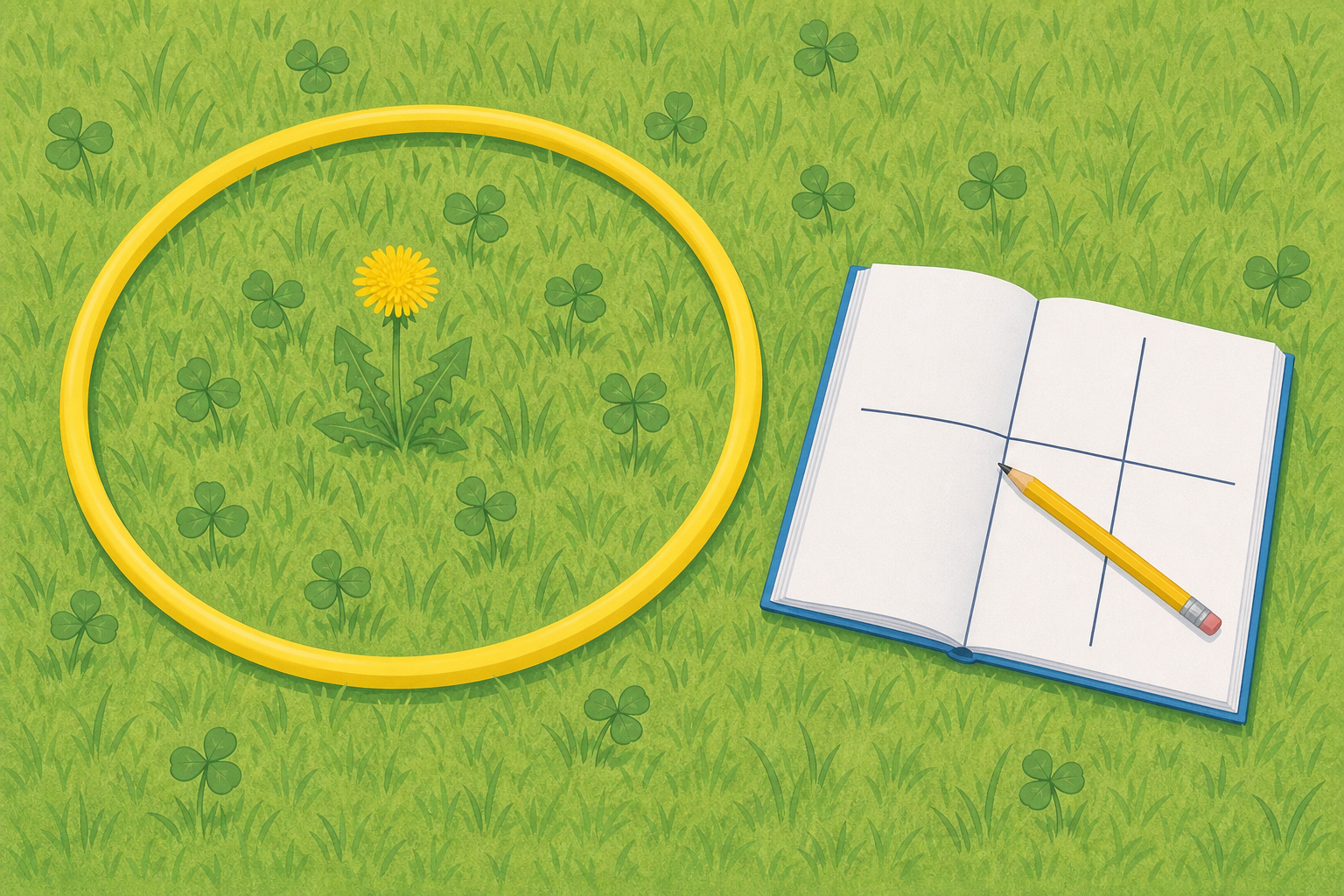
We took a real action for living things in our grounds. Here is the big question for today: did our action help, and how would we know?
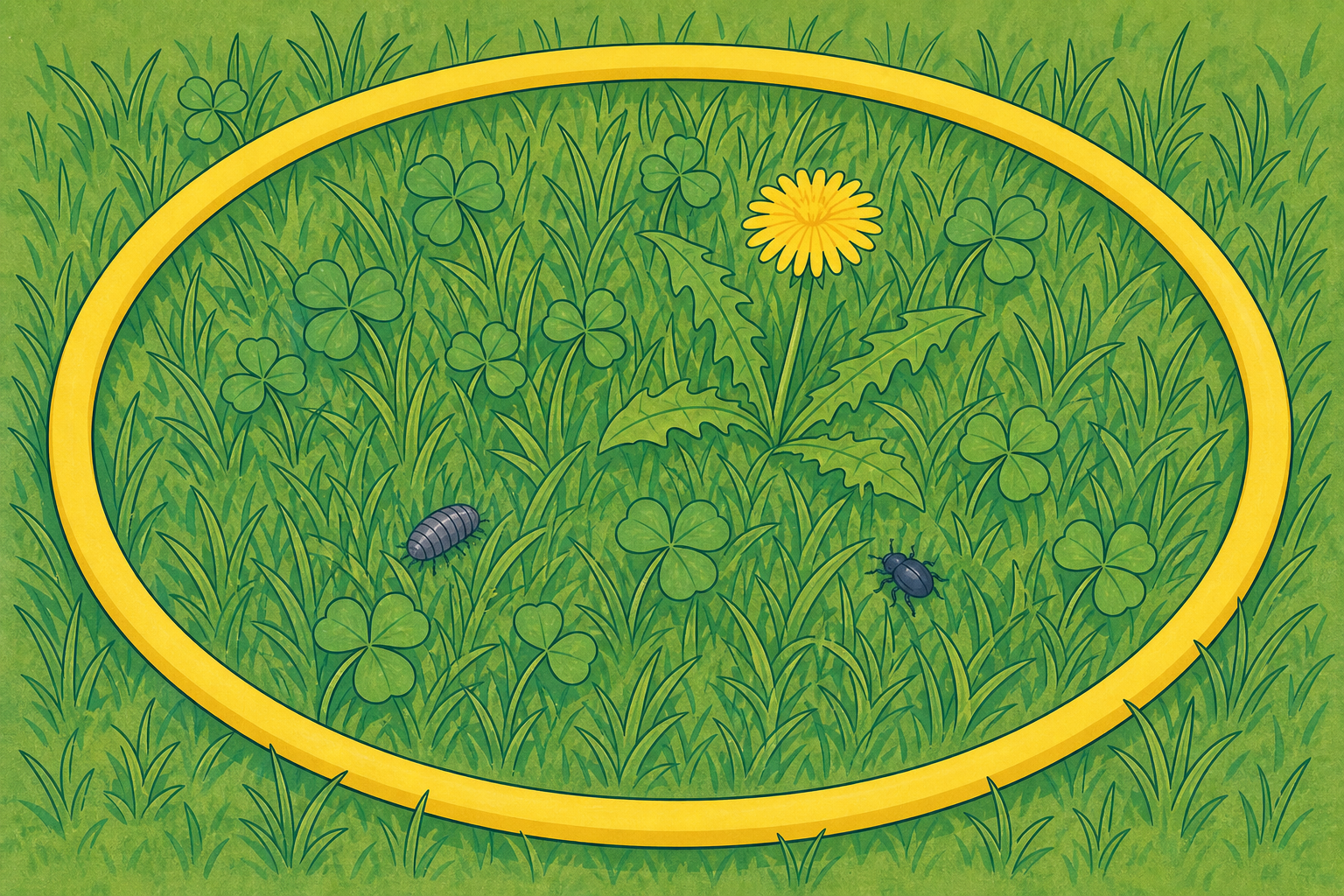
Hands up: what is one clue you would look for if the action had made a difference?
Keep this beat light. Do not hand out hoops or open the audit sheets yet. The hook is curiosity about impact, not the method.
Take three or four quick answers. Accept all as starting ideas. Do not judge whether the action "worked" yet. Typical clues by action type: more bees or flower visits (pollinator patch); more kinds of minibeasts (bug hotel); more plant kinds (wild corner); bird seed still dry and accessible under a feeder (if the class built a bird feeder).
Project link: point briefly at the action the class built earlier in this project (pollinator patch, bug hotel, wild corner, bird feeder, or whatever they chose) so everyone remembers what is being checked today.
Misconception to head off later, not now: "If we like our action, it must have helped." Today's work is about evidence, not hope alone.
Today we check whether our action made a real difference. Scientists call careful counts that show this evidence of impact. To be fair we measure the same place the same way (a before-and-after comparison). Checking again later is monitoring.
With your group: what will you re-count today, and what one thing must stay the same so the comparison is fair?
| Concept | Why it matters | Example |
|---|---|---|
| Evidence of impact — what careful counts or observations show about whether an action made a real difference | Scientists and ecologists do not stop at "we built something"; they check whether living things responded | More kinds of minibeasts in the same hoop after the bug hotel than on audit day |
| Before-and-after comparison — measuring the same place, in the same way, once before a change and once after | If the method changes, you cannot tell whether the living things changed or your measuring did | Same hoop size, same spot near the wild corner, same five-minute look as the first audit |
| Monitoring — checking a place again over time to see what is changing | One re-survey is a start; real biodiversity work often needs more checks across weeks or seasons | Agreeing to count flower kinds in the patch again next month |
Keep the board light: name the three terms in one short pass with one concrete class example, then move straight into the group decision. Fuller definitions stay here for you.
Modelled cycle (say this aloud once, about 45 seconds, before groups decide): "I wonder if our wild corner holds more kinds of living things now. I predict we will find more plant kinds than on the audit because we left the grass long. I will use the same hoop in the same corner and count kinds the same way. I observed eight plant kinds today and five on the audit sheet. That looks like a rise — or if the numbers were flat or lower, I would still treat that as useful evidence and ask what to try next. One survey is only a first clue."
Group decision (main work of this step): each group must leave able to name (1) one thing they will re-measure based on their action and audit, and (2) one thing that stays the same for a fair comparison. Examples of measures: kinds of flowering plants, kinds of minibeasts, pollinator visits in two minutes, whether bird seed is still dry and accessible under a feeder. Examples of what stays the same: spot, hoop size, time window, ID method.
Fast pre-exit gate (protect the outdoor window): do not cold-call every group in full. Use a rapid stand-and-show: each group holds up two fingers when ready (measure + control named). Spot-check two or three groups aloud (about 30 seconds each), then a quick "thumbs up if your group has both" sweep so stragglers get a peer prompt. Total public gate: about 2 minutes. Do not leave until every group has both, but keep the check brisk.
Fair-test reminder: change nothing about the method except that time has passed and the action is in place.
If the action cannot be re-surveyed outdoors today (weather, access): groups set up a clear monitoring plan on paper (what, where, when, how) and use any safe indoor check they can (photo comparison, seed still present, structure still standing) plus the original audit numbers for the presentation. Still treat it as evidence work, not a skip.
Key questions: What did your audit actually count? What would make today's count unfair? What would count as "helped" for your action?
Take your audit notes from earlier in this project, a hoop or string square, and your Investigation Journal. Go to the area of your action.
Re-count or re-observe using the method your group just agreed. Keep the place and the way of counting the same as the audit. Record what you find. Return every living thing gently when you finish.
Many Irish primary classes have one adult outdoors. Do not send groups to distant corners of the grounds out of sight or hearing. Choose one of these plans before you leave the room:
Never leave a group unsupervised at a remote feeder, hedge or far pitch corner.
Print the lists below exactly as written. Pupils use them only as a naming aid; they do not need every name.
Side A — Minibeasts (common in Irish school grounds)
Side B — Plants and flowers
Circulate within the single zone. Ask: "Are you counting in the same way as the audit?" "Is that a different kind, or another of the same?" "What are you seeing that you did not see before?"
What "good" looks like: groups match the audit method, tally kinds or visits carefully, and separate what they saw from what they think it means.
If numbers go down or stay the same: that is still useful evidence. Say so warmly. An unexpected result is data, not failure. Possible real reasons: season, weather, time of day, action still settling, action in the wrong spot. Capture these for the presentation.
Safety: wash hands after handling soil and minibeasts; return animals where found; mind nettles and brambles; no tasting plants; stay inside the agreed boundary and within sight of the teacher.
If a group finishes early: they sketch one extra observation of the action itself (condition of the bug hotel, height of plants) rather than inventing a new unrelated count.
This is the moment we find out what the numbers say, not what we hoped.
Bring your before numbers from the audit and your after numbers from today. On the board we will enter a few clear counts as their own rows. Watch the chart. Which bars changed? Which stayed the same? What does that suggest about our action so far?
On your Investigation Journal page, record the comparison, what the evidence shows, and one next step you would take.
Open the data-recorder interactive. Two columns appear: What we counted and Number. Enter about four rows so one clear before/after pair (or two pairs) sits as separate bars, for example:
Use real tallies groups call out. You do not need every group on the chart; pick one or two clear paired rows so the class can see change or no change quickly. Then show the bar chart. The last number column becomes one bar per row, so paired before/after rows make the comparison readable.
Do not promise a side-by-side double bar for each item — this recorder draws one bar per row. That is why before and after are separate rows.
Split the ten minutes: about four minutes entering rows and reading the chart together; about five minutes for pupils to record comparison, evidence claim and one next step on the journal page; keep a minute spare for transitions. Keep the board sample to one or two pairs so writing time is real, not residual. Groups whose rows are not on the board still use their own tallies in the journal.
Science talk while the chart is up:
Journal support at the point of writing (say aloud and leave on the board):
Do not describe boxes or columns on the journal page itself.
Nature of STEM weave: this is what ecologists do after a habitat action: measure again, compare with the baseline survey, and decide what to try next. Link lightly to the All-Ireland Pollinator Plan idea that actions are checked, not only launched.
First, swap with another group. Each group has about one minute to tell the other:
Then a few groups will share with the whole class. Listeners: be ready to name one piece of evidence you heard that was clear. You may hold up your journal tallies if it helps listeners see the numbers.
Default structure for a full 6th class (six to eight groups): paired swap first (about 4–5 minutes total, one minute each way), then three volunteer or cold-called groups share with the whole class (about one minute each). That is the main plan, not a fallback. Use a visible timer.
Listen for and revoice:
Peer listen prompt after a whole-class share: "What evidence did that group use?" Fold the watching class in by questioning; do not set a separate desk task.
If you have fewer than five groups: every group can present to the whole class within the time.
Success look-fors: names the action, gives at least one before and one after fact, states a next step linked to the result.
You're previewing this lesson. Get full access to this lesson and hundreds more — each one ready to teach, with interactive activities, printable resources and pupil progress tracking built in.