Mathematics
Intermediate
50 mins
Teacher/Student led
+65 XP
Teacher-led from the board. Pupils do not need a device, but can follow on one.

Multiplication as Arrays and Repeated Addition
Learn to read arrays as repeated addition and multiplication. Explore why turning an array does not change the total, using counters and drawings to build understanding of equal groups.
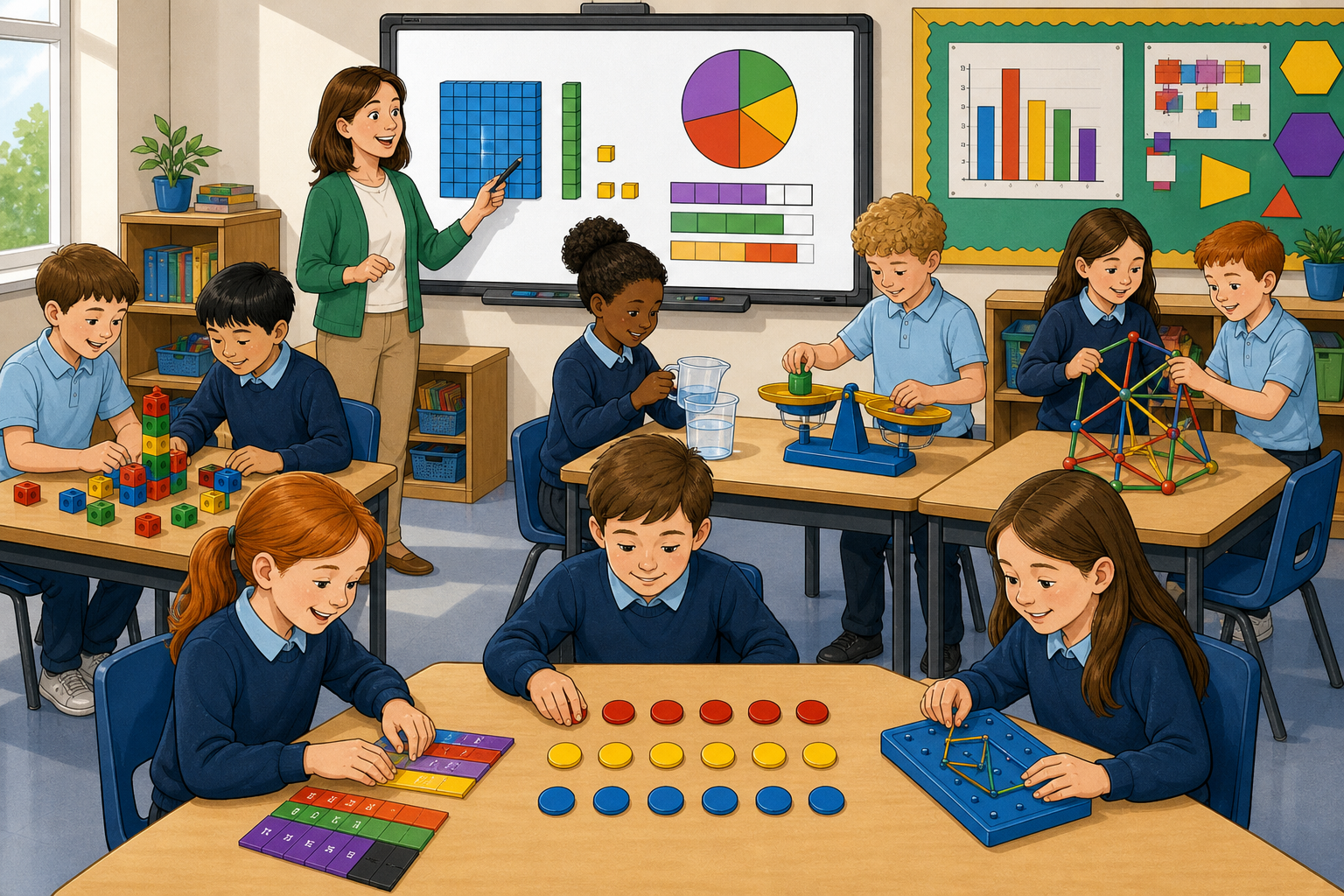 Look at this: three rows of five counters, all lined up neatly. Is this three fives, or five threes? Hands up — which one do you think it is, and does it even matter which way we say it?