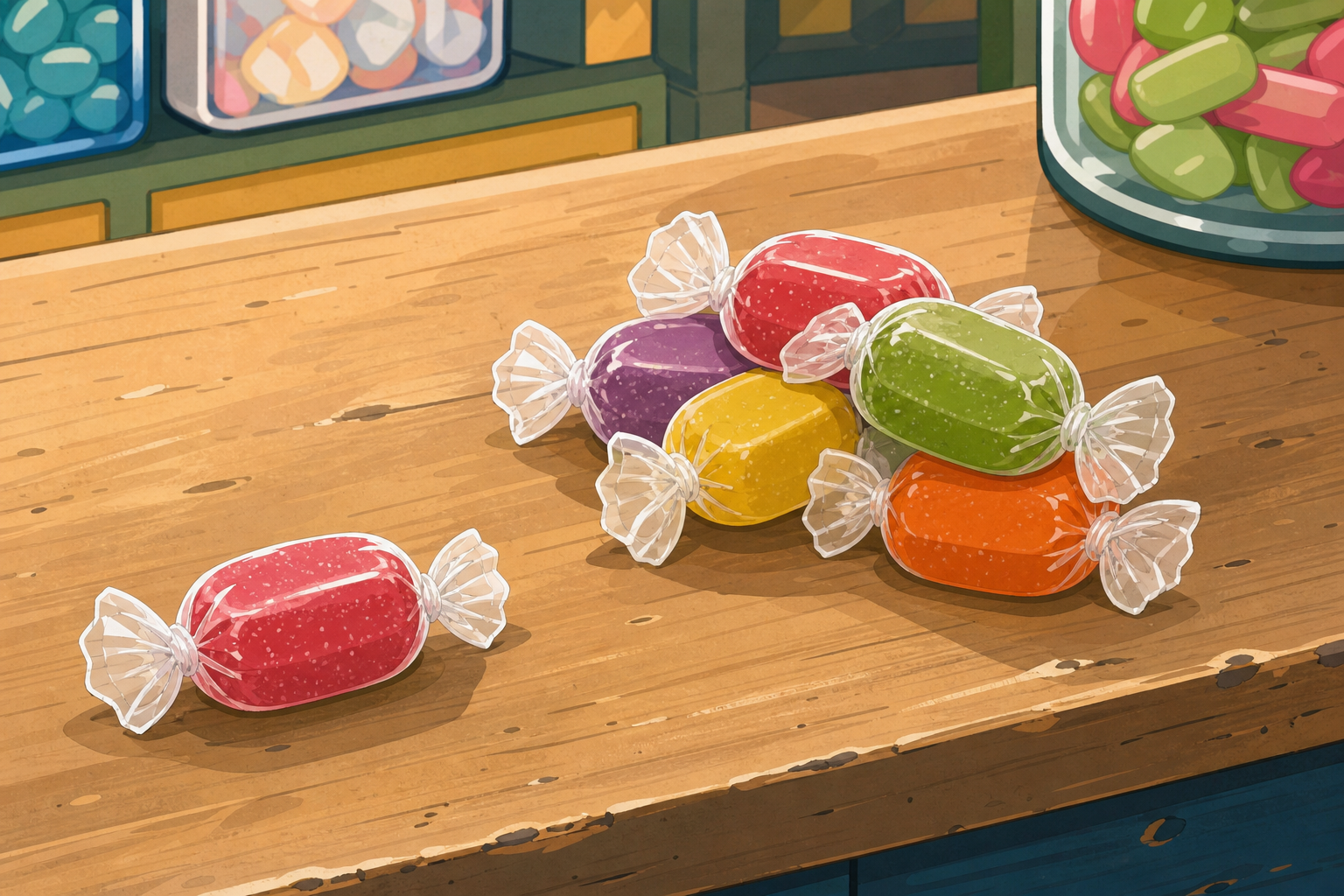
Here is a price puzzle. One jelly sweet costs 3.4 cent to make. A shop buys them in packs of ten. How much does one pack of ten cost the shop to make? Roughly how big will the answer be, and which way will the digits move?
The place-value chart shows each number before and after we multiply or divide. Watch which way the digits travel, and keep your eye on the decimal point. Be ready to predict the next one before it appears.
Today we work through these together on the chart, in this order: 4.5 × 10, then 0.07 × 100, then 1200 ÷ 1000, then 0.3 × 1000. Each one nudges the digits a little further, so predict where they will land before we shift them.
In your maths copy, write each calculation with an arrow showing how many columns and which direction the digits shift, then record the answer. Do these four:
Draw the arrow above each calculation (left for multiplying, right for dividing) and write how many columns beside it.
Today we route each starter number to its target using only powers of ten. We work through these in order: 0.07 → 70, then 4500 → 4.5, then 0.3 → 300, then 0.045 → 45. Some can be done in one jump, some need two — predict the shortest route before we try it.
You're previewing this lesson. Get full access to this lesson and hundreds more — each one ready to teach, with interactive activities, printable resources and pupil progress tracking built in.