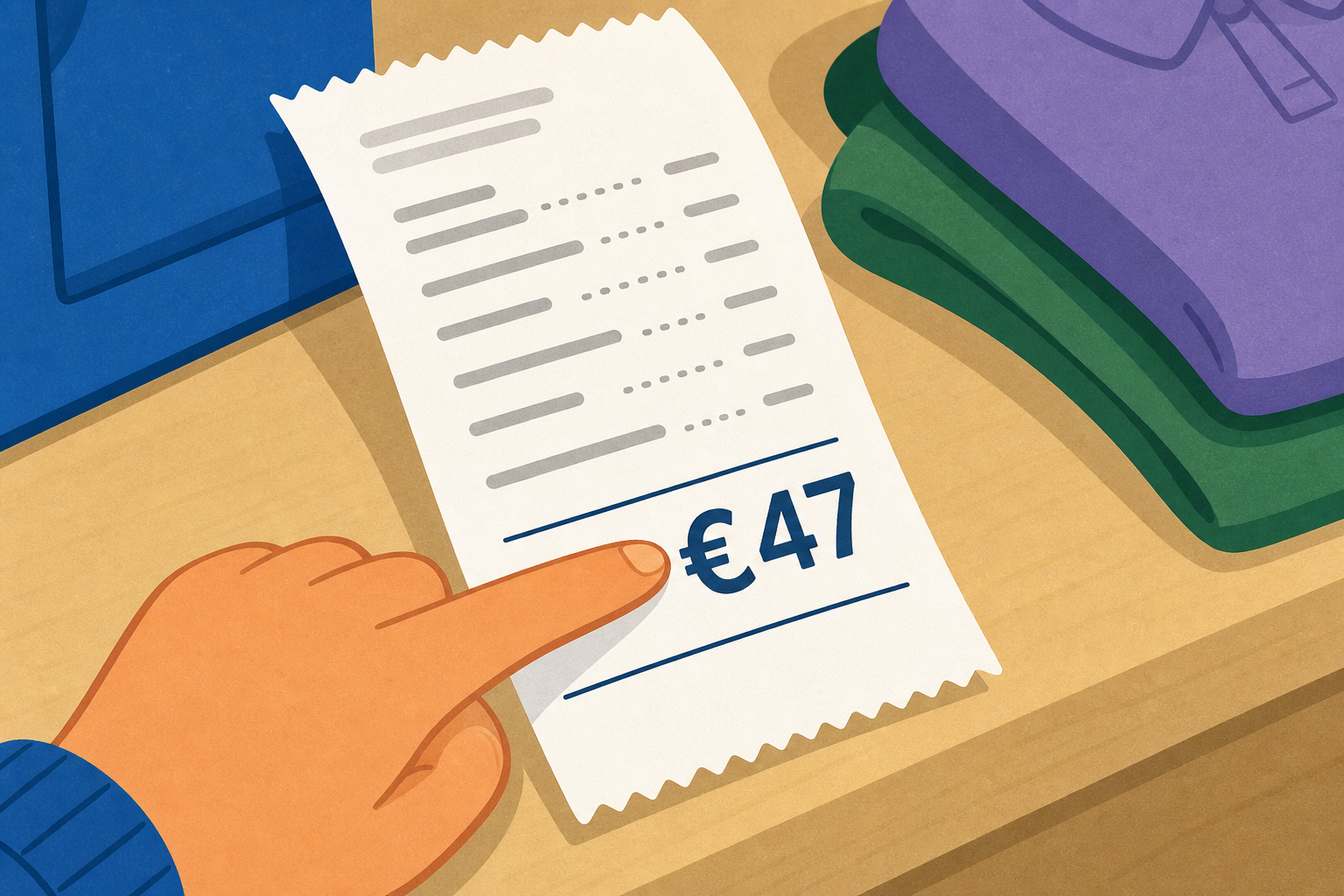
Here is a spot-the-mistake. Someone worked out 47 × 10 and wrote 47.0, they added a decimal point and zero and left the digits where they were. Is that right?
Have a good look. What does 47 × 10 really equal, and what has gone wrong in this answer?
Watch the place-value chart as we multiply by ten, a hundred and a thousand. Every time, the digits slide left and the point stays put. Watch where each digit lands and what fills the empty columns behind it.
We say the answer aloud before we slide the digits, so we can check our prediction against what the chart shows.
Today we work through these together on the place-value chart, in this order: 6 × 10, then 6 × 100, then 3.5 × 10, then 3.5 × 100, and finally 3.5 × 1000. The chart starts on 3.5, so for the first two examples we type 6 into the starter, then set it back to 3.5 for the last three.
Watch how 3.5 × 10 turns a decimal into a whole number, and how 3.5 × 1000 sends the digits three columns left and fills the gaps with zeros.
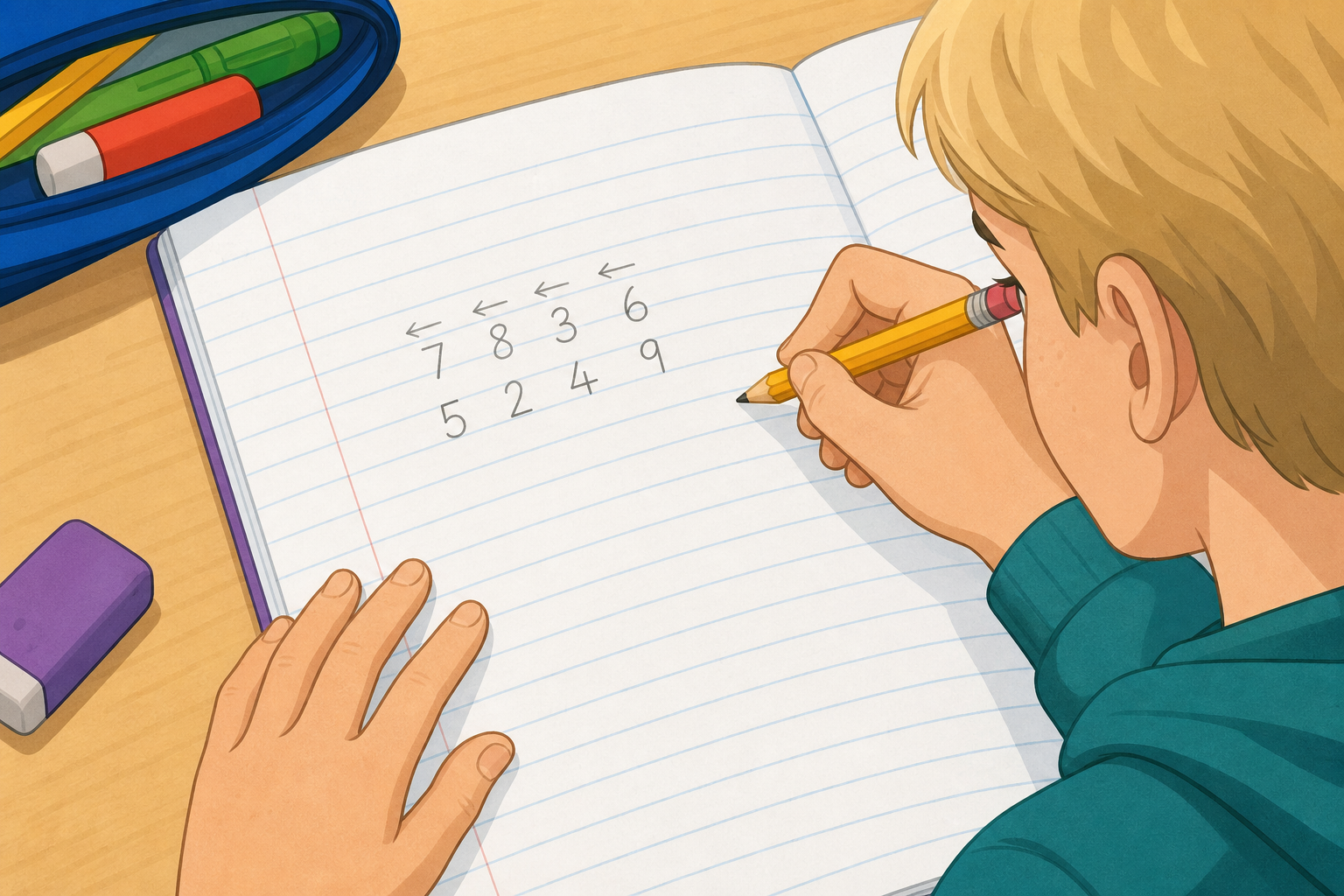
In your maths copy, write each starter and its answer one above the other, with the digits lined up by column. Then draw an arrow above each digit showing how far it slid to the left.
Keep your columns straight so you can see exactly which column each digit moved into.
In today's challenge, you'll turn a starting number into a target number, using only the buttons that are lit up. Some look easy at first, but the lit buttons make you plan a route — sometimes ×100 or ×1000 is switched off, so you have to press two buttons in a row to get there.
You can press more than one lit button in a row to build a route.
We work up through: 4 to 400, then 4 to 4000, then 0.6 to 600 with ×1000 switched off, and finally the tricky one — 7 to 7000, also with ×1000 switched off, so you must find another way.
You're previewing this lesson. Get full access to this lesson and hundreds more — each one ready to teach, with interactive activities, printable resources and pupil progress tracking built in.