Mathematics
Intermediate
50 mins
Teacher/Student led
+80 XP
What you need:
IWB/Projector/Large Screen

Negative Numbers: a First Encounter

Introduce negative numbers through real-world contexts like thermometers, lift floors and bank statements. Pupils learn to read negative values, understand zero as a dividing point on the number line, and calculate temperature changes that cross zero.
Teacher Class Feed

Load previous activity

    1 - Getting Started ~4 mins

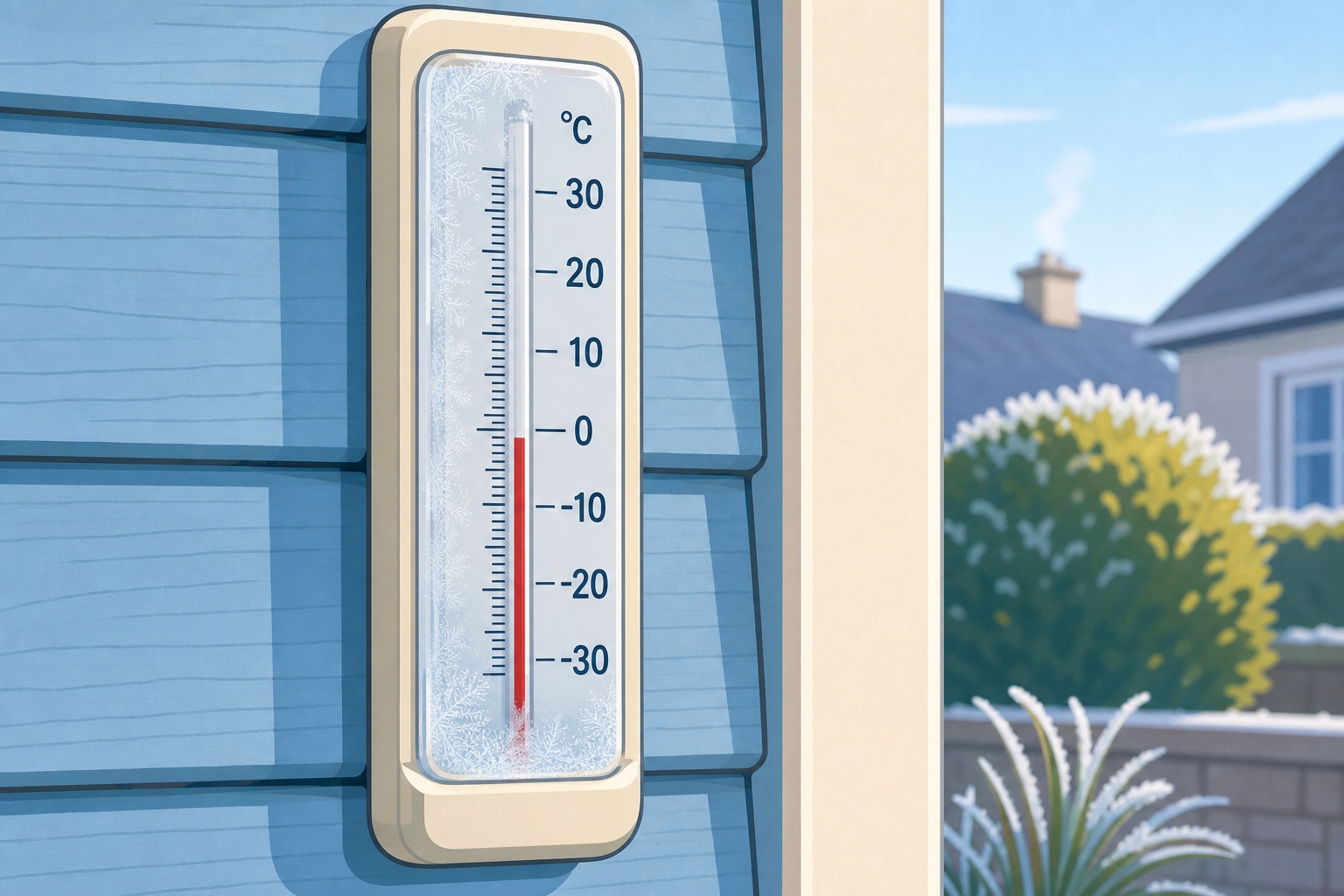
    Illustration for Getting StartedLook at this thermometer. The red line has dropped below the zero mark and it reads 3 °C.

    What is that little minus sign in front of the 3 telling us? Is −3 °C warmer or colder than a frosty 0 °C morning?

    2 - Watch and Notice ~8 mins

    7 on the number line

    Here is a number line that runs from −10 all the way up to +10, with zero right in the middle. Watch where −7 sits: seven steps to the left of zero. The further left we go, the colder, the deeper, the more below-zero we are.

    0 in the middle

    Now look at zero itself. Everything to the right of it is positive; everything to the left is negative. Zero is the dividing line — like the ground floor of a building, with upstairs floors above and basement floors below.

    +5 on the number line

    And here is +5, five steps to the right of zero. Notice how +5 sits five steps to the right of zero, while −7 sits seven steps to the left — the same idea of stepping out from zero, just in opposite directions.

    Counting a change that crosses zero

    Here is a real question. One night in Galway the temperature was +4 °C, then it dropped to −2 °C. How many degrees did it fall? Have a first guess — there is no wrong answer yet, because we are about to count it out together.

    Watch the line. First we count from +4 down to zero: that is 4 steps. But we are not there yet — the temperature kept falling below zero, so we count on from 0 down to −2: that is 2 more steps. Add them: 4 steps and then 2 more steps makes 6 degrees. That is the trick with negative numbers — when a change crosses zero, count down to zero first, then keep counting below.

    3 - Try It Together ~9 mins

    Key point

    Count down to zero first, then keep counting below.

    Now we count some changes across zero together on the −10 to +10 line, using the trick we just saw: count down to zero first, then keep counting below. We will work through two changes in order. First, the temperature falls from +3 °C to −1 °C — place a marker on +3, another on −1, then count the steps out loud. Next, a bigger fall from +2 °C to −5 °C. Predict how many steps each change is before we count it, then we'll check together.

    Count the change across zero

    4 - Draw the Number Line in Your Copy ~2 mins

    COPYBOOK MOMENT

    Illustration for Draw the Number Line in Your CopyIn your maths copy, sketch a number line from −10 to +10 with zero marked in the middle. Then place each of these markers on it and label each one with its value:

    • 7
    • 2
    • 0
    • +3
    • +6

    5 - Class Challenge ~8 mins

    Today we work through these temperature-change problems together, each one a little trickier than the last. Every one asks the same question — by how many degrees did it change? — so we spot the action words and count the size of the fall: the freezer that fell a few degrees, the basement carpark that dipped below zero, the Mullingar cold snap that crossed zero, and finally a deep fall that goes right down below −5.

    How big was the temperature change?

    Pupil practice
    Module 1 · Place Value and the Decimal Number System Number
    Lesson 13 · Negative Numbers: a First Encounter
    Download Activity Book page (PDF)
    123learn · Online learning platform

    Unlock the full learning experience

    You're previewing this lesson. Get full access to this lesson and hundreds more — each one ready to teach, with interactive activities, printable resources and pupil progress tracking built in.

    Hundreds of curriculum-aligned lessons
    Interactive activities in every lesson
    Printable resources & progress tracking
    Copyright Notice
    This lesson is copyright of Coding Ireland 2017 - 2025. Unauthorised use, copying or distribution is not allowed.
    🍪 Our website uses cookies to make your browsing experience better. By using our website you agree to our use of cookies. Learn more
