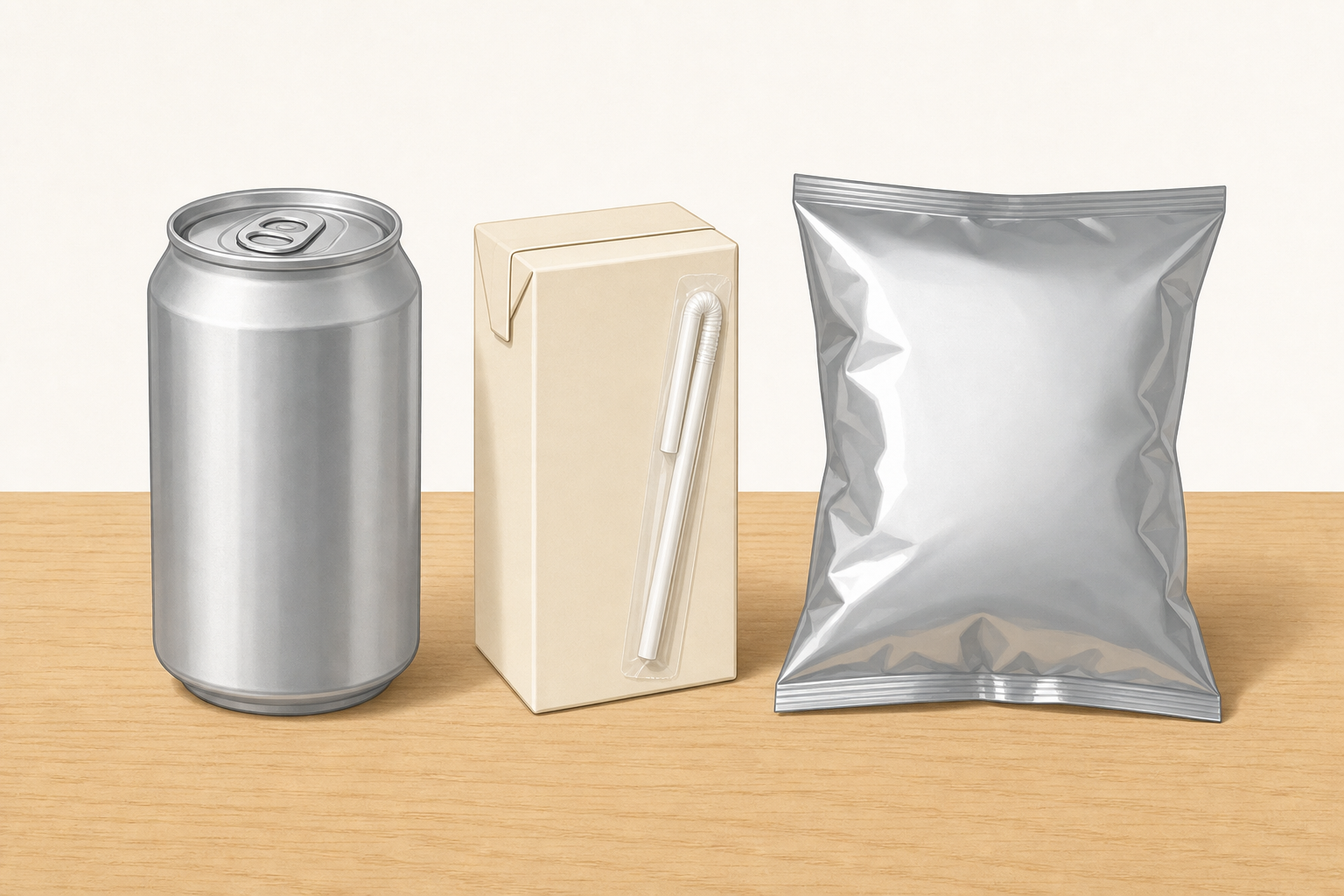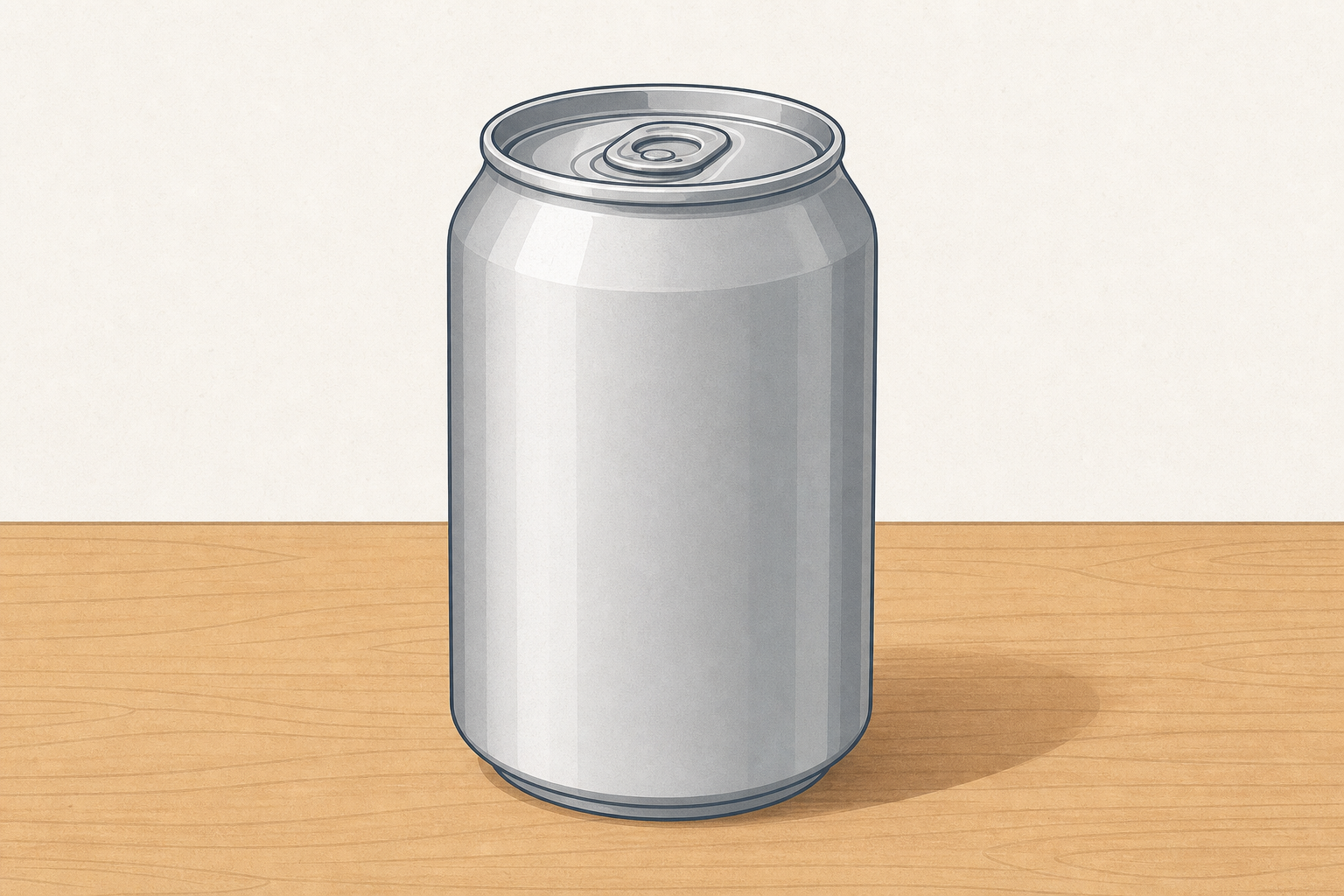
Look at this empty drinks can. How many teaspoons of sugar do you think were hiding inside when it was full? Hold up your fingers to show your guess.
Today we become label detectives. We will read the numbers on packaging, turn grams of sugar into teaspoons, and rank everyday drinks and snacks fairly.
Hold up one clean empty can or bottle so the whole class can see it. Do not reveal the sugar figure yet. Take three or four quick guesses with fingers, then park the mystery: the labels will answer it later.
Before the lesson: gather enough clean, dry, empty packaging with readable nutrition panels for about six groups (aim for three packs per group: a mix of drinks and snacks across the class); prefer packs that already show sugar per 100 ml (drinks) or per 100 g (snacks), and print photo nutrition panels with those units if empties run short; print the Investigation Journal page; set out a bag of granulated sugar, a teaspoon and a few small clear cups or saucers for the teaspoon visualisation; open the sugar-detective interactive on the IWB.
Keep the hook light. Do not hand out packaging or teach the conversion yet.
That can has a secret panel of numbers: the nutrition label. That is our detective evidence for sugar and salt.
Grams are hard to picture, so we turn sugar into teaspoons: about 4 grams fills one level spoon. If a drink has 20 grams of sugar, how many teaspoons is that?
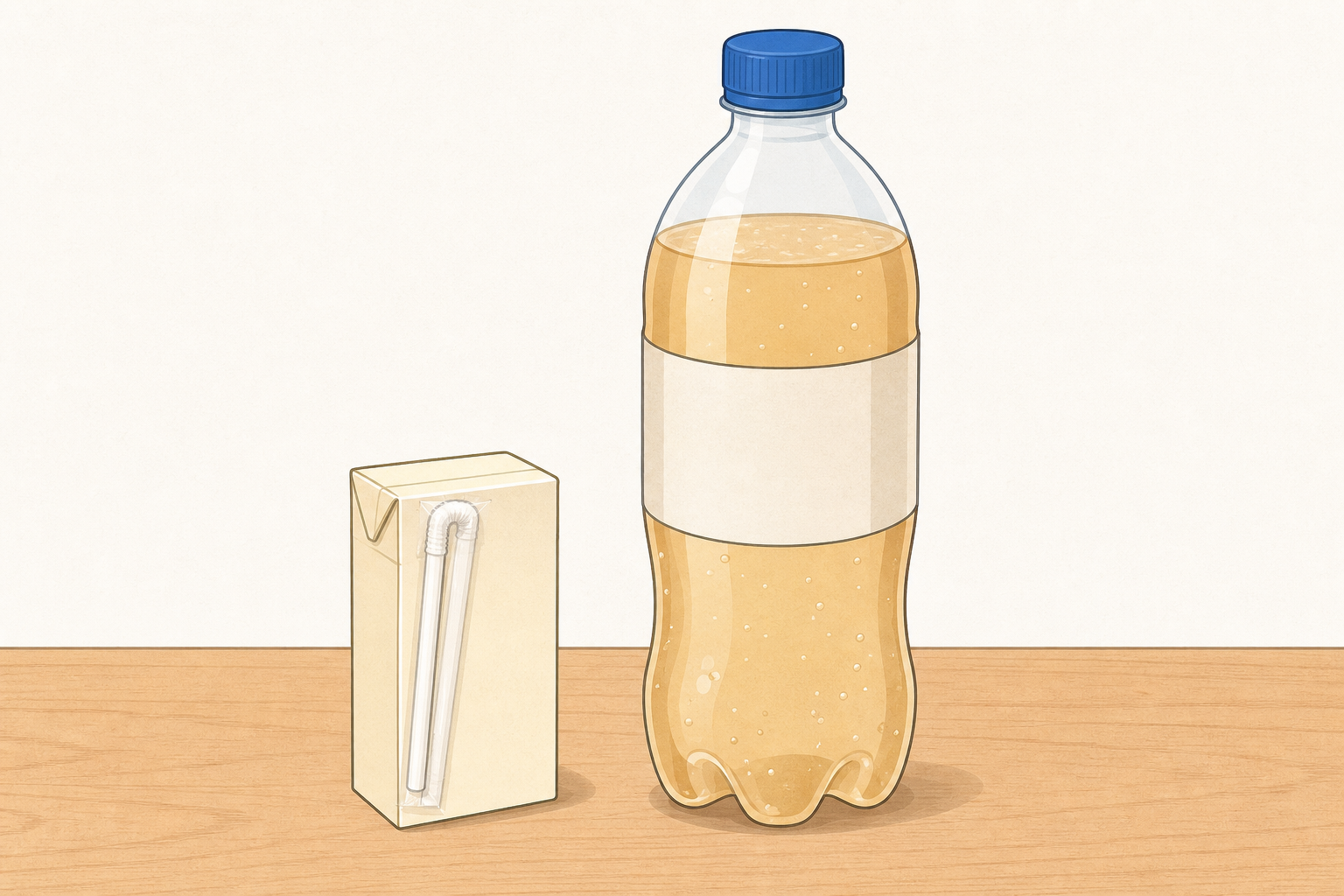
Later we will only rank drinks with drinks, and snacks with snacks. Picture a tiny juice carton next to a huge bottle: the bottle can look "worse" just because it is bigger. A fair ranking uses the same unit each time, for example sugar per 100 ml for every drink.
| Concept | Why it matters | Example |
|---|---|---|
| Nutrition label — the panel on packaging that lists sugar, salt, fat and energy so we can compare foods and drinks | Without the label we are guessing; the numbers let us check claims such as "healthy" or "natural" | A drinks can lists sugar in grams per 100 ml and per serving; that is the evidence we use today |
| Teaspoon of sugar — about 4 grams of sugar fills one level teaspoon, so grams ÷ 4 gives teaspoons | Grams are hard to picture; teaspoons turn a number into something you can see on a spoon | A drink with 20 g of sugar has about 5 teaspoons (20 ÷ 4) |
| Fair ranking — putting items in order using the same unit or serving idea so the comparison is honest | A huge bottle will always "win" on total sugar against a small carton if you only look at the whole pack; drinks (ml) and snacks (g) need separate lines | Compare drinks by sugar per 100 ml, and snacks by sugar per 100 g (or the serving the label names), and say which rule you used |
Model the conversion once on the board with neutral practice numbers (not the hook can and not the detective drinks): write 20 g ÷ 4 = 5 teaspoons. Practise one more together (e.g. 12 g → 3 teaspoons). Round sensibly if it does not divide evenly (e.g. 14 ÷ 4 is about 3.5 teaspoons). Hang the three terms on this worked example rather than listing them as a glossary first.
Fair-unit picture (say once): hold up or sketch a small carton versus a large bottle. Total sugar can favour the big pack; sugar per 100 ml lets both drinks stand on the same rule. That is the ranking rule we will use later for drinks; snacks will use per 100 g.
Misconception to head off: children may think "natural" or "fruit" on the front means little sugar. The nutrition panel is the evidence, not the front slogan.
Worked cycle (say aloud with the sugar and teaspoon, still on the neutral 20 g example): I wonder how many teaspoons hide in 20 g of sugar. I predict about 5. I check: 20 ÷ 4 = 5. I tip 5 level teaspoons into a clear cup so we can see it. I think teaspoons make the number real, which is why reading the label matters. Save the big "wow" sugar piles for the guided reveals in the next step.
We will predict how many teaspoons of sugar hide in each everyday drink, then reveal the answer together on the board.
For each drink: call out your prediction first. After we reveal, we will turn grams into teaspoons and notice any label claims that might fool us.
Drive the sugar-detective interactive in guided mode on the IWB. The class predicts out loud; you tap to reveal. Nothing is scored.
Drinks on screen (name them so you can picture the cards): Water (0 g / 500 ml); Milk (10 g / 200 ml, marked natural); Orange juice (18 g / 200 ml, claim: "1 of your 5-a-day"); Fruit smoothie (26 g / 250 ml, claim: "Made with real fruit"); Cola can (35 g / 330 ml); Energy drink (55 g / 500 ml, claim: "For energy").
Conversion each time: teaspoons ≈ sugar grams ÷ 4. Water 0; milk about 2.5 (natural sugars); orange juice about 4.5; smoothie about 6.5; cola about 9; energy drink about 14.
After cola or the energy drink: tip the matching number of level teaspoons of sugar into a clear cup so the class can see the pile. That is the "wow" moment.
After the energy-drink reveal: note aloud that these packs are different sizes (200 ml, 330 ml, 500 ml). Totals partly reflect pack size. Later we will check whether the order changes when we use sugar per 100 ml so the ranking stays fair. Optionally compare cola and the energy drink quickly per 100 ml (cola about 10.6 g/100 ml; energy drink 11 g/100 ml) so pupils see that the biggest bottle is not automatically the "sugariest" drink. Add one clear frame: energy drinks are sold for adults; health guidance says they are not for primary-age children. We are reading the label as detectives, not choosing them.
Talk prompts: Which drink hid the most sugar in its pack? Did a claim such as "real fruit" or "5-a-day" change your guess? The 5-a-day claim can still be allowed for a small serving of juice, and the label can still show a lot of free sugar: both can be true. Milk's sugar is natural (lactose); free sugars in soft drinks are the ones the daily-max guide is about. The tint for about 6 teaspoons is a discussion guide, not a pass or fail line.
Fold the watchers in: "Do you agree with that prediction? Higher or lower?"
In groups, investigate clean empty packaging of everyday drinks and snacks. Use your Investigation Journal page as you go so nothing gets lost before we rank.
No tasting. Wash hands after handling packaging.
Hand out the Investigation Journal page now so pupils jot sugar, units and teaspoons during the investigation, not only after ranking. Model one pack under the visualiser or held high. Point to the nutrition panel, find sugars and salt, then lock the class ranking units aloud: drinks will use sugar per 100 ml; snacks will use sugar per 100 g.
Whole-class model (1–2 minutes): if a drink only shows sugar for the whole pack or per serving, show how to find or estimate sugar per 100 ml from the panel (many packs already list both columns). Write the fair-unit number beside the pack total so every group knows what the ranking line needs. Remind them: predictions first, then evidence from the label.
Plan for about six groups. Give each group three different clean empty packs (aim for a drink-heavy set or a snack-heavy set so they practise one fair unit). Prefer packs or photo panels that already show per 100 ml / per 100 g so groups are not inventing maths mid-slot.
Must finish for every pack: item name; sugar amount with unit; teaspoons (÷ 4); and the fair-unit sugar figure for ranking (per 100 ml for drinks, per 100 g for snacks). Quick find: salt with unit (one number is enough). Front claims are notice-and-discuss only if time allows.
Fairness reminder: we will not put drinks (ml) and snacks (g) on one sugar line. Groups must note the unit beside every number and hold a same-rule figure ready for the line.
What to expect: soft drinks and many snack bars often show high sugar; savoury snacks often show higher salt; plain water is zero sugar and very low salt. Figures vary by brand; trust the pack in hand.
Safety: clean packaging only; no tasting; wipe tables; wash hands; mind anyone with severe food allergies when handling packaging that once held allergens.
Differentiation: support groups by pre-highlighting the sugars and per 100 lines with a sticky note, or give photo panels with larger print; stretch groups by checking whether whole-pack order would differ from per 100 order.
Pace: keep groups to three packs so predict, decode, record and convert can finish in the slot before ranking.
As a class we make two fair sugar lines, not one mixed pile.
Agreed rules: drinks line uses sugar per 100 ml (least to most). Snacks line uses sugar per 100 g (least to most). Only packs that have that fair-unit number on the journal page go on the line.
Groups bring standout packs to the bench. Everyone else is a judge: watch each placement, then agree or challenge using the label numbers and the rule. After the two sugar lines settle, notice which items also climbed high for salt.
Use the real packs as two physical lines on a bench or the floor (or along the ledge under the board): one drinks line and one snacks line. Before the first pack is placed, say the locked rules again: drinks = sugar per 100 ml; snacks = sugar per 100 g. If a standout pack still only has a whole-pack figure, normalise it quickly with the class so it enters the line with a defensible same-rule number (or park it off the line and use a pack that already has per 100).
Groups bring standout packs and place them where they think they belong. Fold watchers in on every placement: "Do you agree? Higher or lower? What number are you using?" The class agrees or challenges using the journal fair-unit figures.
Sorting rules (say them aloud):
Do not place a drinks carton next to a crisp packet on a single sugar line: millilitres and grams are not the same unit, so that order cannot teach fair ranking.
Optional quick pass only if time remains: pull out the top items for salt on each line and compare with the sugar order. Salt stays a notice thread, not a third full ranking task.
Keep the talk oral but unhurried enough to settle unit disputes. Recording of the final ranks comes next on paper.
You're previewing this lesson. Get full access to this lesson and hundreds more — each one ready to teach, with interactive activities, printable resources and pupil progress tracking built in.