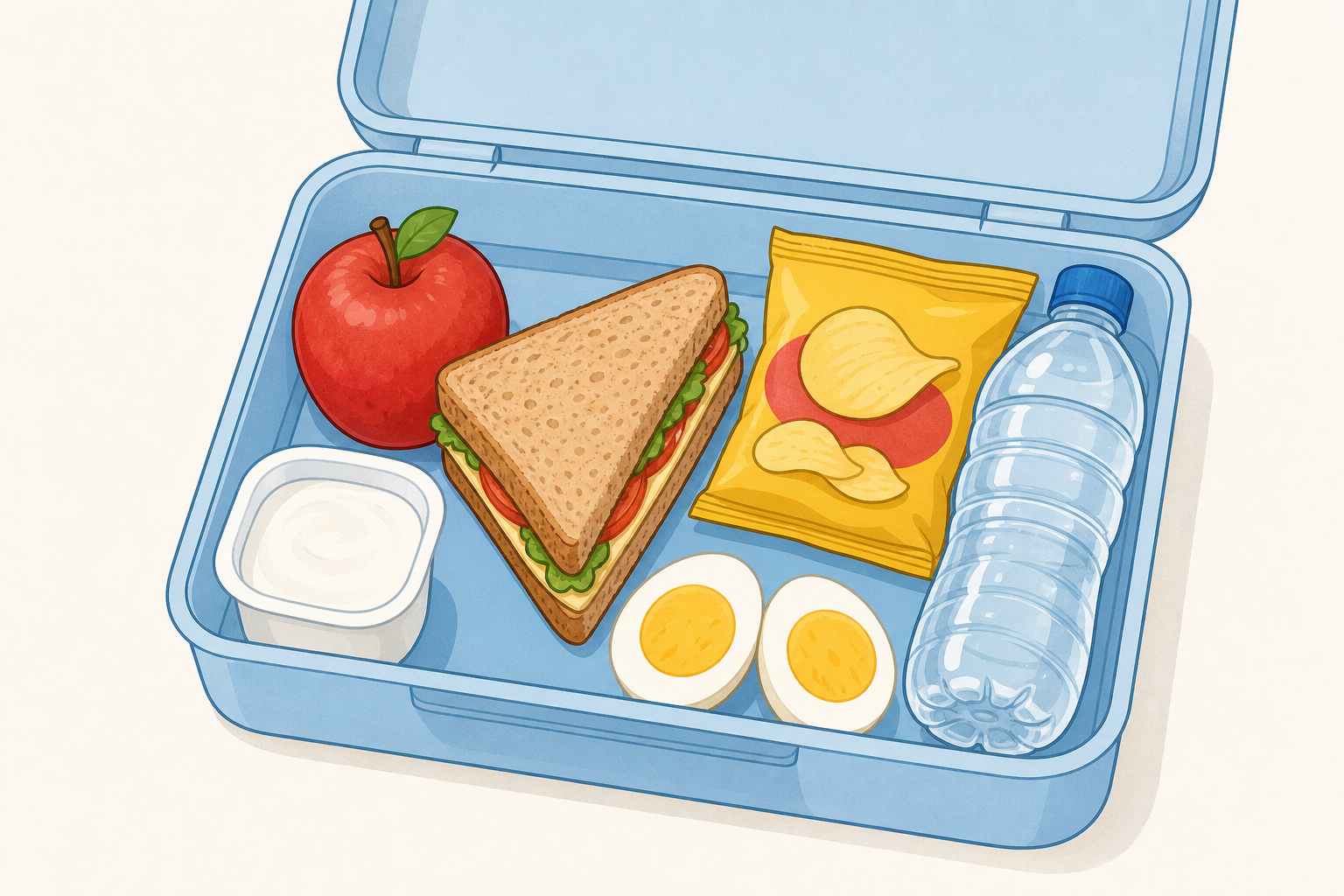
 Think about your lunchbox on a school day. What kinds of food usually go in it? Hands up if you often pack fruit. Hands up if you often pack bread or a sandwich. What do you think those different foods do for your body?
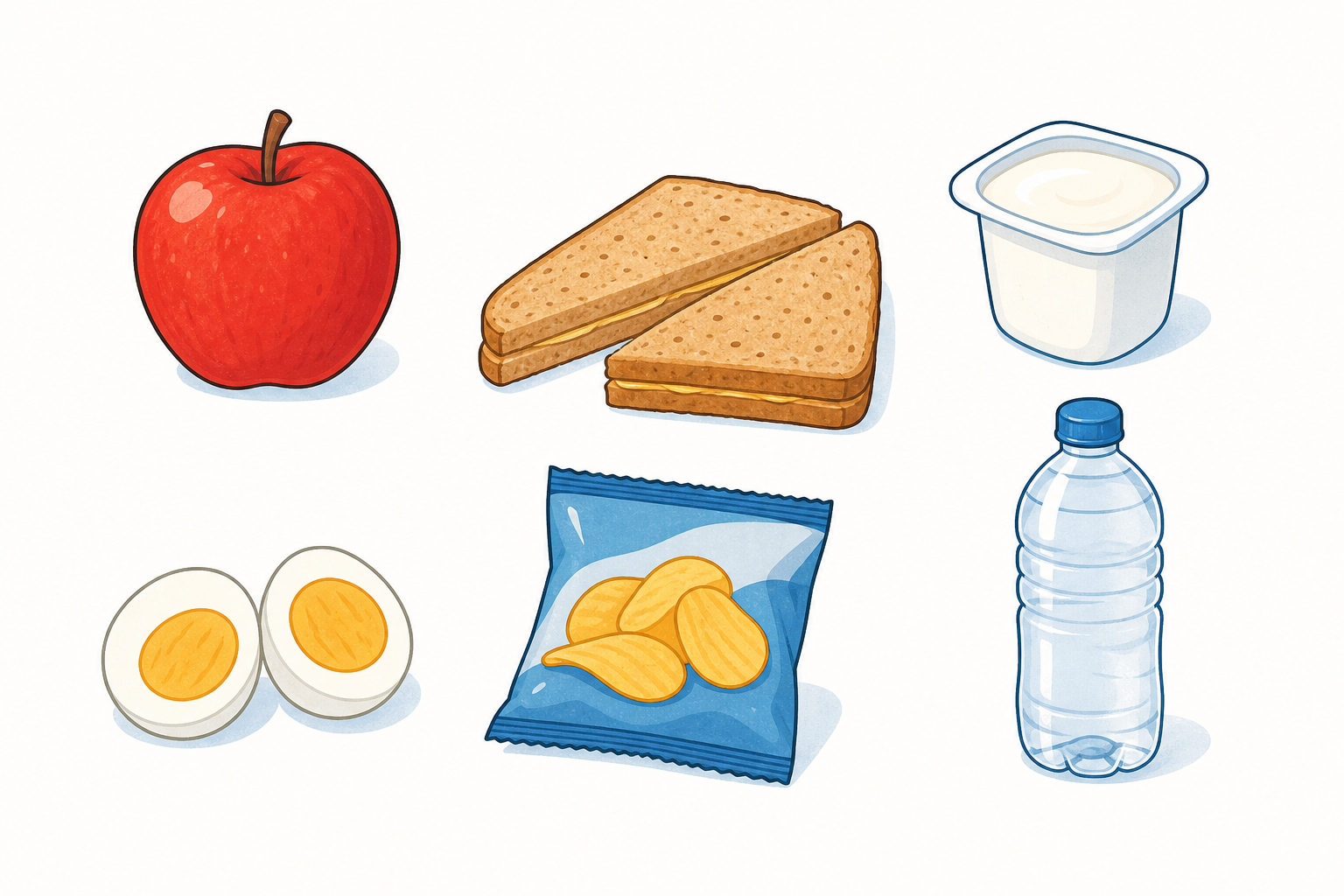 Food groups are families of foods that do similar jobs in the body. Here are the six groups we will use all lesson:
- Fruit & veg: e.g. apple
- Bread, cereal & potato: e.g. wholemeal sandwich
- Milk, yogurt & cheese: e.g. plain yogurt
- Meat, fish, eggs, beans & nuts: e.g. boiled egg or hummus
- Treats: e.g. crisps
- Drinks: e.g. water
Which group do you think carrot sticks belong in? What about a boiled egg?
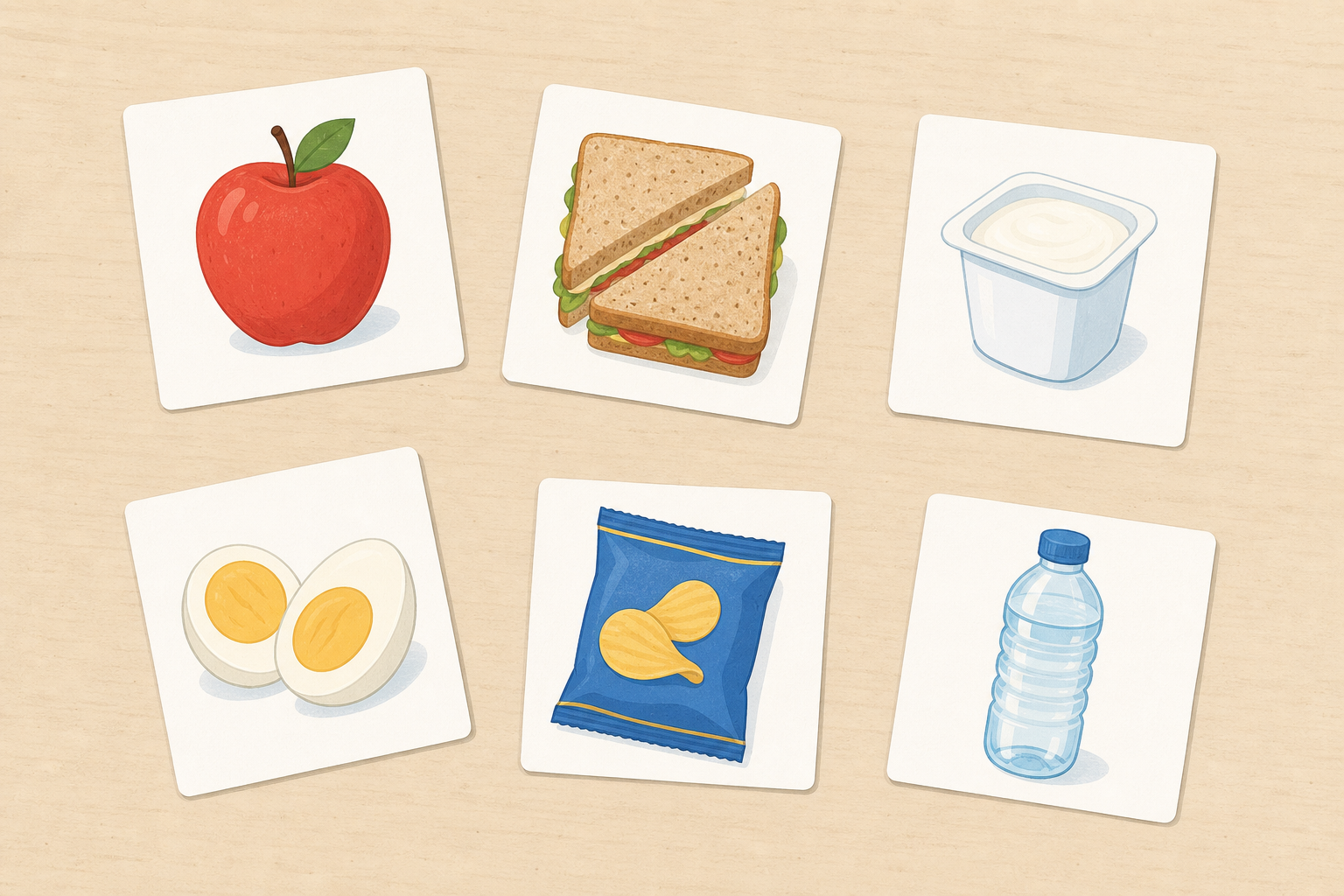 In your group, sort the lunchbox food cards under the six food-group headers. Talk about why each food belongs where you put it. If you disagree, say what made you choose that group.
On your Investigation Journal page, record how your group sorted the lunchbox foods. Show which foods went into each food group. Note one food you found tricky and why. Keep the page open: later you will design your own balanced lunch on the same page.
Today's words: balanced lunch: food from several main groups, not only treats. Vitamins: the tiny amounts fruit and vegetables bring that your body needs to grow and stay well.
On the board we will pack a lunchbox together from a shelf of everyday foods, and you call out what goes in. Which groups are we covering, and where does most of the energy come from?
Then design your own balanced lunch on your Investigation Journal page:
- List or sketch what you would pack, choosing from the shelf we used.
- Name the food groups you used.
- Write or say which food carries most of the energy.
Pack a balanced lunchbox
Unlock the full learning experience
You're previewing this lesson. Get full access to this lesson and hundreds more — each one ready to teach, with interactive activities, printable resources and pupil progress tracking built in.
This lesson is copyright of Coding Ireland 2017 - 2026. Unauthorised use, copying or distribution is not allowed.