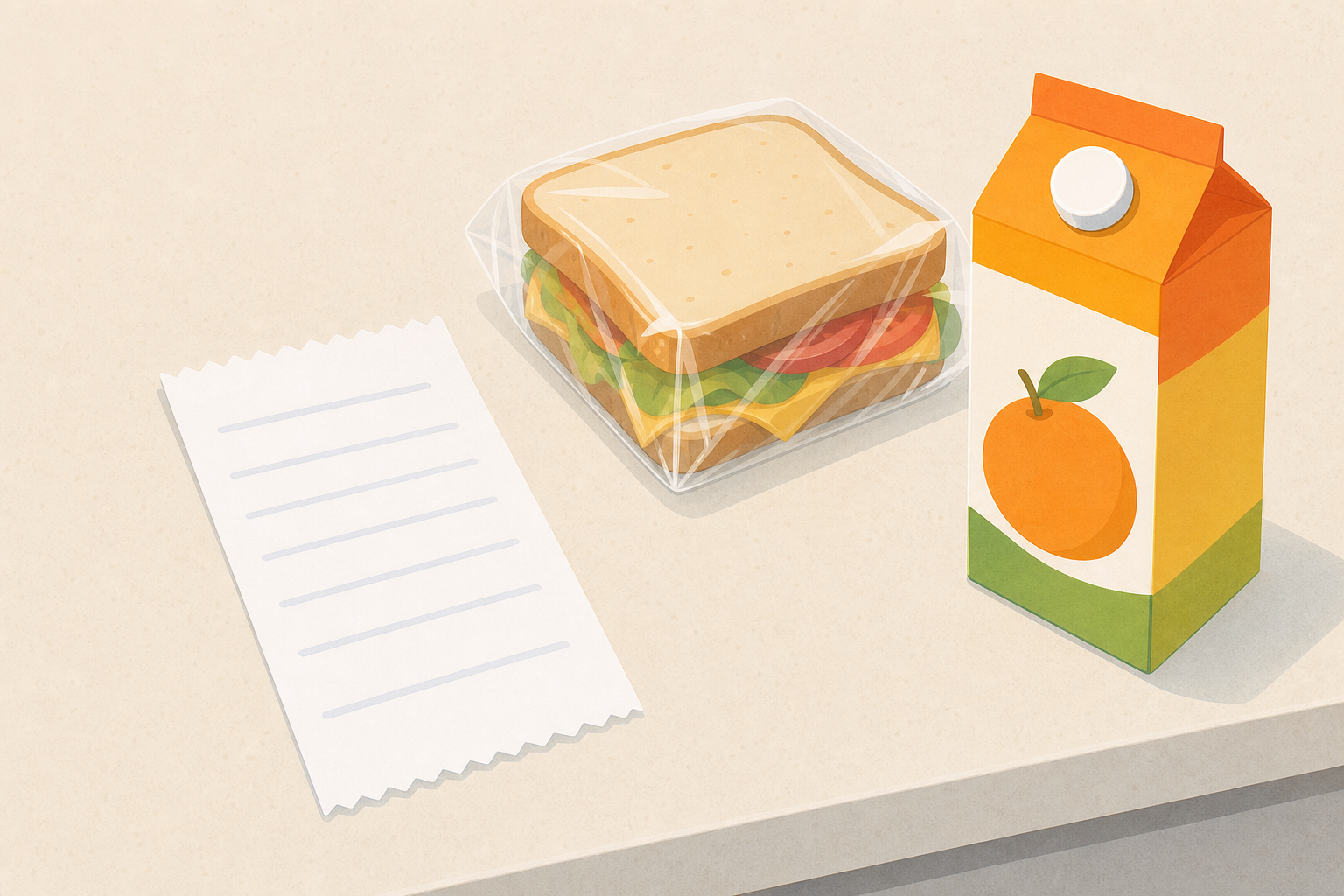
Here is the receipt. The total is €12.50. Look at the price printed for the juice: €7.5. Is that written correctly for money? What is missing?
Watch three money ideas build in the coin tray, one at a time.
A zero that holds a place. In €7.50, the zero in the one-cent column keeps the 5 in the ten-cent place. Read it aloud.
Adding money. Here are the two amounts we will add: €12.50 and €8.75.
Now the total, €21.25. Watch what happens when a cent column goes past nine and we carry into the next column.
Sharing money. We split €27.60 equally among three, sharing the euros first, then the cent, to reach €9.20 each.
Today we build and combine money on the tray, one task at a time. Say each cent column aloud before we check it.
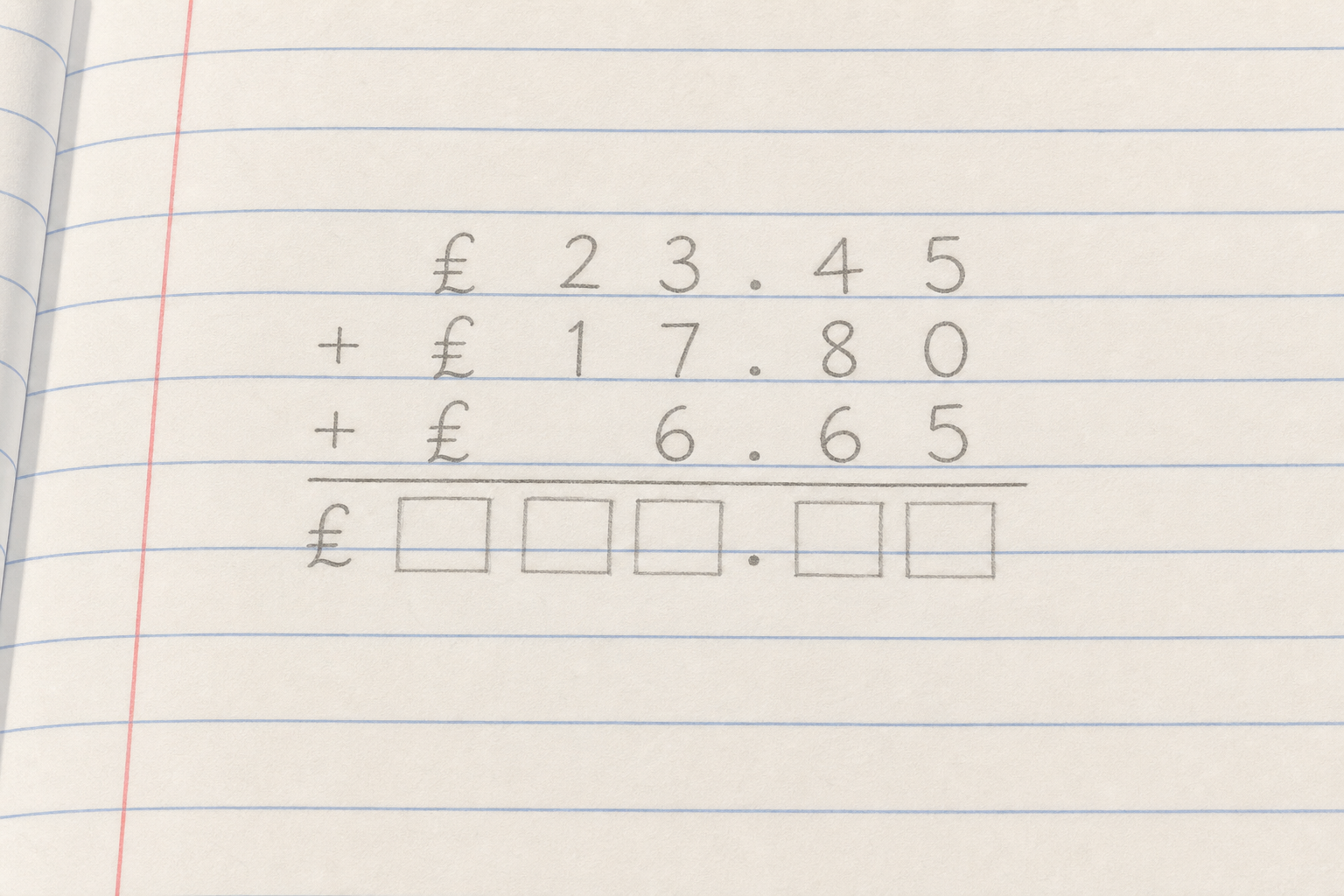
First we set two sums out together on the board so you can see how money is written in columns. Watch €12.50 + €8.75 with the decimal points one under the other, then worked down each column from the right. Next watch €27.60 ÷ 3 set out the same way: point under point, short division across the euros then the cent, and the answer written as €9.20. After that, set out each calculation below in your maths copy the same way. Write every answer in standard €X.XX form and circle the cent digits on every answer.
Now we solve real shopping problems together at the board. There are three core problems, each one a step further. First we total a small shopping list. Then we find change from a note. Then we split a bill fairly among three. If time allows, the strongest pupils reach an extension: work out the change from €20 after buying three items at €4.95 each.
Solve everyday euro problems by adding, sharing and finding change, keeping the decimal points aligned and the cent column correct.
Ways to start:
Stretch:
You're previewing this lesson. Get full access to this lesson and hundreds more — each one ready to teach, with interactive activities, printable resources and pupil progress tracking built in.