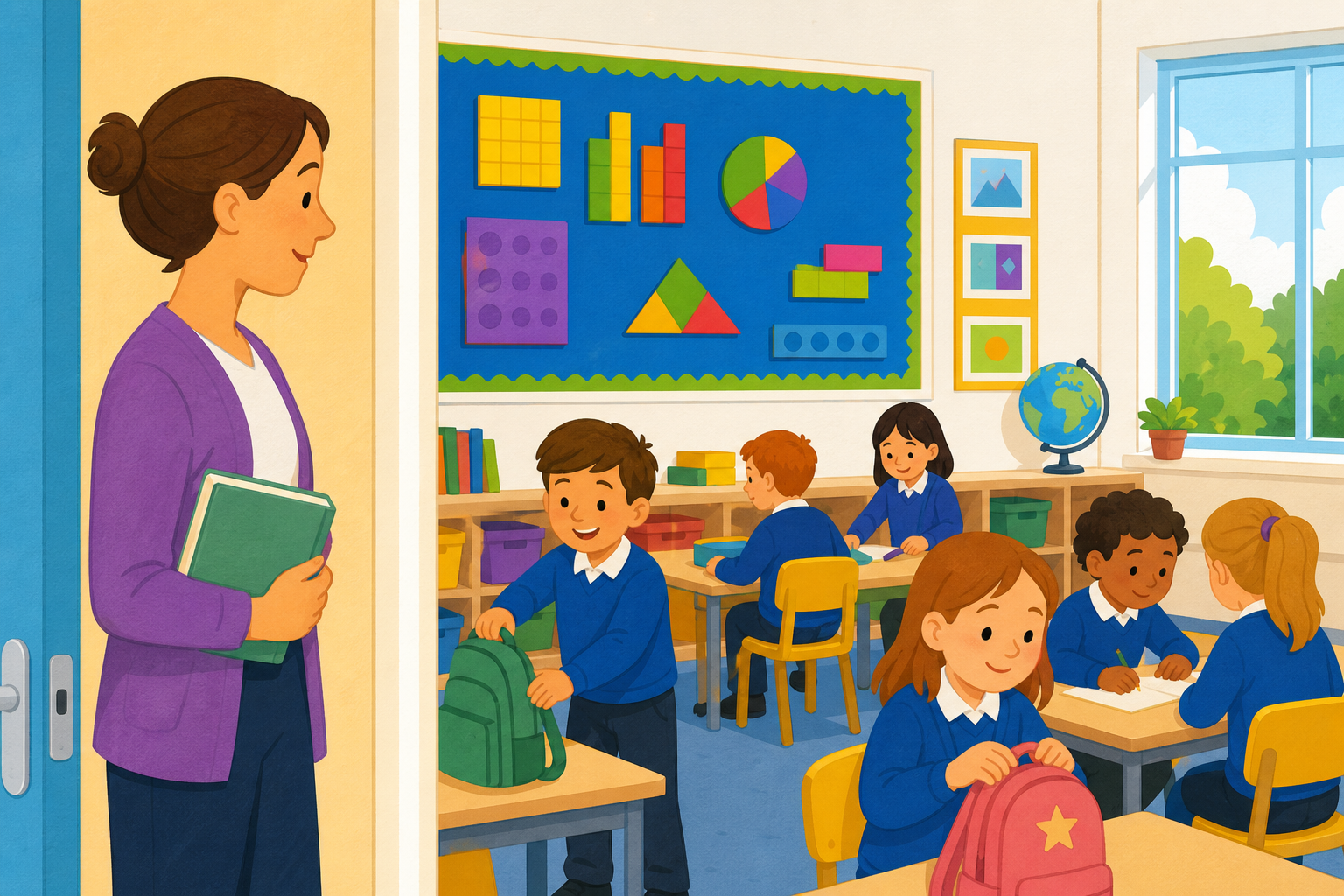
How many pupils are in our class today? Is that number closer to ten, or closer to a hundred?
Have a think, then put up your hand. We are going to look at how every two-digit number is made from a number of tens and a number of leftover units.
The place-value blocks show one number at a time in a tens column and a units column. Watch how many ten-rods and how many single cubes make each number.
Now it's our turn — let's build some numbers together using the T and U columns.
When I call out a number under 100, one of you will come up to the board and build it with ten-rods and single cubes. The rest of us will check — how many tens, how many units?
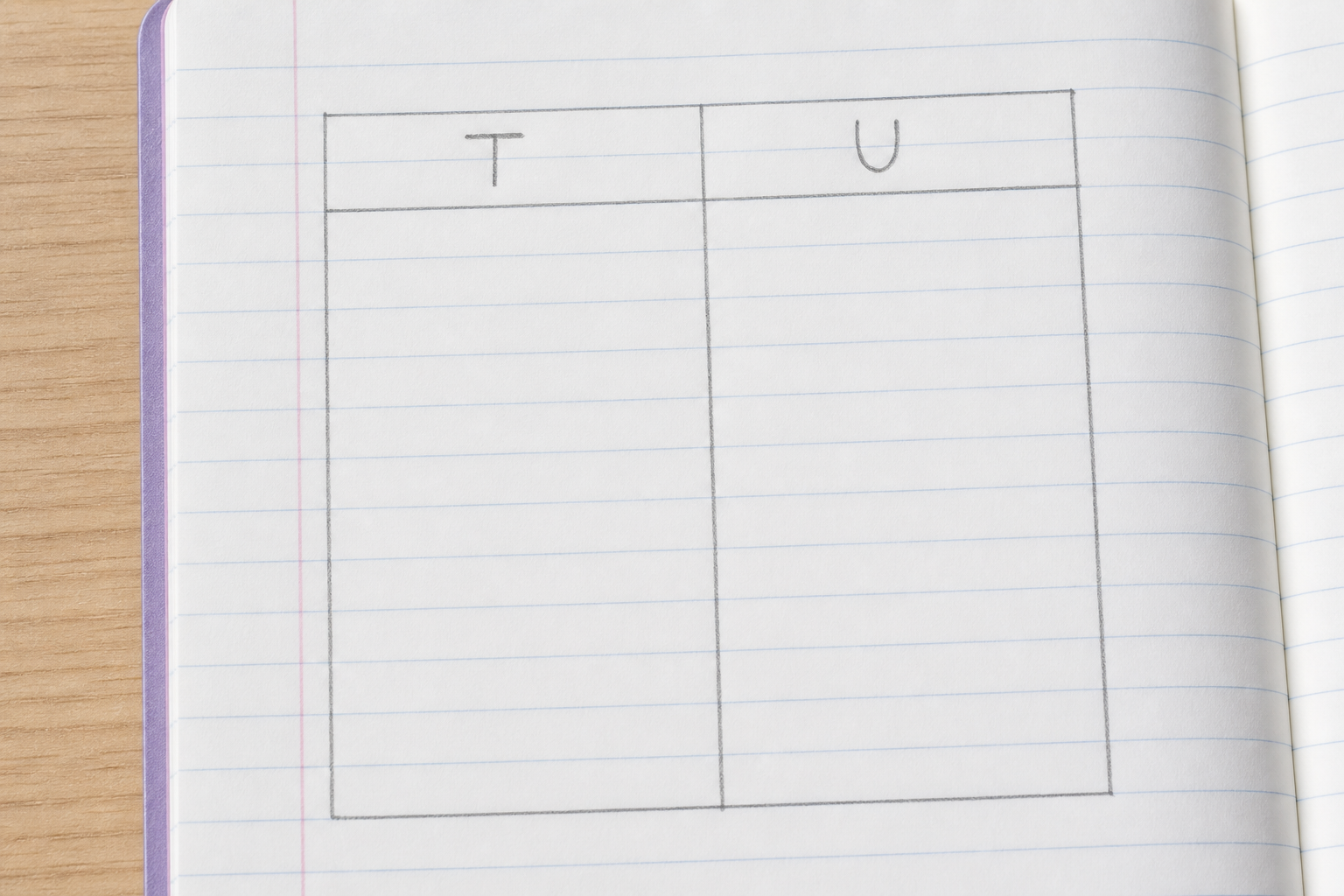
In your maths copy, draw two place-value columns and label them T and U.
Then write each of these numbers into the columns, one under the other:
Read each number aloud after you write it.
Today we build these numbers together at the board: 30, then 47, then 80, then 99.
For each one, work out how many tens and how many units make the number, build it, and check it.
Why does where a digit sits — in the tens column or the units column — change what it is worth?
Think about the 4 in 47 and the 4 in 74. Same digit. Is it worth the same amount?
Today you built two-digit numbers from tens and units, and you saw that where a digit sits decides what it is worth.
Next time we add a new column on the left — the hundreds — and build numbers all the way up to 1,000.
You're previewing this lesson. Get full access to this lesson and hundreds more — each one ready to teach, with interactive activities, printable resources and pupil progress tracking built in.