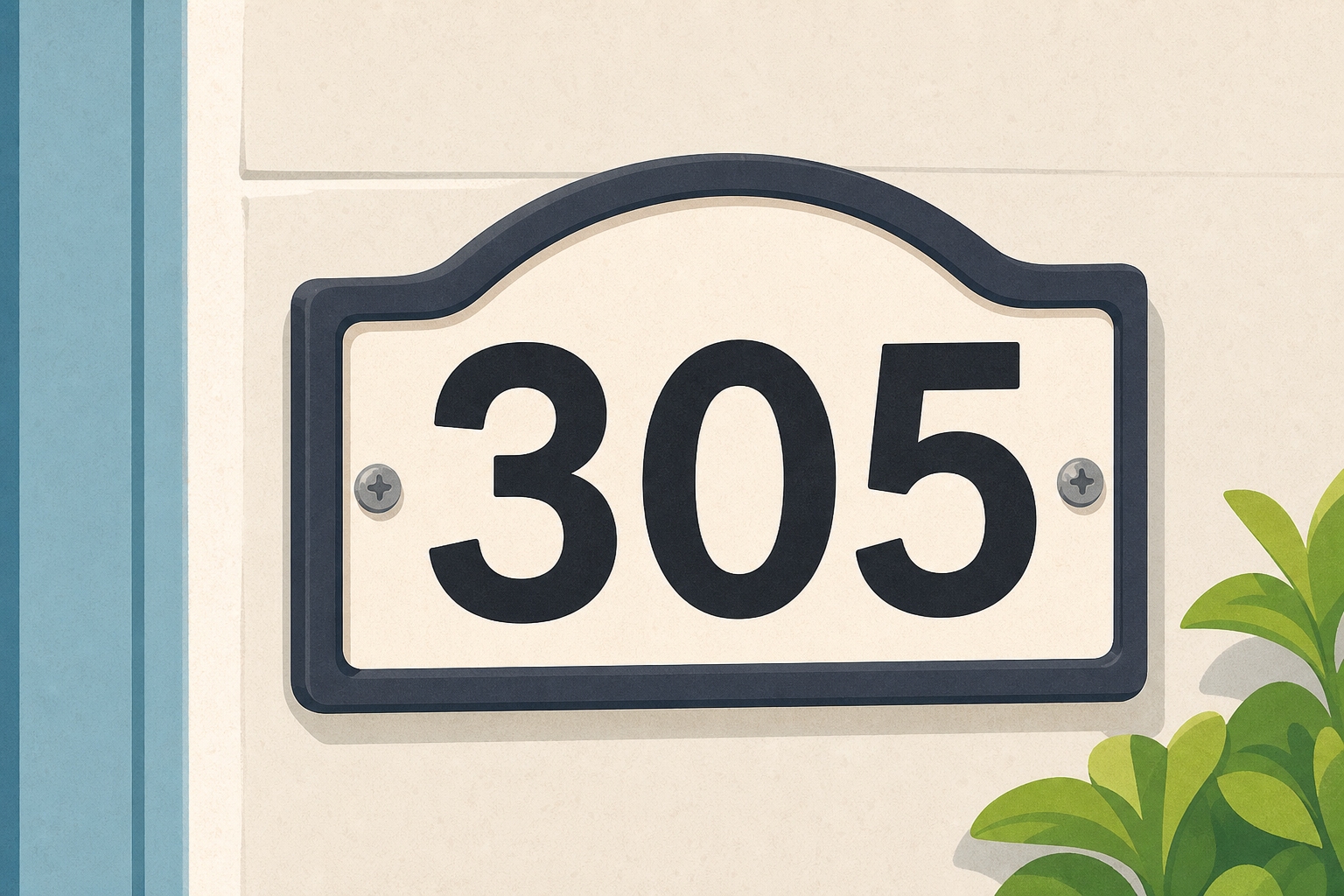
Look at this number on the board: 305.
Each number-symbol, like the 3, the 0 or the 5, is called a digit.
Hands up: which digit do you think is worth the most in this number, and which one is worth the least? And that little zero sitting in the middle, what is it there for, could we just leave it out?
Write 305 large on the IWB and give five seconds of quiet think-time before any hands go up. Take three hands-up answers, not open call-outs. Then write two or three pupil-suggested three-digit numbers beside it and read each aloud together. Keep this brief, the columns get built properly in the next step.
The interactive builds each number from place-value blocks: hundred-flats, ten-rods and single units. Watch what each column holds, including full columns and any that sit empty.
247: name each column in turn, two hundreds, four tens, seven units. Every column has something in it. After that, show the ten-times trade yourself with loose rods: lay out ten loose ten-rods, count them aloud, trade for one hundred-flat. Ask how many ten-rods make one hundred-flat and take the answer before confirming. Same with ten units for one ten-rod if time allows. Draw out the ten-times rule: each column worth ten times the one on its right.
408: point at the columns. If we forgot the zero and wrote 48, the 4 slides into the tens and the 8 into the units, a smaller number. The zero holds the place open. Let them see the slide, not just hear it.
530: the empty column has moved. Ask which column is empty now, the units, the number ends in nothing.
999: biggest number before running out of room, every column at nine. Ask what comes next and pause before anyone answers. Sets up the wrap.
Today we build numbers together on the place-value mat with H, T and U columns. You will hear a number called out, then one of us will come up and build it: the right number of hundred-flats, ten-rods and units. The rest of us will check that every column matches.
This round is for talking it through together — pupils take turns at the board and the class agrees or corrects out loud.
Call a number under 1,000, then invite an individual pupil up to build it on the mat. Rotate four pupils across four numbers. Pick at least one number with a zero (e.g. 306 or 720) so the class has to reason about the empty column. After each build, ask the class 'does every column match the number we heard?' before confirming.
Pupils watching the board are checking the build, that watching is their part, so keep the pace brisk and revoice a good correction aloud. Four single builds with a quick class check is roughly nine minutes, not a quarter of the lesson.
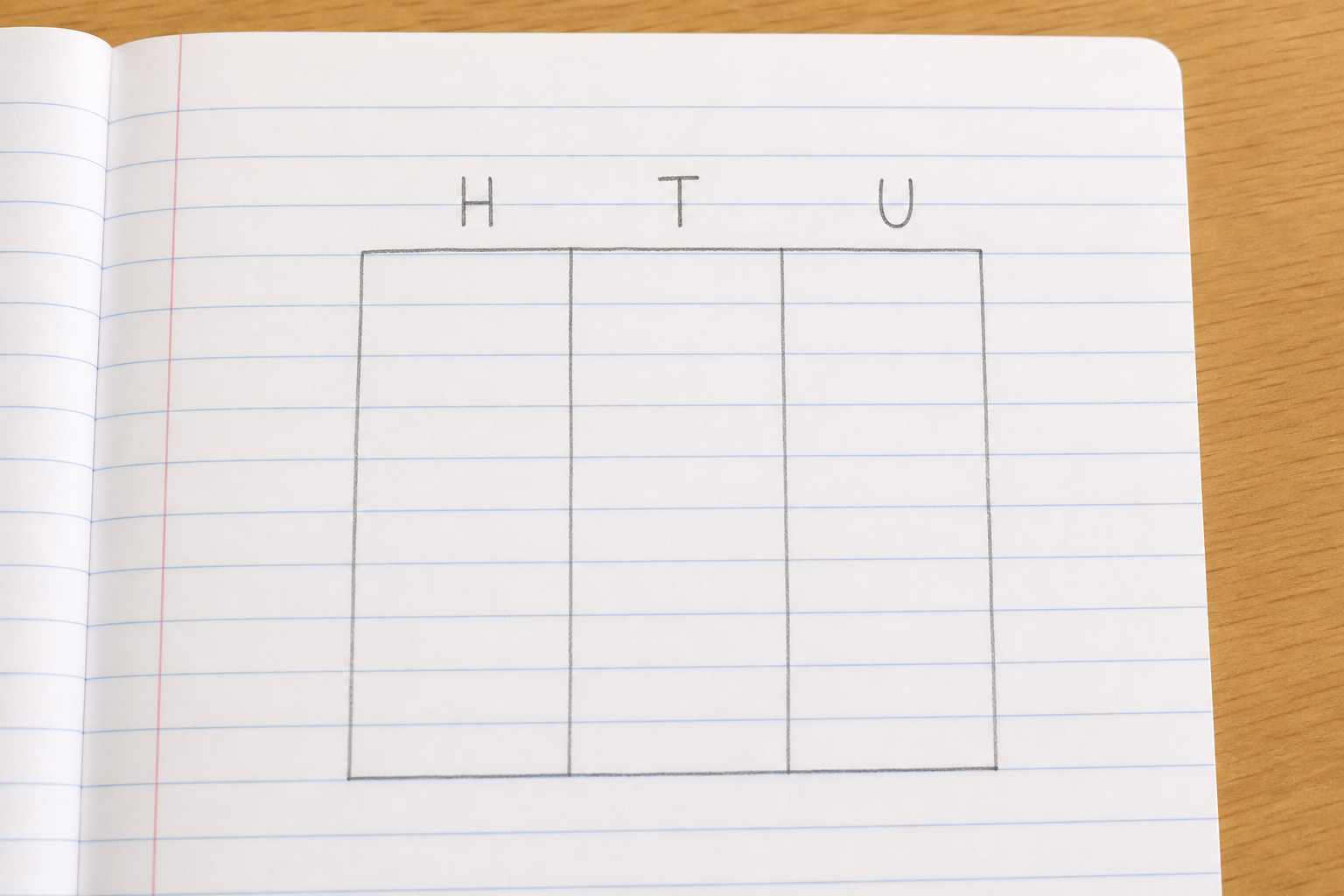
In your maths copy, sketch three place-value columns and label them H, T and U.
Then write each of these numbers into the columns, one under the other, putting each digit in its matching column:
After you write each one, read it out quietly to yourself.
Walk the room glancing at column labels and alignment, no marking, this is whole-class copybook practice. Watch for pupils who slide the 4 and 8 of 408 together and forget the zero, that is the slip to catch on the spot.
Now we work through these numbers together at the board: 162, then 308, then 740, then 909. The zeros catch people out, so for each one we will all say it aloud and name the empty column together, then watch as the pupil at the board builds it and checks it.
These are the practice questions — one pupil builds at the board while the whole class says the number and names the empty column aloud first, then watches the build being checked. Keep the board work brisk rather than over-explaining.
Run the four targets in order. For each, ask 'what is tricky about the zero here?' before the pupil presses Check, 308 has an empty tens column, 740 and 909 each have a zero too. Use the on-screen check tick as part of your narration: 'yes, that's it.' Pupils who finish thinking ahead can mouth the next number, no desk work in this step.
We have built every number all the way up to 999. What do you think has to happen when we run out of room past nine hundred and ninety-nine?
Listen for pupils noticing that there is no bigger digit than nine, so we cannot just add to a full column, we need a brand-new column to the left. Revoice a strong answer: 'so when the hundreds column is full and we still need more, we make a new column.' Do not name the thousands column yet, that is the next lesson, let the class arrive at the idea that a new place is needed.
Next time we follow the same ten-times rule one step further and add a brand-new column on the left, so we can build numbers far bigger than 999.
Recap the three points quickly using a number from the lesson (e.g. point back at 408 for the zero, and back at the ten-rods trade for the ten-times rule). Keep it to under two minutes so pupils move smoothly into their activity-book practice page.
You're previewing this lesson. Get full access to this lesson and hundreds more — each one ready to teach, with interactive activities, printable resources and pupil progress tracking built in.