Here is a co-ordinate pair on the board: (−5, −2). You already know how to plot points that go right and up. Now both numbers can carry a minus sign. So which way do we travel for each number in this pair — and how far?
Each screen shows a co-ordinate pair already plotted on the grid. Notice how the x tells you left or right and the y tells you up or down. On the last one, read the point back; the label confirms it.
Today we'll work these out together at the board, one pupil at a time while everyone else watches and agrees. First the grid shows a point with its label hidden, and we read off its co-ordinate pair. Then I'll call out a pair and one of us will plot it. We'll swap between reading and plotting so both skills get a turn.
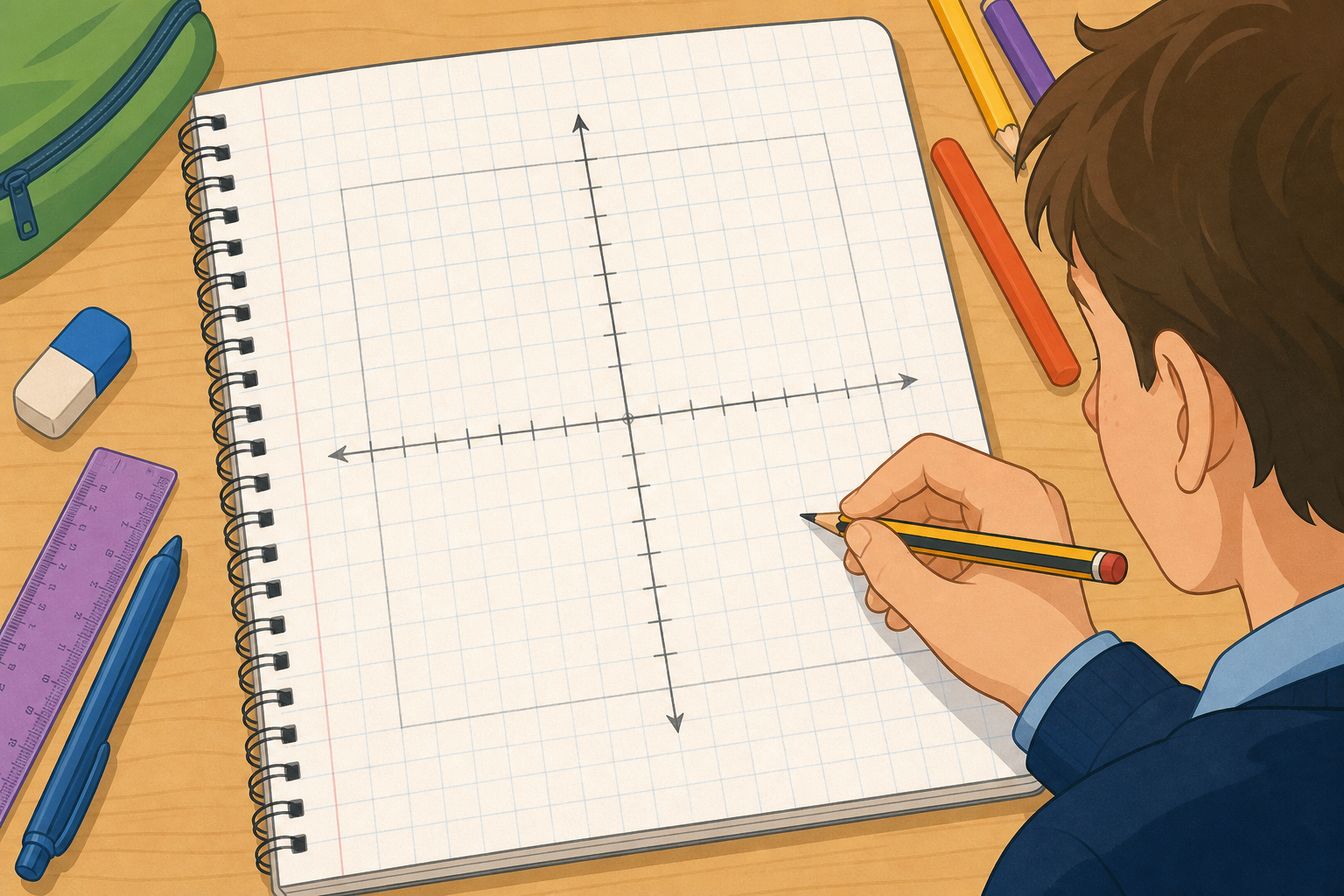
In your maths copy, rule a four-quadrant grid from −6 to 6 on each axis. Plot each of these points and label it:
Then read the three points I place on the board and write their co-ordinate pairs underneath your grid.
Today we'll work through these together at the board. First we'll plot some mixed-sign points. And for the tricky one, three corners of a rectangle are placed and we'll work out where the fourth one goes.
How is (−3, 4) different from (4, −3)? They use the same two numbers and the same minus sign — so do they land in the same place, or somewhere different?
Next we will slide whole shapes around this four-quadrant grid, reading off the new co-ordinates of every corner after the move.
You're previewing this lesson. Get full access to this lesson and hundreds more — each one ready to teach, with interactive activities, printable resources and pupil progress tracking built in.