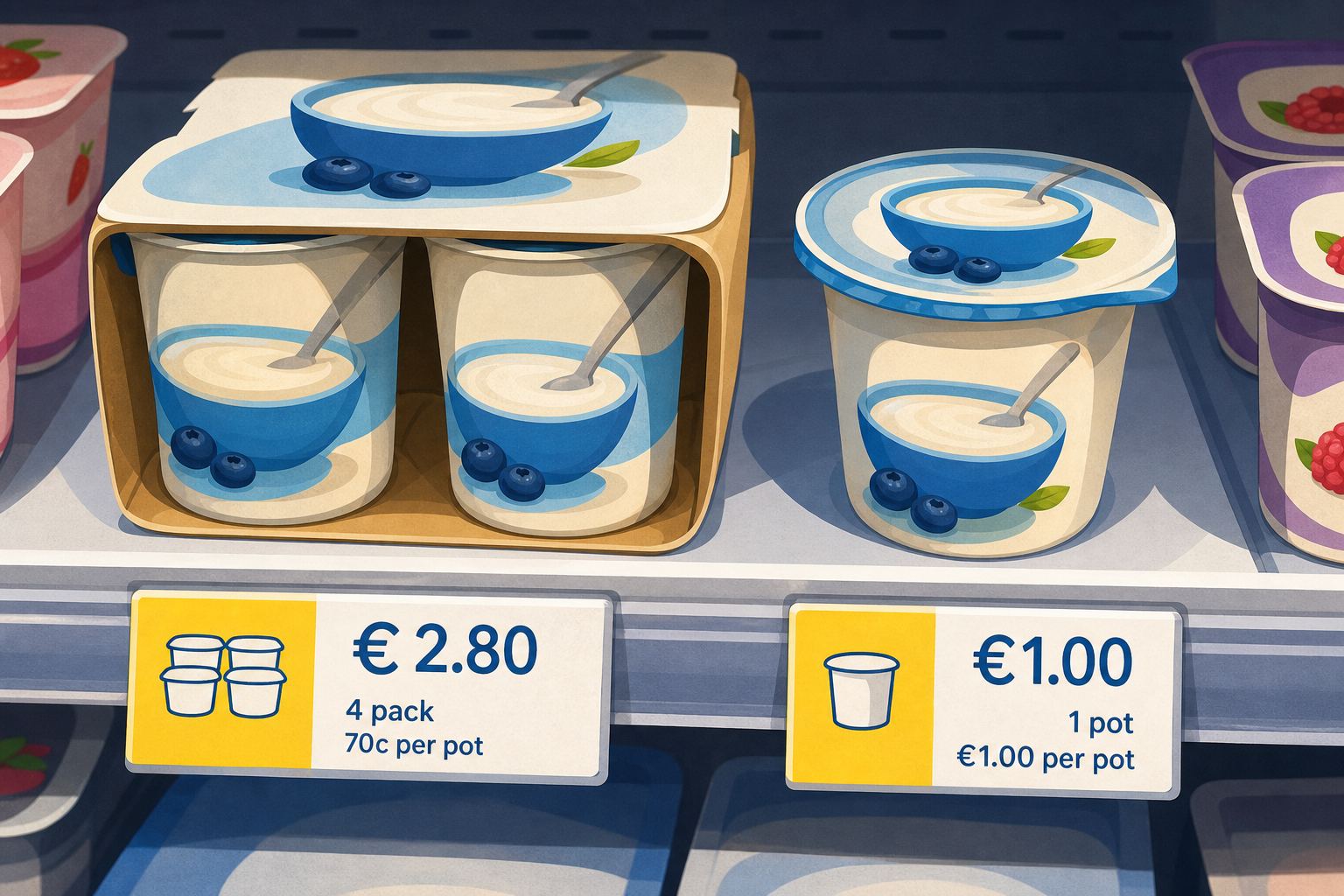
Here are two ways to buy the same yoghurts: a 6-pack for €2.40, or single pots at 45c each. Hands up: which one do you think is the better buy? And how could you actually prove it, rather than just guessing?
We work through four shelf-tag comparisons together. For each pair, share the pack price out to find the cost of just one, the unit price, and say which side wins and why. On the last one, predict the winner before the working is shown. Then we switch to a fundraising stall and look at profit and loss.
Remember: profit is selling above what something cost, and loss is selling below what it cost.
We work the first pair on the interactive together, then work the rest on the board:
First we work one pair together on the board so everyone sees the full method. Then in your maths copy, for each pair of shopping options write the unit price of both and circle the better value. After that, for each profit-and-loss example write three things one under the other:
Work out and label each one.
Board example first: €2.80 for 4 apples against €3.60 for 6 apples.
In your copy, pairs:
In your copy, profit and loss:
Today we work through four comparisons on the board in order: a 6-pack against a 4-pack of the same drink, then two washing-powder boxes of different sizes, then a 20-pack of pens against a 10-pack, and finally a battery-pack twist.
After the four comparisons, we work a total-profit sum together on the board: a fundraising stall buys 20 wristbands at €2 each and sells them all at €3.50 — what is the total profit?
You're previewing this lesson. Get full access to this lesson and hundreds more — each one ready to teach, with interactive activities, printable resources and pupil progress tracking built in.