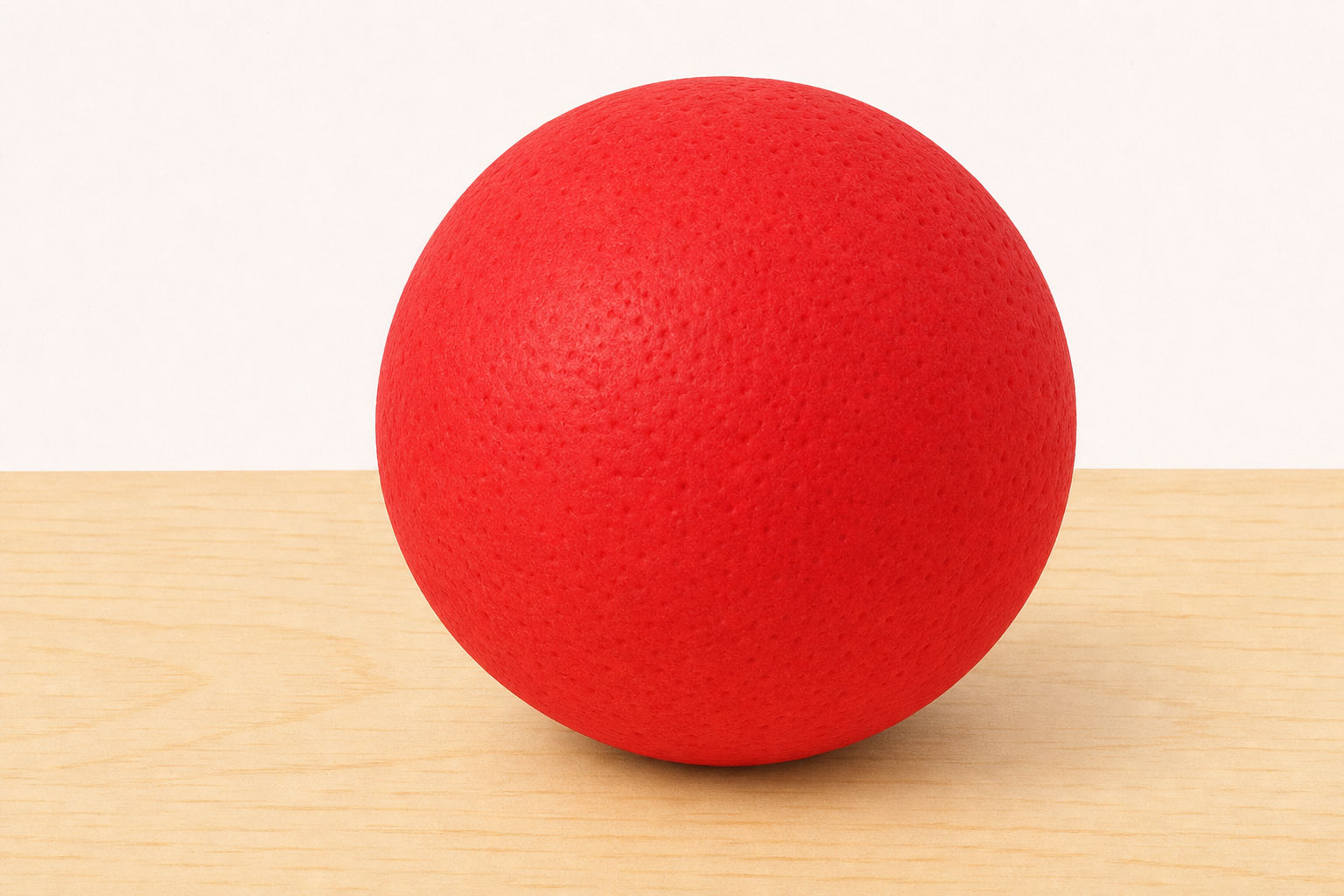
Look at this soft ball. How could we make it move without kicking it? Hands up if you have an idea.
Hold up one soft ball. Keep the hook light: one question only. Do not name push or pull yet, and do not lay out the stations. Accept any idea (blow, roll, tip). Smile and say we will try some of their ideas in a moment.
Have ready: one soft ball in your hand only. Keep the pull-along toy nearby but out of sight until Step 2.
Today's words: push — you move something away from you. pull — you bring something toward you.
Can a push or a pull make something move? Can it make something stop?
| Concept | Why it matters | Example |
|---|---|---|
| Push — moving something away from you by pressing it with your hands or body | We push all day without noticing: doors, dough, balls, buggies | Rolling a soft ball along the floor with a flat hand |
| Pull — bringing something closer by holding it and drawing it toward you | Pulls help us open drawers, shut doors and move toys on strings | Drawing a pull-along toy across the mat by its string |
Have ready in your hands for this step: the soft ball and the pull-along toy (or string box). Do not open the full circuit yet. Stations stay set but closed until Step 3.
Modelled cycle (do this live before the stations):
I wonder: can my hands make this ball move? I think: if I push it gently, it will roll away. I try: push the ball once with a flat hand so it rolls a short way. I noticed: the ball moved away from me. I think: that was a push, and the push made it move. Now pull the pull-along toy toward you once. I noticed: it came closer. I think: that was a pull.
Door model (whole class, teacher-led): Stand at the classroom door with the class watching from the carpet or a safe line. Invite one child to open the door toward themselves (pull) and one child to press it closed away from themselves (push). Chorus: open toward you is a pull; press closed away from you is a push. Name the direction each time. An adult stays at the door for this short demo only, then the door station is finished. Do not leave the door as a free-rotation station.
Misconception to head off: some children say any touch is a push. Name the direction: away from me is a push; toward me is a pull. Stopping can be a push too (a hand against a rolling ball). Changing shape (squash dough) can be a push too.
Ask: when you open our classroom door toward you, is that a push or a pull?
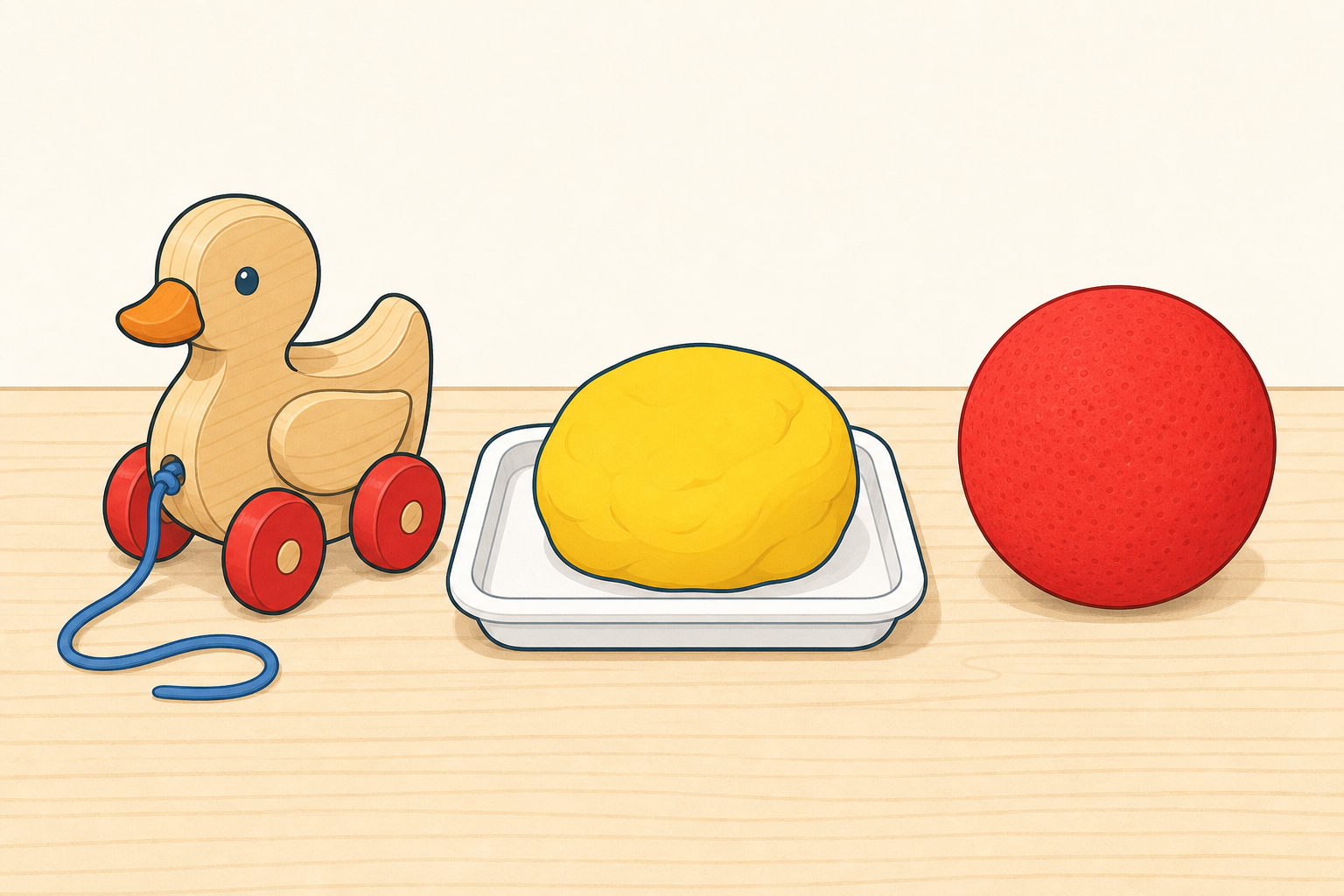
We will visit three little stations: pull toy, squash dough, and roll ball. At each one, try the job with your hands. Say out loud: was that a push or a pull? What happened?
Set three short stations around a clear floor space (not four). The door is already done as a whole-class demo in Step 2, so you are free to circulate. Keep each burst to about three to four minutes, then clap for a quick regroup and rotate. Junior Infants need short turns, not one long sit.
Split the class into three groups so every child is at a station at the same time. One group per station. Rotate on your clap until each group has visited all three stations (about three to four minutes per stop). You circulate among the three floor stations; no second adult is required because the door is not part of the rotation.
At each station ask: Was that a push or a pull? What did the thing do? Join in briefly at one station if a group needs a model, then keep moving.
Look-fors: child names push or pull without being told; child notices move, stop or change of shape; child keeps hands and feet clear of others.
Differentiation: less confident children can point to a push or pull picture card you hold up; confident children can try a little push and a bigger push at the ball station and say which went further.
Safety: push and pull gently, away from faces, toes and friends. Balls roll on the floor only. The classroom door stays closed during the circuit (already modelled).
Show us with your body. Mime one job you did. Tell us: was it a push or a pull? What happened?
Whole-class carpet circle. Invite four or five children to mime one station job (pull a toy, squash dough, roll a ball, or the door open or close from the demo). The class choruses push or pull. Revoice their words in full sentences: You pulled the toy and it moved toward you. You pushed the dough and it changed shape.
There is no Investigation Journal page for this lesson. Keep the beat oral and playful. If a child is shy, let them point while you name it.
Listen for: correct naming of push versus pull; noticing move, stop or change of shape.
Tell your partner one push or one pull you used today.
Short make-sense talk on the carpet. One clear pupil job only: each child tells a partner one push or one pull from today's stations (or the door demo).
Then you model a familiar everyday link with a quick picture in words (not a second pupil task): Think of someone pushing a buggy, or pulling a school bag, or sliding a big box along the floor. They use pushes and pulls too. Invite one or two spoken ideas from the class if time allows. Keep it warm and concrete.
Prompts if talk stalls: Where did we use a push today? Where did we use a pull? Can a push stop something as well as start it? Can a push change the shape of dough? Revoice: pushes and pulls are how we make things move, stop, or change shape.
Common mix-up: children may say the ball moved by itself. Gently return to hands: Your push made it go.
You're previewing this lesson. Get full access to this lesson and hundreds more — each one ready to teach, with interactive activities, printable resources and pupil progress tracking built in.