Mathematics
Intermediate
42 mins
Teacher/Student led
+80 XP
What you need:
IWB/Projector/Large Screen

Reading the Analog Clock to the Nearest Minute

Learn to read an analogue clock to the nearest minute by identifying which hand shows the hour and which shows the minutes, paying careful attention when the hour hand creeps between numbers.
Teacher Class Feed

Load previous activity

    1 - Getting Started ~4 mins

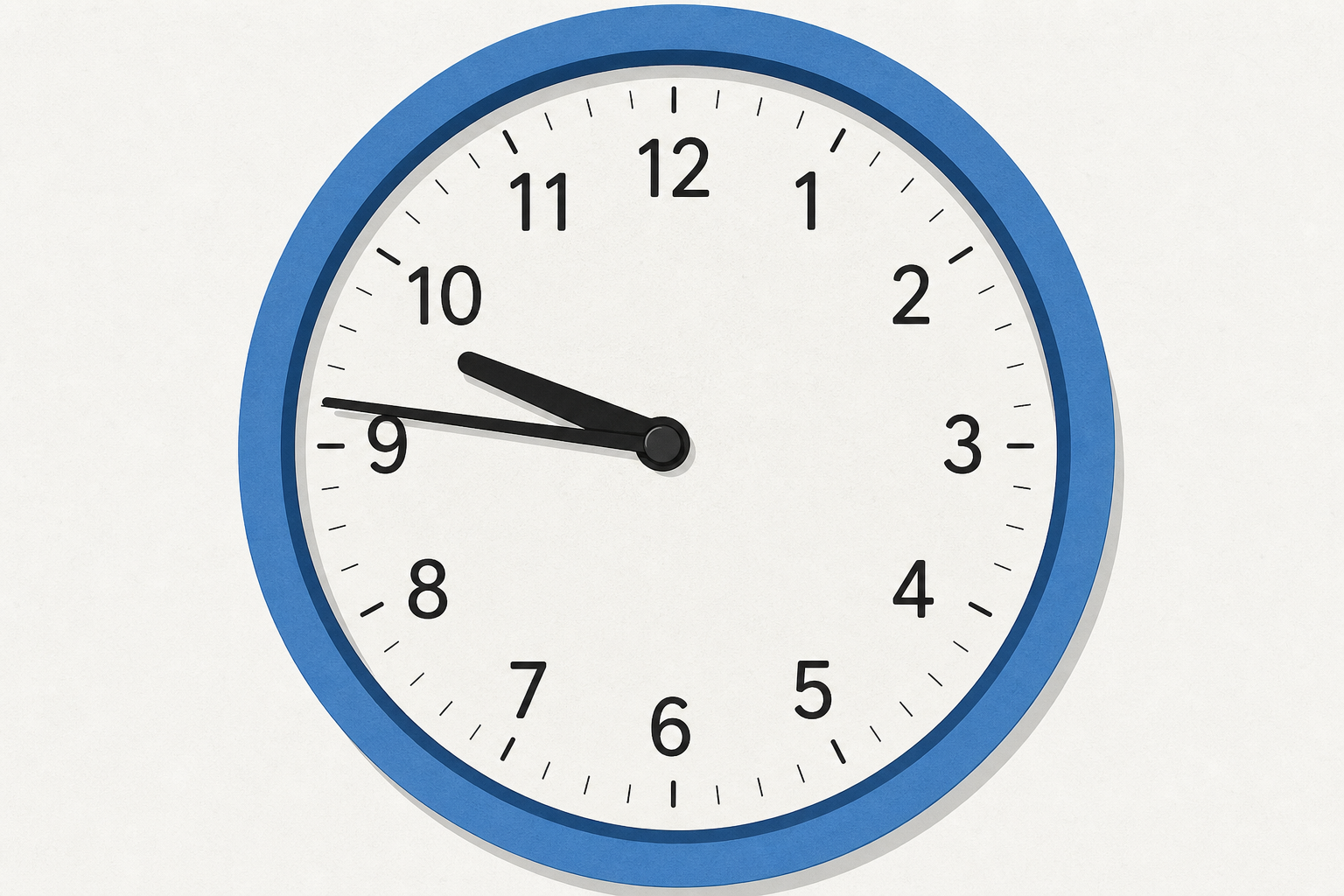
    Illustration for Getting StartedLook at this clock. The long hand is down near the 9, and the short hand is up near the 10. What time do you think it is showing? Look carefully at which hand is which before you decide, because one of them is trying to trick you.
    2 - Watch and Notice ~9 mins

    The interactive shows four clocks in turn. Watch both hands each time, and keep an eye on where the short hand is when the minutes are high. What hour is it really?

    3 - Try It Together ~9 mins

    Now we set the hands together. The board shows a target time, and one pupil comes up to drag the hands to match it while the rest of us check their work. Before each pupil presses Check, look at the short hand and predict the hour out loud, then check the long hand is on the exact minute. We will set these three times in turn:

    • 4:25
    • 8:50
    • 11:08

    Set the time on the clock

    4 - Sketch the Clocks in Your Copy ~4 mins

    COPYBOOK MOMENT

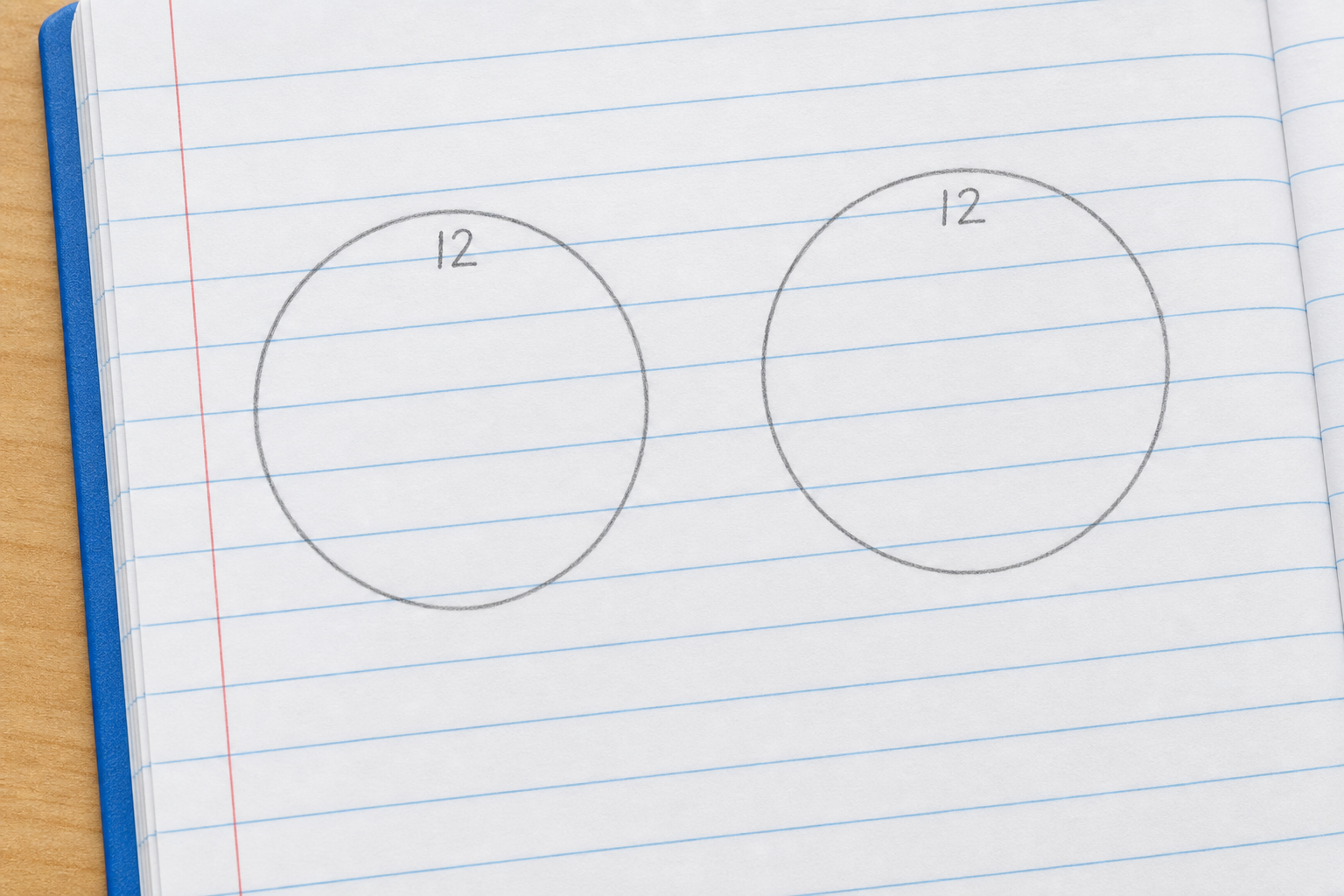
    Illustration for Sketch the Clocks in Your CopyIn your maths copy, sketch two clock faces as simple circles with 12 at the top. Mark the hour and minute hands for each of these times, and write the time in digits underneath each clock.

    • 3:15
    • 7:53

    5 - Class Challenge ~8 mins

    Now we set the hands to match each target time. We will work up from easy times to the really tricky ones where the hour hand tries to fool us.

    Key point

    Read the short hand for the hour first, then the long hand for the minute.

    Match the called time

    6 - What Did We Notice? ~3 mins

    MATHS TALK

    When does the short hand try to fool us? Think about the times where it sat nearly on the next number but the hour had not changed yet. How did you know which hour was the right one?

    7 - What's Next ~2 mins

    What we learned today

    • The short hand tells the hour, the long hand tells the exact minute.
    • Each small mark is one minute; each number is a five-minute jump.
    • When the minute is large, the short hand creeps toward the next number — but the hour does not change until it gets there.
    Coming up

    Next we look at 24-hour time, where the hours keep counting up after midday — so 2 pm becomes 14:00.

    Pupil practice
    Module 5 · Time and Money Measures
    Lesson 59 · Reading the Analog Clock to the Nearest Minute
    Download Activity Book page (PDF)
    End of lesson
    123learn · Online learning platform

    Unlock the full learning experience

    You're previewing this lesson. Get full access to this lesson and hundreds more — each one ready to teach, with interactive activities, printable resources and pupil progress tracking built in.

    Hundreds of curriculum-aligned lessons
    Interactive activities in every lesson
    Printable resources & progress tracking
    Copyright Notice
    This lesson is copyright of Coding Ireland 2017 - 2025. Unauthorised use, copying or distribution is not allowed.
    🍪 Our website uses cookies to make your browsing experience better. By using our website you agree to our use of cookies. Learn more
