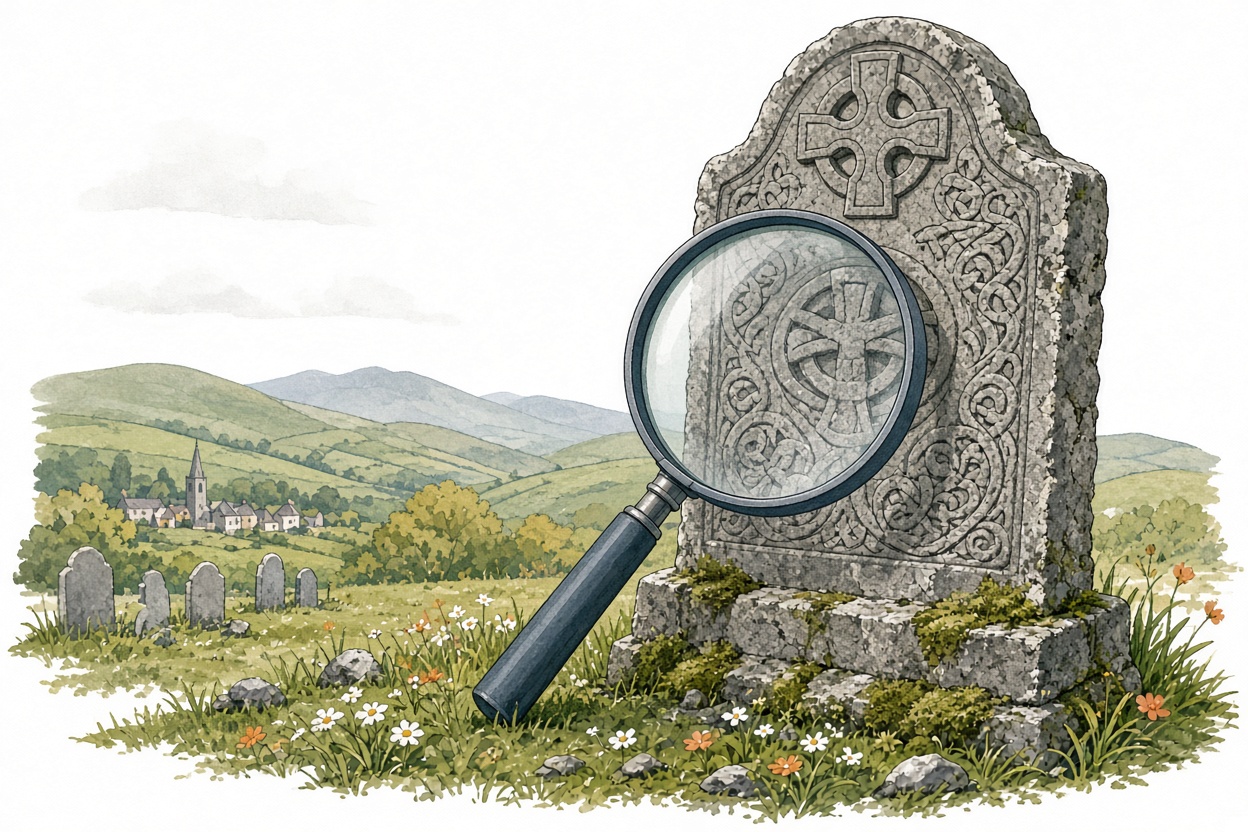
Look at this old headstone on the board. What do you notice? What do you wonder?
Our question for today is what the oldest writing near our school tells us about the people of this place, and what it cannot tell us.
The nearest stones to our school are at the graveyard, memorial or dated stone nearest our school.
Today we read real stones: at the graveyard, memorial or dated stone nearest our school if we walk there, or the headstone on the board if we stay in.
On the stones sheet, record what is actually carved:
- names
- dates
- ages
- any work or place named
- the words used
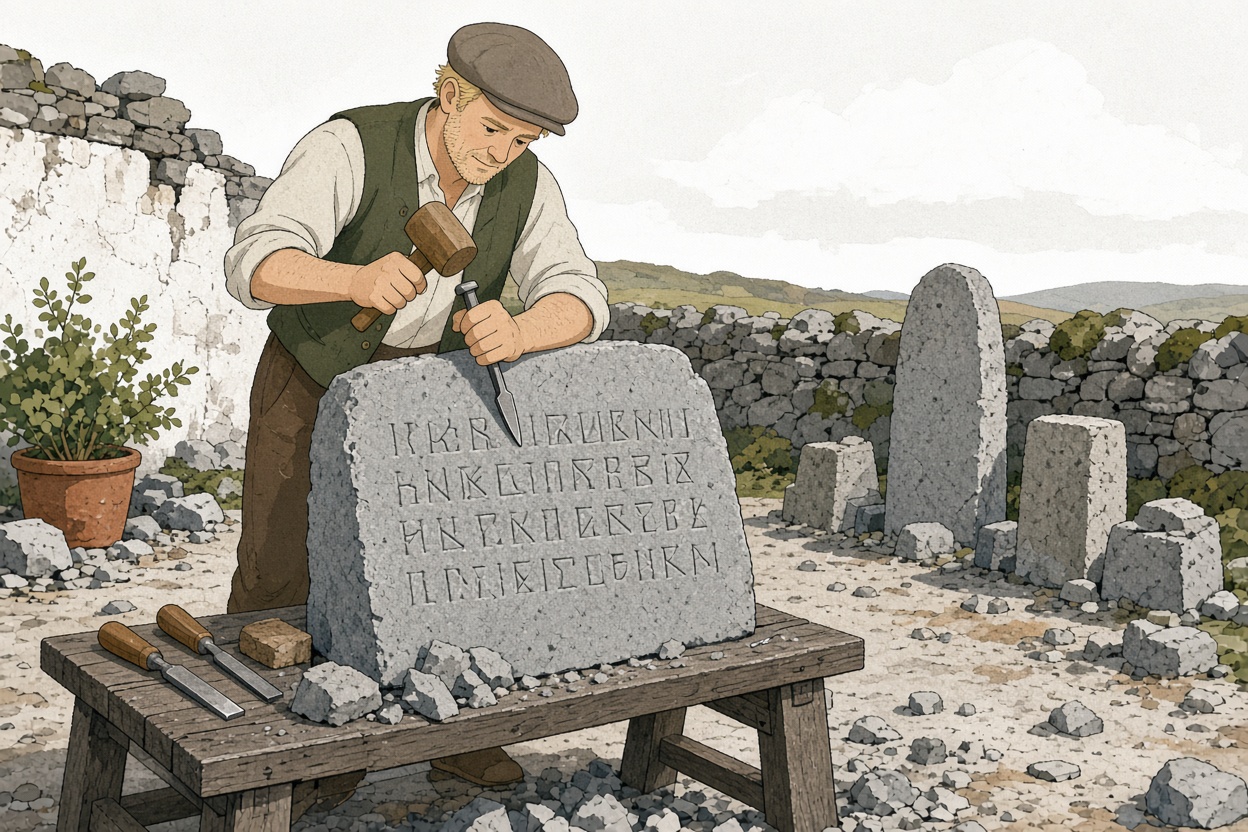
Write only what you can really read. One clear name and one clear date is enough if the letters are hard. Do not rub the stone and do not touch the carving. Sketch the oldest piece of writing you find.
An example headstone
Back in class: what is the oldest date we read today, and what is the newest?
Where does each date belong on the line? How many years ago was our oldest stone?
How far back do our stones go?
What can the stones tell us about the people of this place, and what can they not tell us?
Where does each card go?
What can the stones tell us?
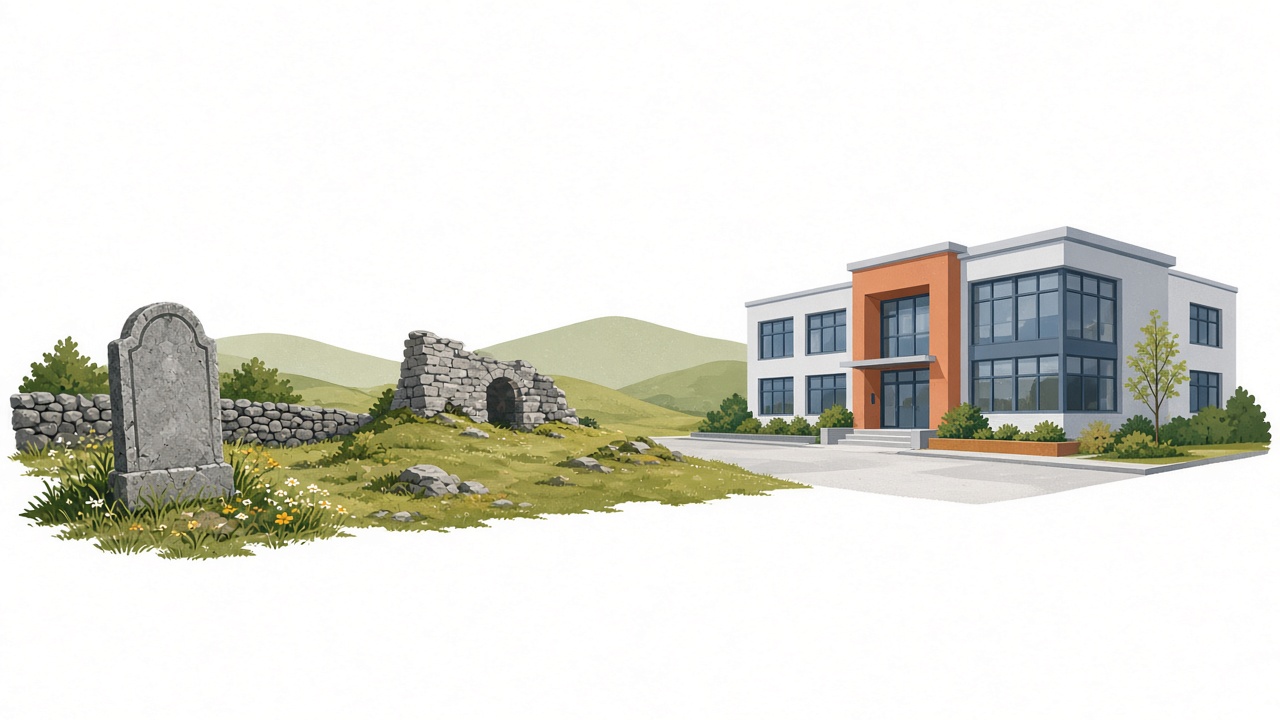
An inscription on stone can tell us names, dates and ages that people wanted remembered in this place. It cannot tell us about everyone who lived here, or what those people thought and felt.
Talk about this: if a stone near our school is still here in a hundred years, what could children then learn from it, and what would they still have to find out another way?
That was a sample lesson from History for 3rd Class
Every lesson in the course is ready to teach like this one. See what else comes with it, and how to order it.
This lesson is copyright of Coding Ireland 2017 - 2026. Unauthorised use, copying or distribution is not allowed.