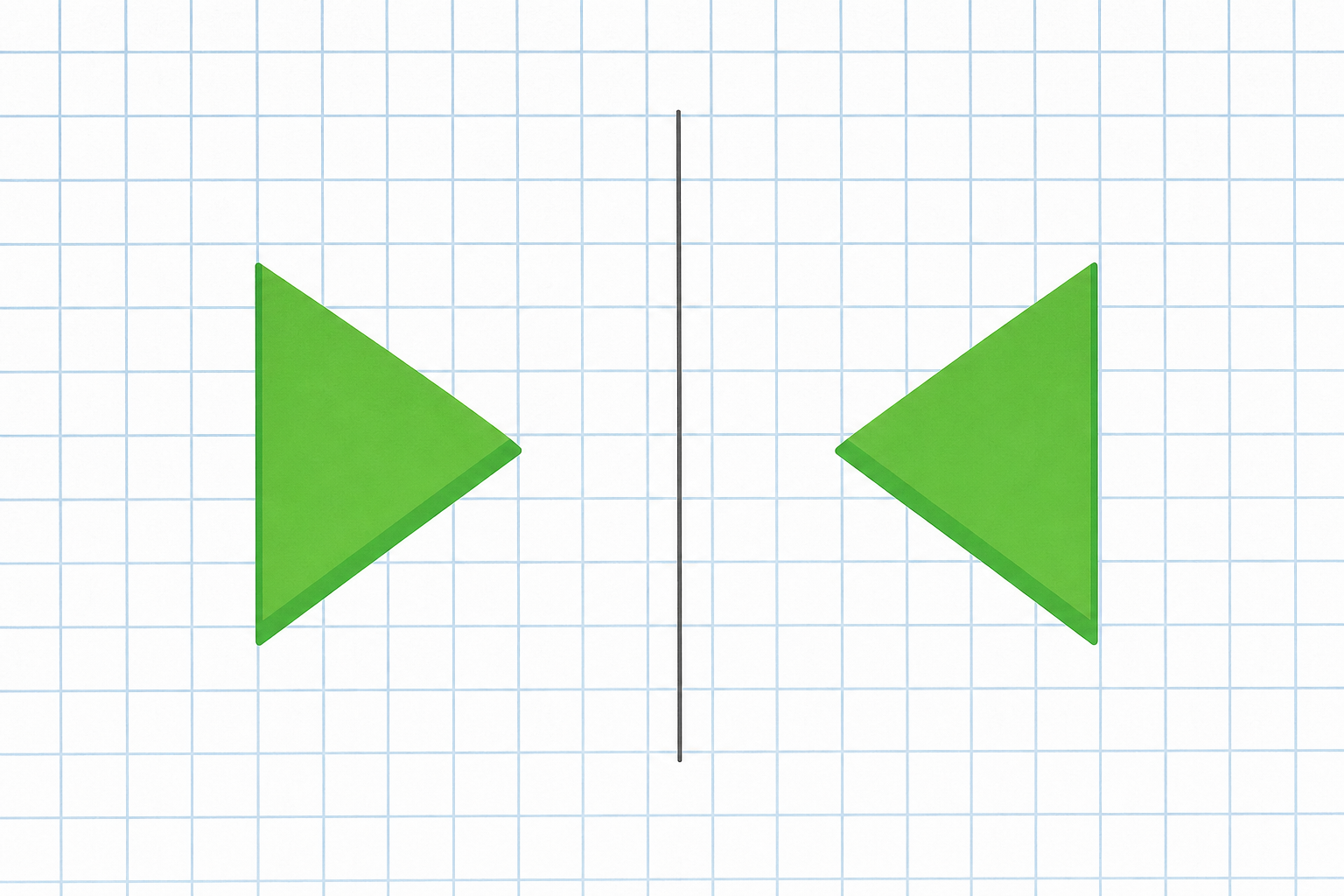
Look at this before-and-after picture: the same shape facing left, then facing right, like it is looking in a mirror. What stayed the same about the shape, and what changed? Have a think before any hands go up.
Show the before-and-after of one shape flipped over a line as pupils settle. Take three hands-up answers, not open call-outs. Listen for 'it turned around' or 'it's facing the other way' and hold those words for Watch and Notice.
The interactive flips each shape over a line, one at a time. Watch which way the shape ends up facing, and count how far each corner sits from the line on both sides.
Triangle: same size, faces the other way. Point one corner then its match, two squares this side, two squares that side.
Rectangle: stays the same size, only the facing changes.
Arrow: pause before the flip, ask which way will it point.
Shape away from the line: the new idea. It sits two squares off the line, reflection lands two squares the other side, four squares across in total. Count it aloud and build it carefully, they meet this again as the trickiest challenge.
L-shape: line now goes side to side, so the flip is up and down. This is where pupils slide instead of flip, stress the flip.
Watch as we build a simple shape on one side of the mirror line and its reflection appears on the other side. Check together that each reflected corner is the same number of squares from the line, and that the shape now faces the other way.
This round is for talking it through together — pupils take turns at the board and the class agrees or corrects out loud.
Set the mirror line, then shade a few squares of a simple shape on one side. As the tool reflects each square, ask the class to count squares from the line on both sides before agreeing. Rotate four pupils. Between shadings, keep the watching class live: pose a quick question to the room — 'before it reflects, how many squares from the line is this corner?' — take two hands-up answers and revoice the right one so the back rows hear a classmate reason it out. Watch for the slide error — if a pupil expects the shape to face the same way, replay the L-shape from Watch and Notice.
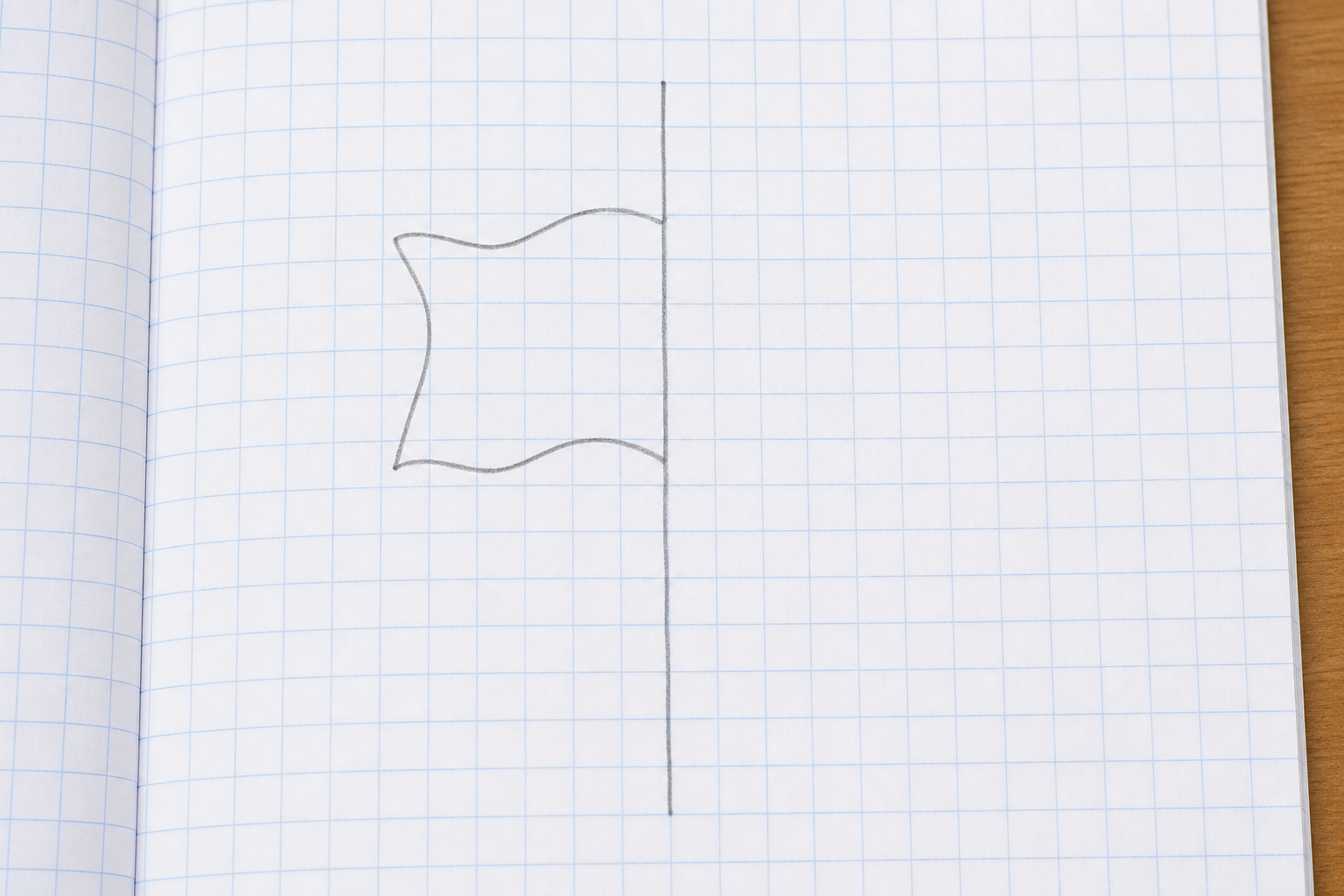
In your maths copy on squared paper, draw a line up and down the page. Draw a simple flag shape on one side. Then draw its reflection on the other side, checking each corner is the same number of squares from the line.
Walk the room glancing at whether each corner is the same number of squares from the line on both sides, and whether the flag now faces the other way. No marking — this is whole-class copybook practice.
Today we work through these reflections together: flip a triangle across a line that goes up and down, then an arrow the same way, then an L-shape across a line that goes side to side, and finally a shape that sits two squares away from the line. For that last one, count it out loud: two squares this side, two squares that side, so the reflection lands four squares across the line from the start.
The last one catches people out, so check each corner carefully before we move on.
These are the practice questions — pupils take turns at the board, check each answer, and the class confirms before moving on. Keep the board work brisk rather than over-explaining.
The fourth challenge (a shape two squares away from the line) is the hardest one. Its starting shape is already shaded two squares clear of the line on the board, so pupils can see the gap. Count it aloud as a class: 'two squares this side, two squares that side, four squares across the line.' Ask 'did it flip over, or just slide along?' at each one.
What stays the same when a shape is reflected, and what changes? Think about the size, the way it faces, and how far each corner is from the line.
Listen for pupils naming that the size stays the same and the way it faces changes. Revoice a strong answer: 'so it flips over to face the other way, but it never gets bigger or smaller.' Head off the slide misconception — if anyone says it just moved along, ask whether it is still facing the same way.
Next we will look at turns: quarter turns, half turns and three-quarter turns, and how a shape moves around a point.
Keep this brief — recap the three bullets and link forward to turns. No activity-book hand-off needed in this step.
You're previewing this lesson. Get full access to this lesson and hundreds more — each one ready to teach, with interactive activities, printable resources and pupil progress tracking built in.