Mathematics
Beginner
50 mins
Teacher/Student led
+65 XP
Teacher-led from the board. Pupils do not need a device, but can follow on one.

Rotation, Quarter, Half and Three-quarter Turns
Learn how shapes rotate around a fixed point through quarter, half and three-quarter turns. Discover that turning changes only which way a shape faces, never its size.
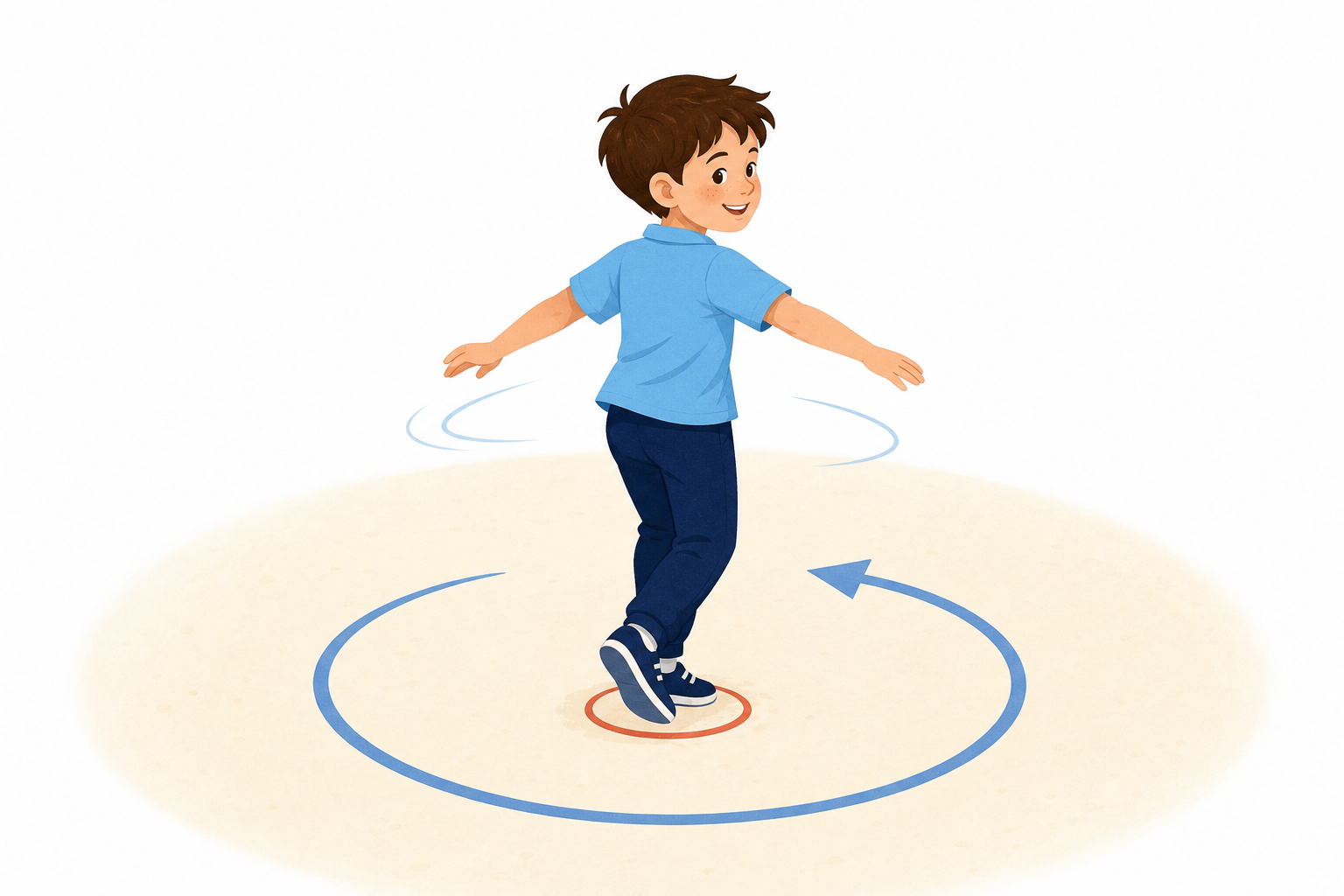 Everyone stand up in a clear space. Watch me turn on the spot, then copy each turn with me. First we turn all the way around, back to where we started. Now a half turn. Now just a quarter of the way. Each time we stop, notice which direction you are facing.