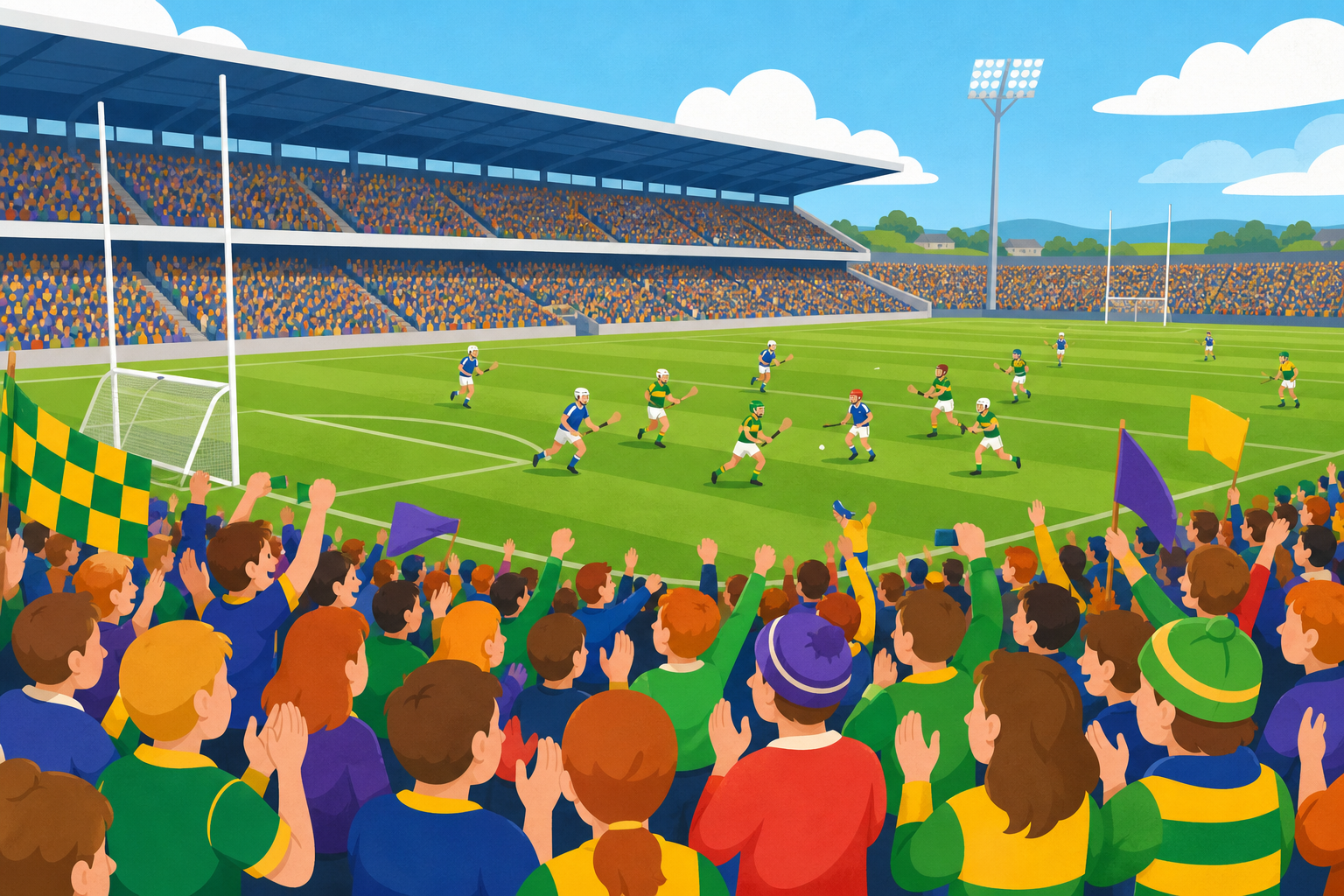
A big crowd of 340 people is at a hurling match. Is that nearer to three hundred people, or nearer to four hundred people? Have a think, then show me with your hands: three hundred, or four hundred?
Take three hands-up answers, not open call-outs. Give a few seconds of quiet think-time first.
Mark 340 between 300 and 400 on a quick line on the board and ask which hundred is it closer to? — don't confirm yet, that is the lesson.
The number line runs from 300 to 400, marked every ten. Think about where numbers sit on a line and which hundred each is closer to. The tens digit is our clue for which way it rounds.
320: two steps past 300, tens digit 2 is small, stays down at 300.
380: ask which hundred it is nearly touching before revealing; tens digit 8, rounds up to 400.
Before the third, ask them to predict what happens when a number sits exactly in the middle.
350: the one that catches them. Pause on exactly halfway, leaning neither way. Name the halfway rule: a halfway number always goes up, so 350 rounds to 400.
Today we work through these numbers together, rounding each to the nearest hundred: 210, then 290, then 640, then 750. Watch the tens digit each time. The last one lands exactly halfway, so predict before we place it which hundred it will jump to.
This round is for talking it through together — pupils take turns at the board and the class agrees or corrects out loud.
For each number, ask which two hundreds is it between?, then what is the tens digit?, then which way it rounds. On 290 draw out that even though the tens digit 9 belongs to the 200s, it rounds all the way up to 300. On 750, pause on the halfway rule before revealing.
In your maths copy, write each of these numbers and its nearest hundred beside it. Underline the tens digit you used to decide.
Walk the room glancing that pupils have underlined the tens digit, not the units — this is whole-class copybook practice, not marking.
Today we round these together on the board, each one a little trickier: 230, 460, 550, 970. Watch for the halfway one, and watch the last one — when a number rounds up past 900, where does it land?
These are the practice questions — pupils take turns at the board, check each answer, and the class confirms before moving on. Keep the board work brisk rather than over-explaining.
You're previewing this lesson. Get full access to this lesson and hundreds more — each one ready to teach, with interactive activities, printable resources and pupil progress tracking built in.