Today you will train and test an AI image model in the browser using your own webcam examples of rock, paper and scissors hand gestures. You will watch how the model learns from the pictures you give it — and where it gets confused.
Before you add any examples: predict what the model will need in order to tell the three gestures apart. What kinds of pictures might help it, and what might trick it?
This is not a coding lesson. The big question is a media one: how does AI learn from examples, and what does that mean for the AI behind the media you use every day?
In this lesson, you will create an image model using Google's Teachable Machine to recognise rock, paper and scissors hand gestures.
Google's Teachable Machine is a tool that allows you to create machine learning models. You'll train the model to recognize different hand gestures for rock, paper, and scissors.
In another lesson in this course we will use the model to build an AI Rock, Paper, Scissors game.


First we need to open the Google's Teachable Machine website to create our model.
Click on the Get Started button.

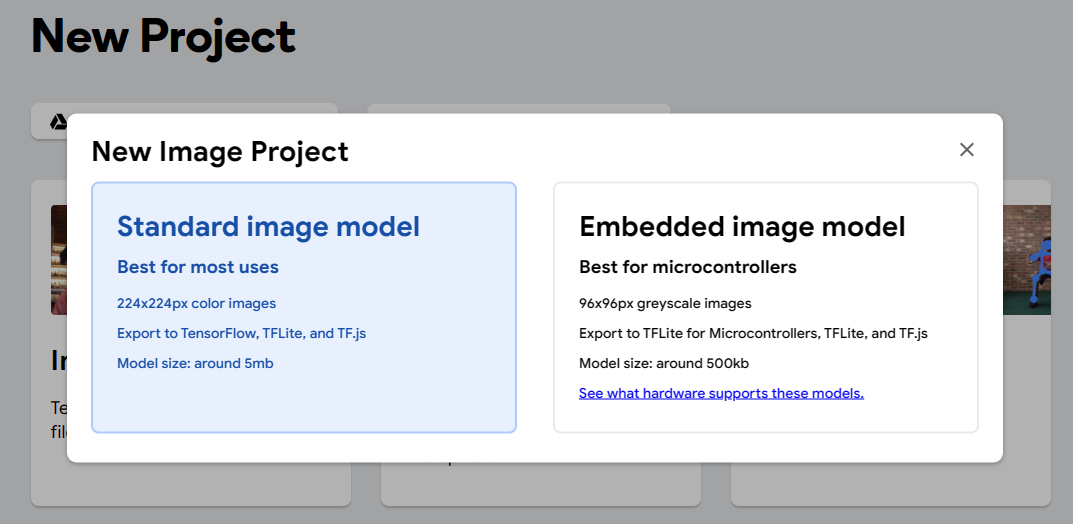
Click on the Image Project button to create a new image model project, and then click on the Standard image model option.
This will bring you to the screen where we can create our classes for our image model.
In an AI image model, a class is a category that the model can recognize. For example, in our rock, paper, scissors game, we will have three classes: rock, paper, and scissors. The AI will learn to recognize images of each class and be able to tell them apart.

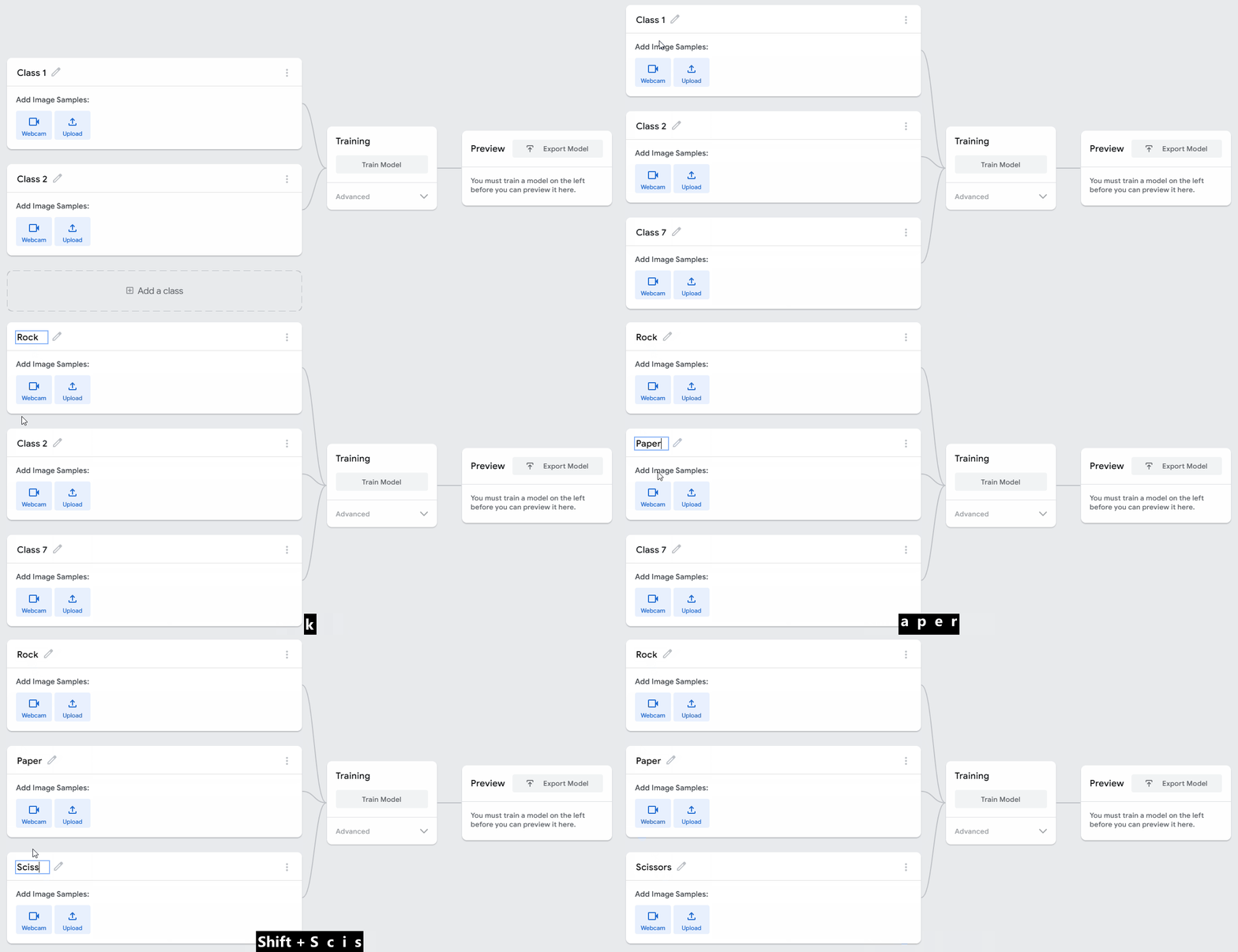
There will be two classes already added to your model called 'Class 1' and 'Class 2'.
Add a third class by clicking on the 'Add a class' button and then rename your classes to:
- Rock
- Paper
- Scissors
Unlock the full learning experience
You're previewing this lesson. Get full access to this lesson and hundreds more — each one ready to teach, with interactive activities, printable resources and pupil progress tracking built in.
This lesson is copyright of Coding Ireland 2017 - 2026. Unauthorised use, copying or distribution is not allowed.