We are going to use a grid split into four boxes. Along the top it says even and not even. Down the side it says more than 10 and not more than 10.
Where would the number 14 go? What about the number 7? Put your hand up if you can point to the right box.
We will sort two sets of cards on screen. The first is a Carroll diagram that sorts numbers by two questions: is it even, and is it single-digit or two-digit? The second is a Venn diagram that sorts shapes by whether they have a right angle and whether they are red. A right angle is a square corner, like the corner of this page. Watch where each card lands, and see which card sits outside both circles.
Now we sort together. First we work a Carroll diagram of numbers on the board. We sort them by even / odd and by single-digit / two-digit. We place 4, then 11, then 22, then 9.
Then we move to the shapes on screen. The Venn sorts them by has a right angle and is red. Drag a red rectangle into place. Then a blue square. Then a red circle. Then a blue circle.
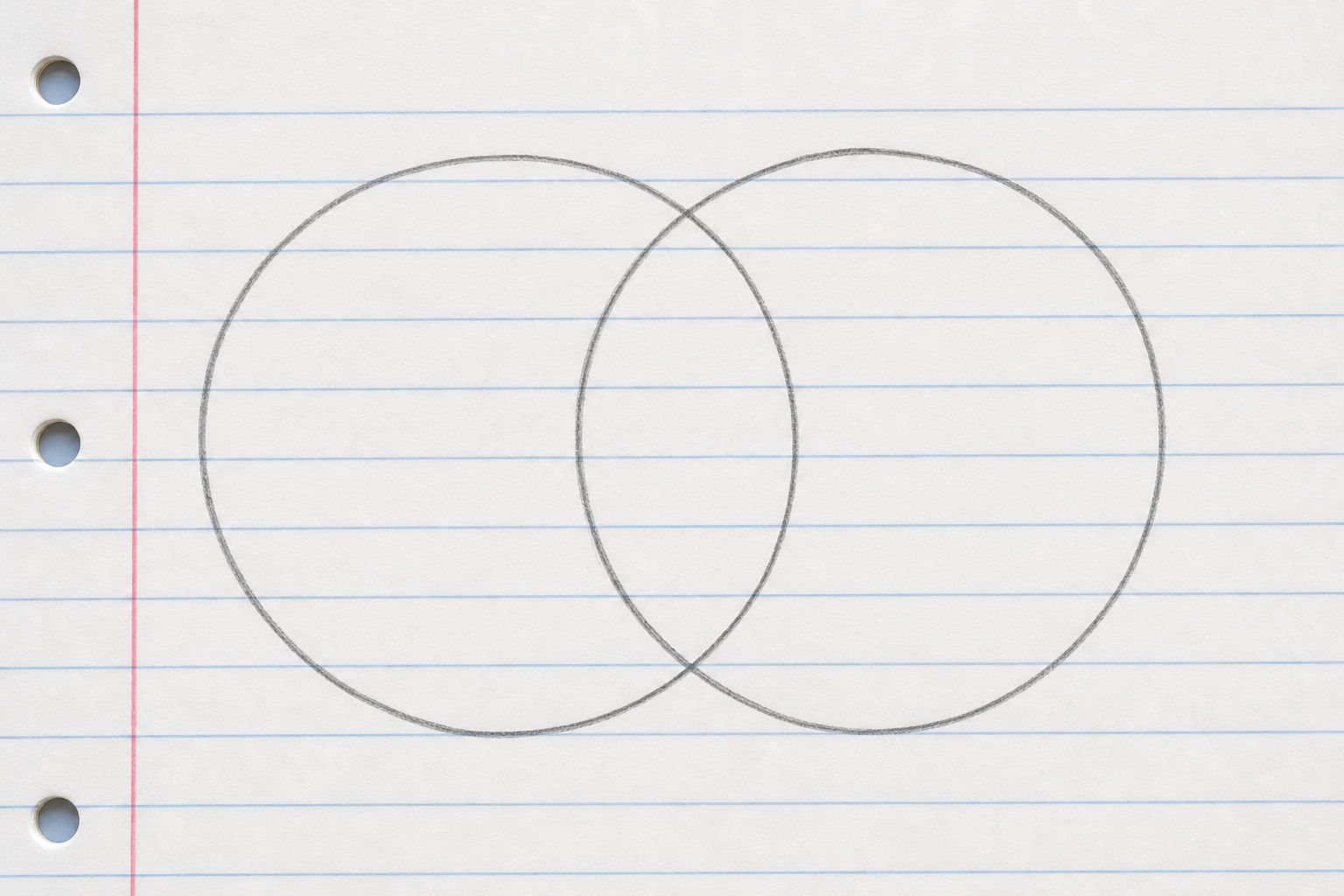
In your maths copy, draw a Venn diagram with two overlapping circles. Label one circle even and the other more than 10. Then write these three numbers into the correct regions, including the overlapping middle:
Think carefully about where 14 goes.
Now you sort at your seats. The grid and the circles are already laid out, so you are only sorting cards, never drawing diagrams.
Three sorts, one at a time. Finish one and stop before the next.
Key point After each sort, write down one card and the region it ended in, and be ready to say why it went there.
You're previewing this lesson. Get full access to this lesson and hundreds more — each one ready to teach, with interactive activities, printable resources and pupil progress tracking built in.