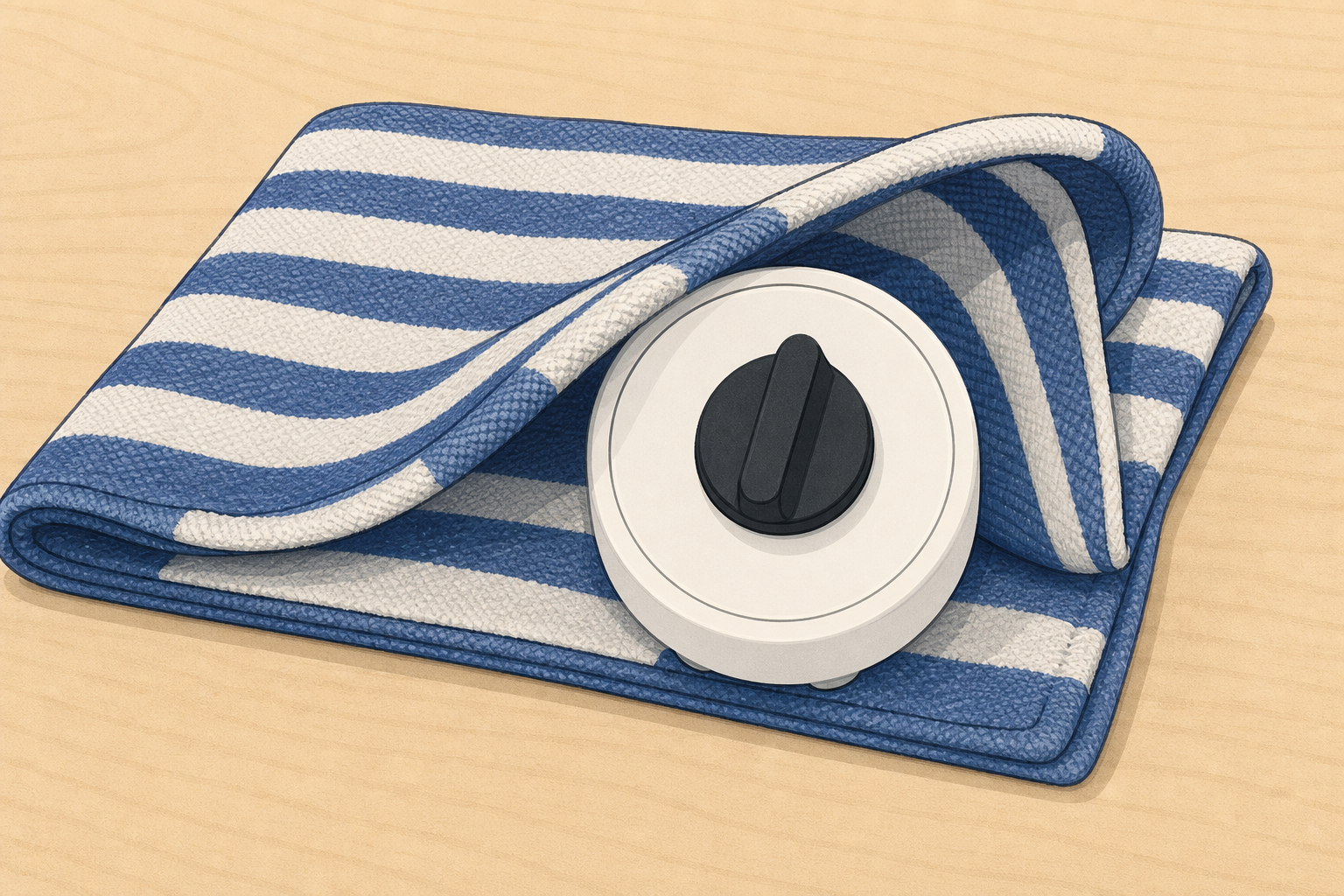
Listen carefully. Can you still hear the timer when it is under this towel?
It was still there, just quieter. So materials must be doing something to the sound.
Some materials let sound through easily. Others muffle it. Today we will find out which materials muffle sound best, using a fair test.
Have one kitchen timer (or phone alarm on a quiet-ish ring) ready on the desk and one thick tea towel or jumper. Start the sound, let the class hear it clearly, then loosely cover it and ask: Is it as loud? Quieter? Almost gone?
After the listen, name the shared surprise in one line (still there, just quieter) before stating the aim. Keep this beat light: one surprising listen and the curiosity question only. Do not hand out materials or name the variables yet.
Key question: If sound can travel through air, can materials stop some of it?
Whisper to your partner: which wrapping will muffle our timer best, a thin sheet or a thick soft layer? Be ready to share one idea.
When we covered the timer, the sound got quieter. That quieter sound is muffling. Sound is a vibration that travels through materials to our ears. Choosing materials on purpose to cut noise is soundproofing.
Lead with the partner whisper, then take two or three quick ideas. Hang the three terms on what pupils just said and on the towel demo, keeping each definition to one short line.
| Concept | Why it matters | Example |
|---|---|---|
| Sound — a vibration that travels through a material (air, cloth, wood) until it reaches our ears | If sound could not travel, we would not hear a timer across the room or a friend calling in the yard | A kitchen timer ticking on a desk: the vibration travels through the air so you hear it from your seat |
| Muffling — when a material absorbs or scatters some sound so less of it reaches your ear | Knowing which materials muffle sound helps us design quieter classrooms, homes and music rooms | A phone alarm wrapped in a thick tea towel is much quieter than the same alarm wrapped in one sheet of newspaper |
| Soundproofing — choosing materials on purpose to reduce how much sound travels from place to place | Engineers and builders pick soft, thick materials when they want less noise to leak through walls or doors | Soft wall panels in a school music room soak up sound so less noise escapes into the corridor |
Misconception to head off: pupils often say sound "disappears" inside a thick wrap. The vibration is still there; the material absorbs or scatters some of it, so less reaches the ear. Prefer "muffled" over "gone". Use "block" only as a brief colloquial synonym once muffling is established.
Nature of STEM cue: choosing materials that muffle sound is everyday engineering, from recording studios to quieter classrooms.
Our theme: which materials muffle a sound best?
With your group, choose three materials from the tray to compare. Predict which will muffle the timer most, and say why. Predictions are the start of the science, not a test to get right.
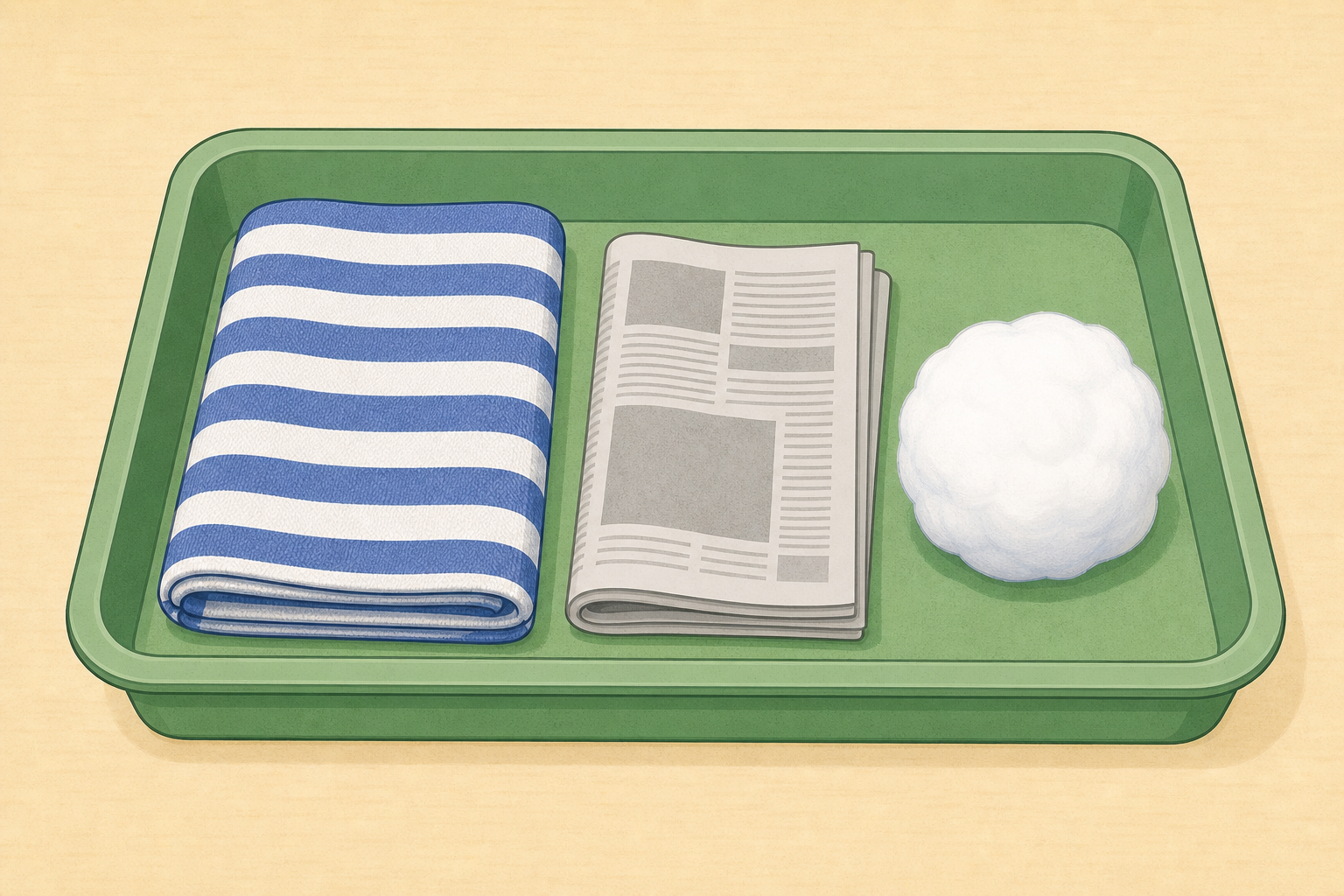
Show the tray of wrapping materials (tea towel or cloth, bubble wrap, newspaper, cardboard, cotton wool or foam packing). Each group picks three to compare. That choice is their open-ended design decision.
Ask groups to say their prediction aloud in one sentence: We think the ___ will muffle most because…
Capture a few predictions on the board without judging them. Remind the class that an unexpected result is useful data.
Differentiation: less confident groups can choose from two pre-shortlisted soft materials and one thin one; confident groups can add a fourth material if time allows later.
Look at the five cards on screen: the wrapping material, how muffled the sound is, the sound source, the listening distance, and how tightly it is wrapped.
Help us sort them. What do we change? What do we measure? What must stay the same to keep the test fair?
When the cards are sorted, write on your Investigation Journal page: your three materials, your prediction, and how you will judge muffling (our class 1–5 scale or rank 1st–3rd). Keep it short so you are ready for the stations.
Before this step: hand out one Investigation Journal page per pupil so desks are ready for the plan write-up.
Drive the fair-test-planner interactive on the IWB in explore mode. Five cards appear: the wrapping material, how muffled the sound is, the sound source, the listening distance, how tightly it is wrapped.
Target placement:
Protected timing inside 10 minutes:
Worked model (say aloud, do not project as a script): I wonder which muffles more, newspaper or a tea towel. I predict the tea towel, because it is thicker and softer. I will wrap the same timer the same way, listen from the same one-metre mark, and score muffling on our 1–5 scale. I keep the timer, the distance and the tightness the same so only the material changes.
If the interactive is unavailable, sort the same five ideas on the board with sticky notes or written cards.
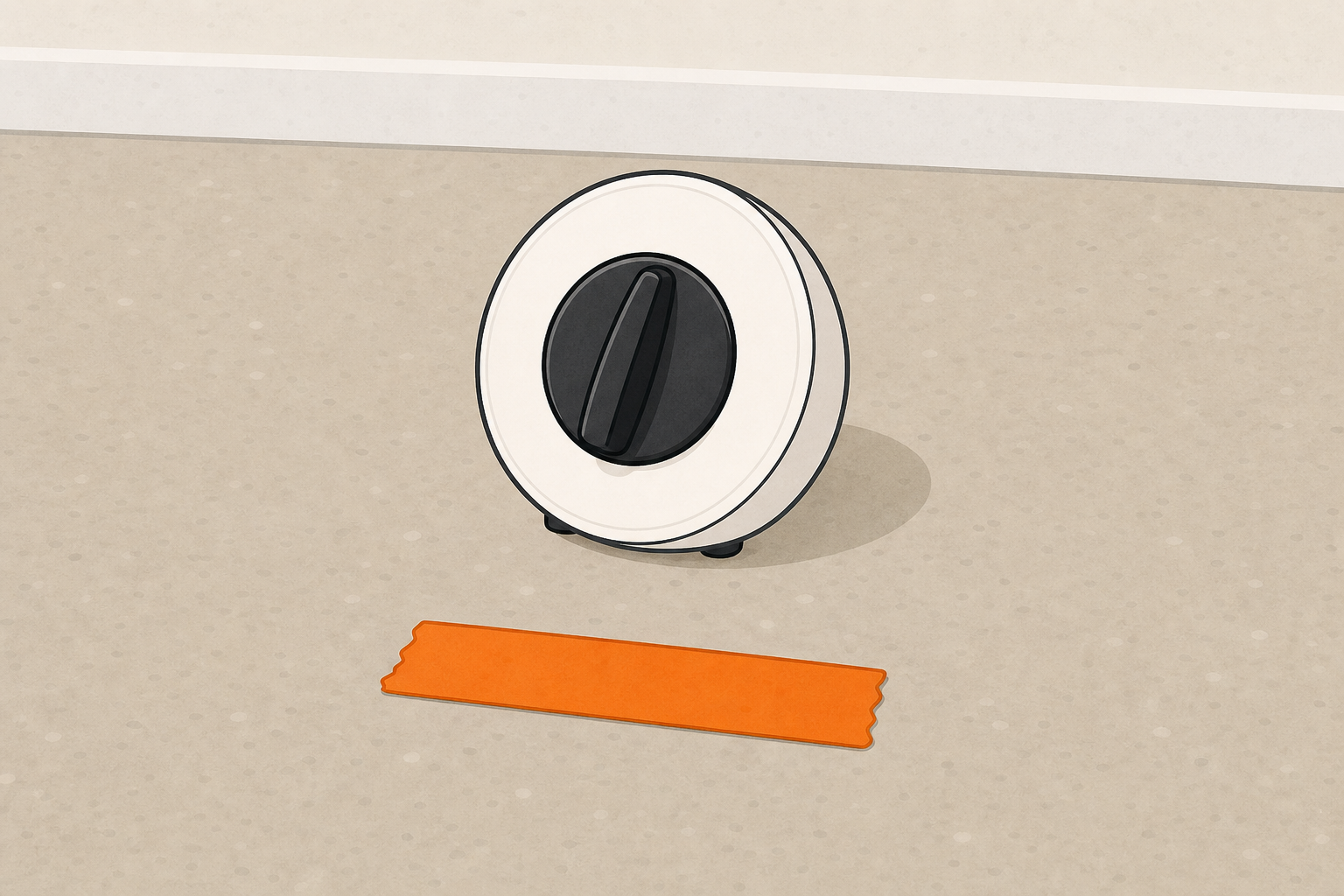
Your group will test at a listening station when it is your turn. While you wait, prepare your three wraps and keep your Investigation Journal page ready.
Class muffling scale (higher = more muffled): 1 = almost as loud as bare, 2 = a bit quieter, 3 = clearly quieter, 4 = hard to hear, 5 = barely hear it. Or rank your three materials 1st–3rd.
1. Start the timer with no wrap and listen from the mark (your baseline).
2. Wrap it in your first material. Keep the wrap about the same tightness each time.
3. Listen from the same marked distance, agree one muffling score, and jot it on your Investigation Journal page straight away.
4. Repeat for your other materials. One agreed score per material is enough.
If every group runs an alarm at the same time, competing sounds drown the measure. Only the station(s) sound. Only one source should sound per station; place two stations as far apart as the room allows and keep volume moderate.
Wrap prep finishes quickly. Once wraps are ready, waiting groups stay in the investigation with a light pacing menu (not a second experiment):
Rotate observers with a quiet hand signal so late groups are not left idle for a long stretch.
Groups run the test they planned with their chosen materials. At the station: baseline listen, then each material once. Core expectation: one agreed score or rank per material, written on the Investigation Journal page immediately. A second trial is extension only if a group finishes early and the station is still free.
Circulate for fair-test talk: same distance, same tightness, same sound-source setting. Coach the score conversation against the board scale ("Was it a 2 or a 3? Why?").
What to expect: thick, soft, airy materials (tea towel, cotton wool, foam, bubble wrap) usually score higher muffling than thin hard ones (single newspaper sheet, thin cardboard). Results can surprise if a material is wrapped loosely.
If results look the same: check the alarm is not too quiet already, that wraps are comparable in bulk, and that listeners are on the mark. Try a slightly louder setting or a clearer baseline listen so differences show.
Safety: do not hold the sound source against anyone's ear. Keep phone volume moderate. No wrapping materials over faces as a joke. Clear floor tape hazards if needed. Stop the alarm fully between groups.
Differentiation: support groups by coaching the score conversation and helping them keep one variable only. Stretch groups that finish early may test one extra material or briefly compare loose vs tight wrap as talk only, still changing one thing.
Timing guide (two stations): with two stations and about six groups, aim for roughly 5–6 minutes per group at a station, including wrap changes and scoring. Keep waiting groups on the pacing menu so the 20 minutes stays full.
You're previewing this lesson. Get full access to this lesson and hundreds more — each one ready to teach, with interactive activities, printable resources and pupil progress tracking built in.