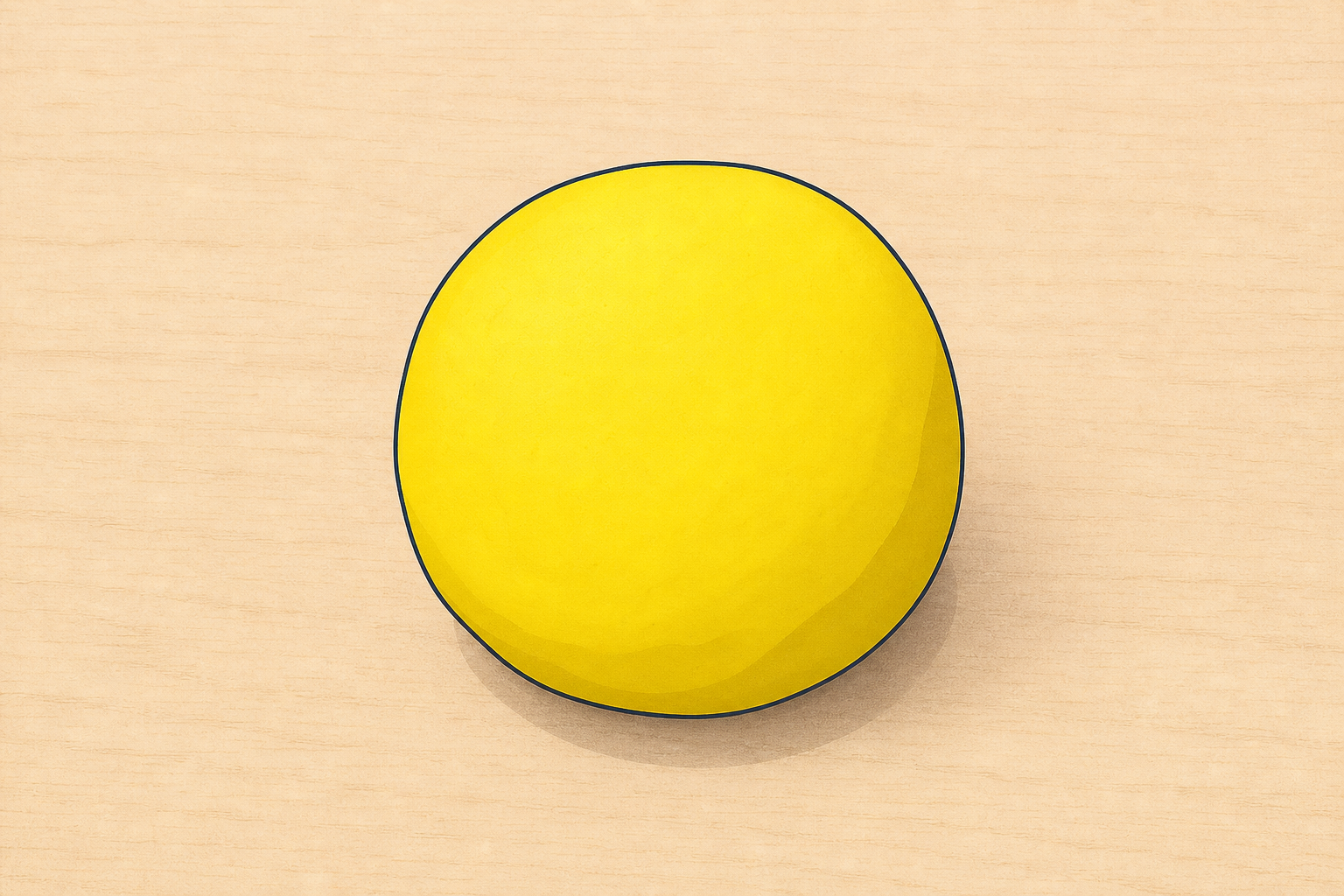
Look! A soft ball of play-dough. What might happen if I give it a big push?
Hold up one smooth ball of play-dough so the whole class can see it. Do not flatten it yet. Ask the hook question and take two or three guesses. Keep the apparatus for the next step. Tone is playful and curious.
Key question: What might happen if I give it a big push?
Today's word: change — when something looks different after we push, squash or bend it.
Will the ball stay round, or will it look different?
Model one full gentle cycle aloud before the children play. Keep language simple: notice, push, change.
| Concept | Why it matters | Example |
|---|---|---|
| Change — when something looks different after we do something to it, like push, squash or bend it | Lots of things we use every day were shaped by pushing and bending soft materials | A round ball of play-dough becomes a flat pancake when you press it with your hand |
I wonder: Will this ball still look round if I push it?
I think: I think it will go flat.
I try: Press the ball firmly once with your palm so the class sees it squash into a pancake.
I noticed: It is flat now. It is not a ball any more.
I think: Pushing changed how it looks.
Misconception to head off: Some children may think the material has gone or been broken. Name that it is still the same play-dough — only the shape changed.
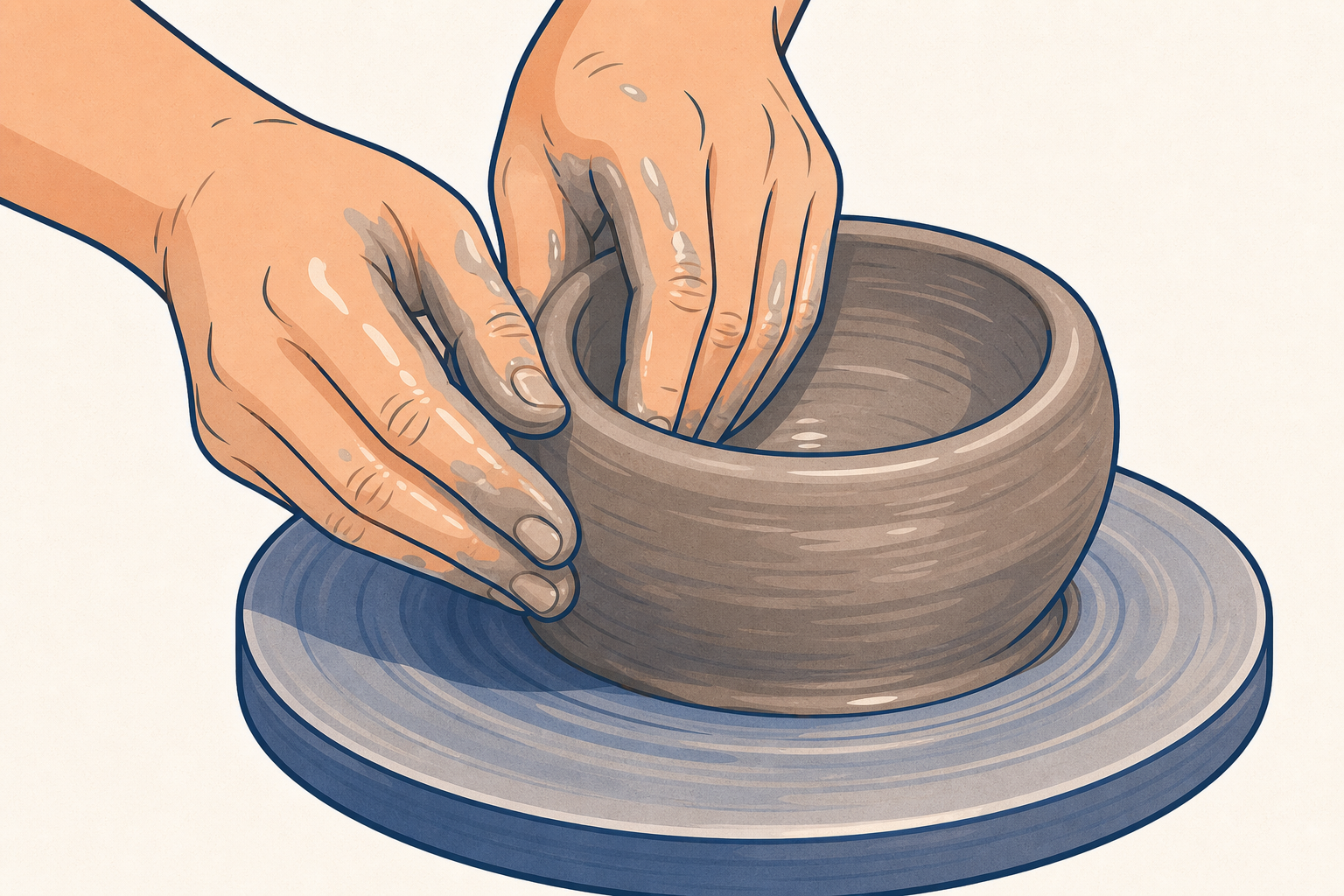
Who helps us: Later, name someone who pushes and shapes soft clay into bowls. Save that weave for the make-sense talk so it does not crowd this beat.
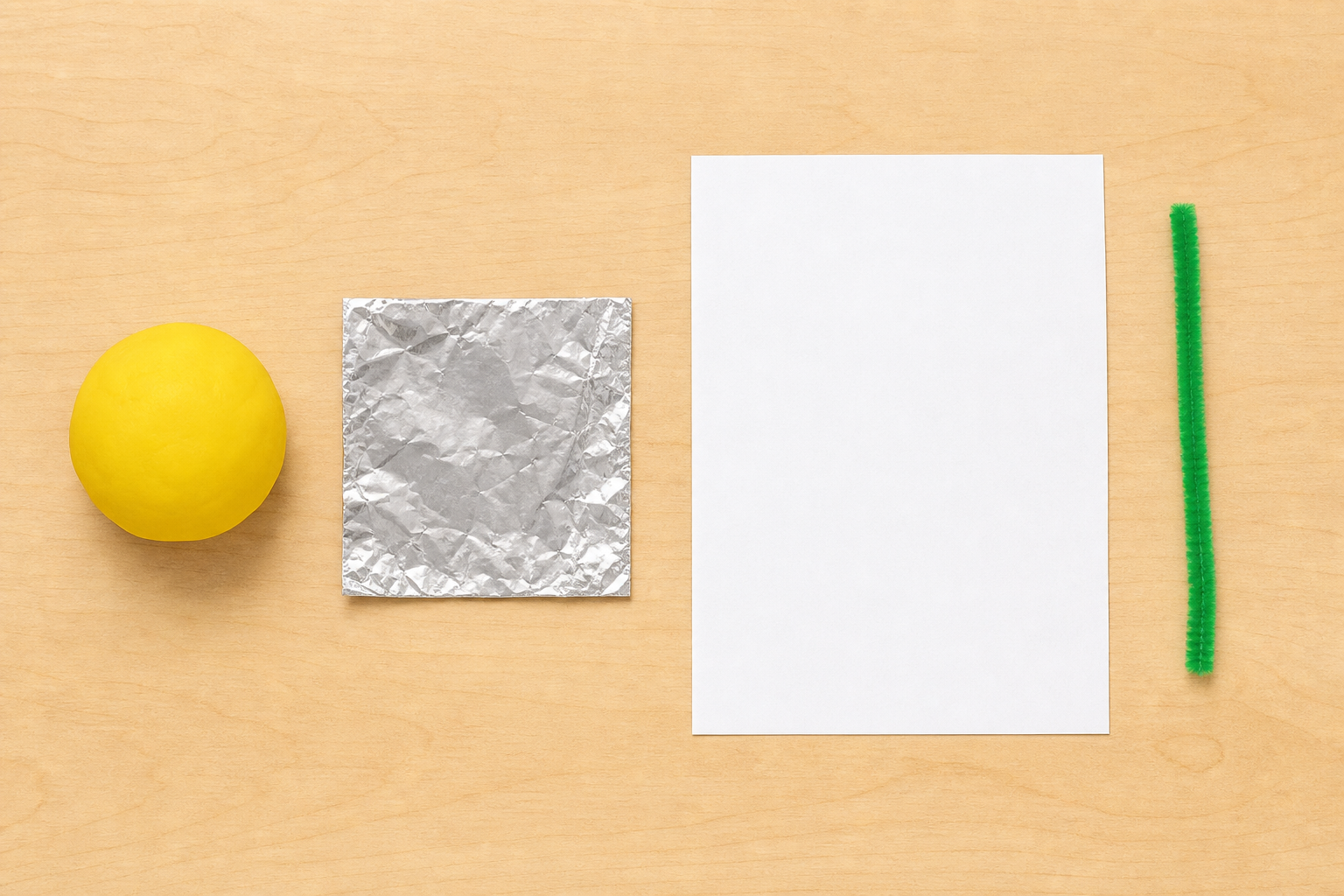
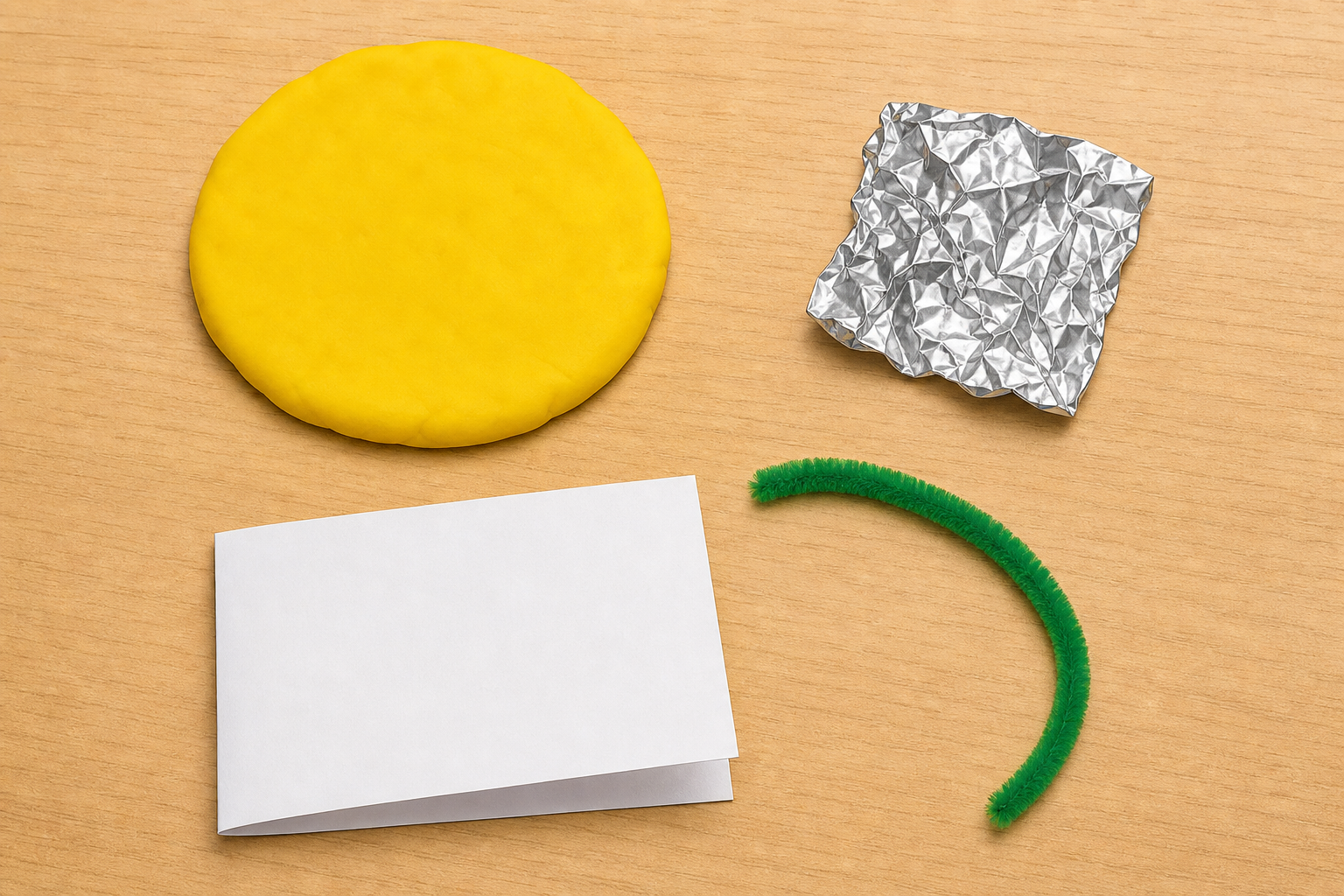
You each have dough, shiny foil, paper and a bendy stick. Push them. What changes?
Portion materials so every child has their own set at their table place: one small play-dough ball, one foil piece, one scrap of paper, and one or two pipe cleaners. Use shallow trays only to hold each child's set at the table if that helps tidy hands, not as rotation stations.
Children stay seated at their tables for the whole exploration. Launch with the board line, then model one push on dough if needed. Circulate and coach. Use two or three short freeze-and-show moments in place (call freeze, invite two children to hold up what changed and name the action: squash, roll, bend or flatten), then resume play. No physical rotation between trays.
Look-fors: children using hands to push; children saying the shape looks different; children trying more than one material.
Differentiation: Offer a child who is unsure just the play-dough and one action word (squash). Confident children can try to make a little bowl or snake and say what they pushed.
Safety: Materials stay out of mouths. Pipe-cleaner ends point away from faces. Wipe tables if dough crumbs build up.
Hold up one thing you changed. Tell us: what did you do, and how does it look now?
Gather on the carpet with trays left at the tables. Invite four or five children to hold up one changed piece and say one short sentence. Revoice with the word change: You pushed it, and the shape changed.
Keep the whole carpet folded in between each share. After a child shows, ask the class a quick choral or gesture response, for example: Did it change? Thumbs up if yes. Or: What did their hands do — squash, roll or bend? Whisper the word. Or: Echo with me: it changed.
Prompts for the speakers:
Keep this oral. There is no Investigation Journal page today. If a child wants to point rather than speak, that is enough.
What to expect: Many will show a flat pancake or a rolled sausage of play-dough. Foil often stays scrunched. Paper keeps creases. Name that different soft things change in different ways, still without testing language.
When we push, squash or bend soft things, they can look different. That is change.
Someone who makes bowls pushes soft clay so we can use them. What did your hands change today?
Display-only oral close. Revoice the big idea in the same child words used in play: When we push, squash or bend soft things, we can change how they look. The dough (or foil, paper, bendy stick) is still there — the shape is different.
Who helps us (no prop required): Say: This kind of bowl started as a soft lump. Someone pushed and shaped the soft clay so we can use the bowl. If you happen to have a small clay or ceramic bowl or a clear photo, hold it up while you say the line; the beat still lands if you do not. Do not rely on the bare word potter alone.
Prompts:
Misconception: If someone says the play-dough is "gone", hold the pancake and the leftover crumbs and say it is the same dough in a new shape.
You're previewing this lesson. Get full access to this lesson and hundreds more — each one ready to teach, with interactive activities, printable resources and pupil progress tracking built in.