Look at these three puzzles on the board. How would you send a message across the room without speaking? How would you lift something heavy with less effort? How would you stop an ice cube melting?
People in Ireland once faced problems just like these. Today we will try to crack them ourselves.
Keep this light. Do not hand out station kits or name the historical breakthroughs yet. Point at the three puzzle phrases on the board and take two or three quick guesses only.
Before the lesson:
Key question: What problem would you most want to solve if you were an engineer?
Every big change in how we live started as someone trying to solve a problem with what they had, just like you will at the trays.
Today's words: STEM: Science, Technology, Engineering and Maths working together to solve real problems. Engineering challenge: a problem you try to solve with limited materials and a clear goal.
Look back at our three puzzles on the board. Which puzzle are you most excited to crack, and why?
Project only the short board text. Use the table below yourself; do not project it. Save the word breakthrough for the reveal step after stations, when the Ireland stories give it something concrete to hang on.
| Concept | Why it matters | Example |
|---|---|---|
| STEM — Science, Technology, Engineering and Maths working together to solve real problems | Real jobs in Ireland rarely use just one of these; builders, nurses, farmers and coders blend them every day | A weather app uses science (how weather works), technology (phones), engineering (the system) and maths (the numbers) |
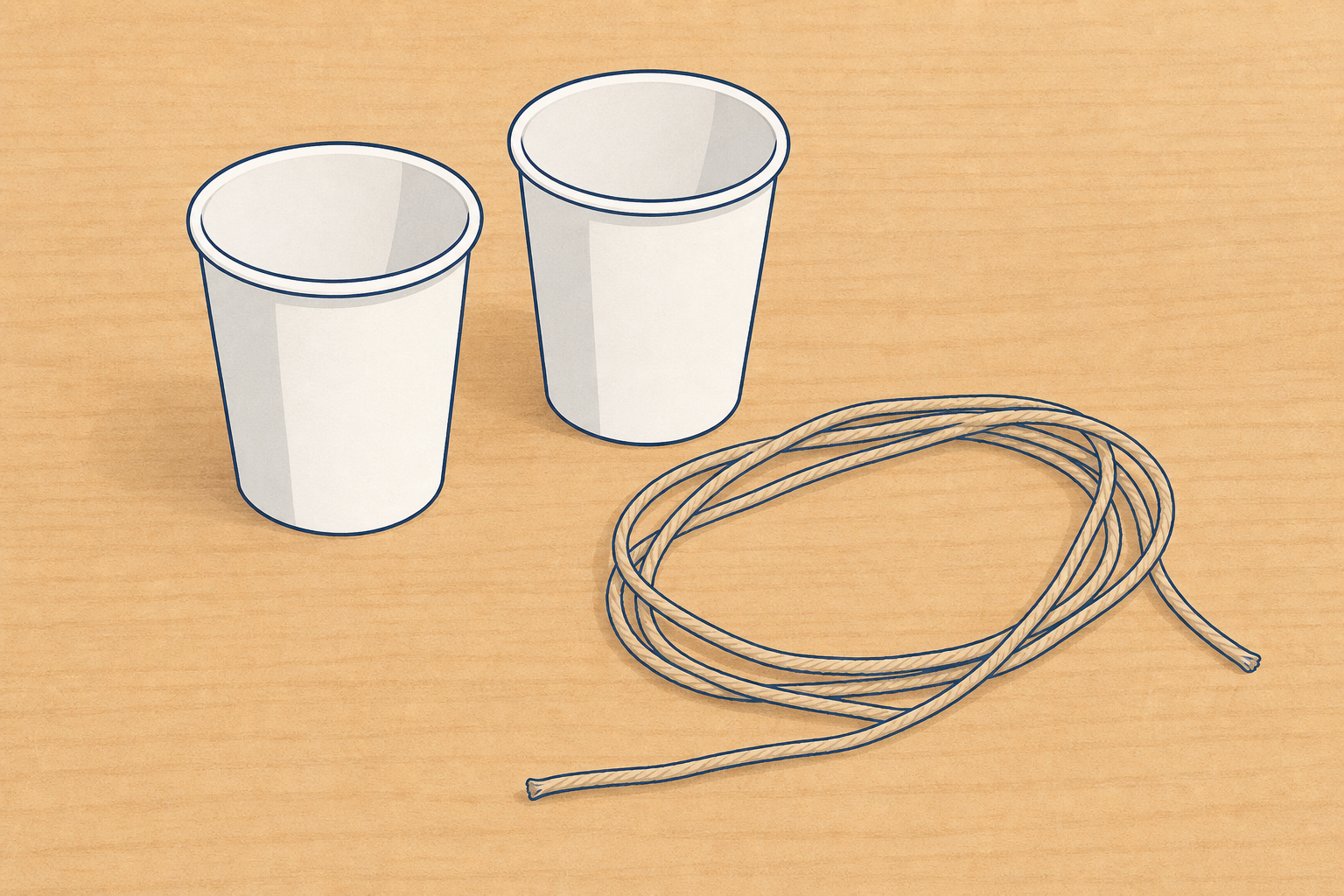
| Engineering challenge — a problem you try to solve with limited materials and a clear goal | Limits force you to think, not just grab more stuff; that is how many real inventions start | Sending a message with only two cups and a length of string |
Modelled investigation (do this live before stations, about two minutes, thinking aloud). Use the separate demo cups and string, not the message-station tray:
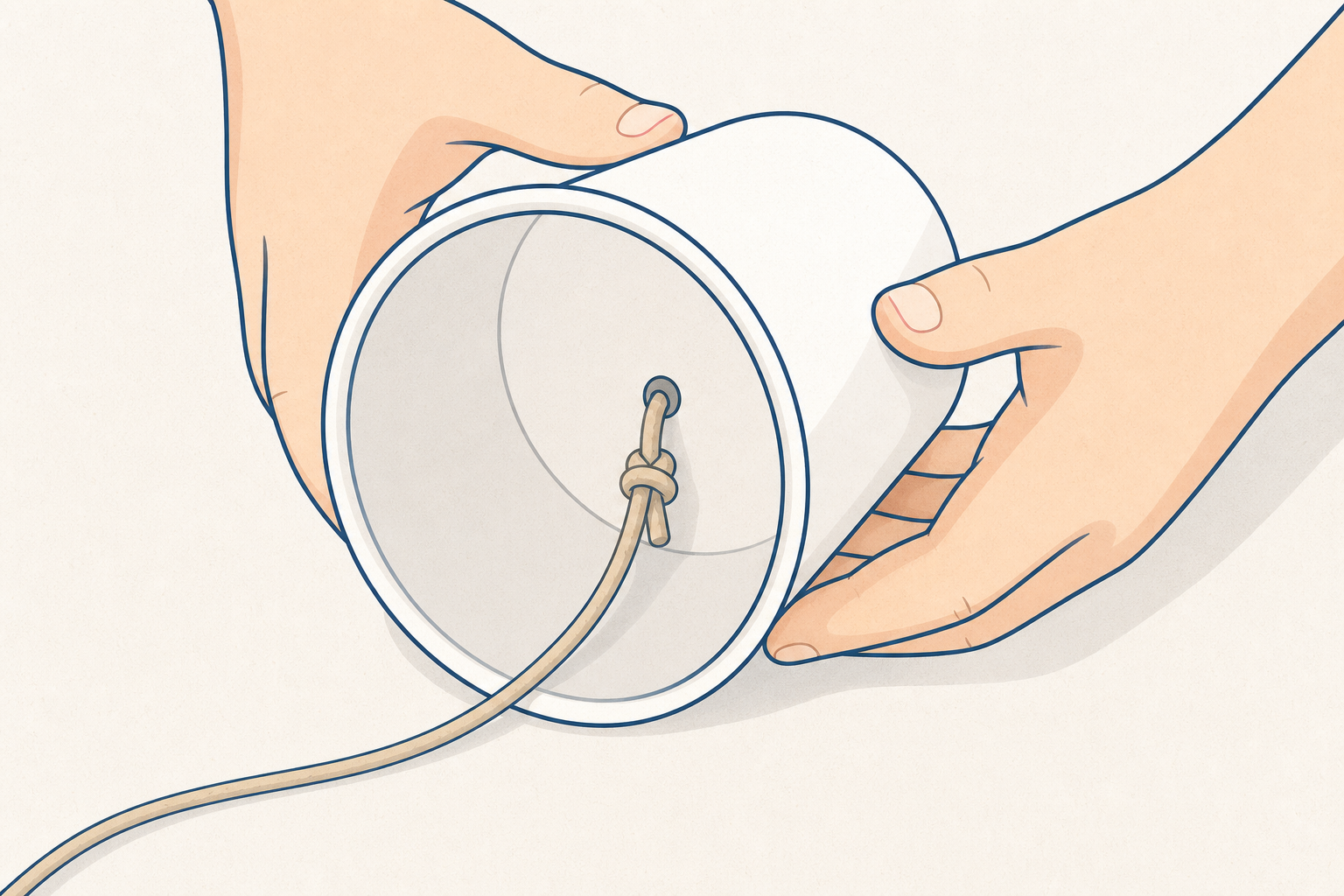
I wonder whether a short piece of string between two cups will carry a whisper better than a long floppy one. I predict the short, tight string will work better because the cup will shake the string more clearly. I test by whispering the same word into each set-up while a pupil listens. I observed that the tight short string carried the word; the loose long string did not. I think the idea that worked was keeping the string tight so the wobble could travel.
Misconception to head off: STEM is not only for scientists in white coats. Name everyday Irish examples: a mechanic fixing a tractor, a chef choosing a pan that heats evenly, a nurse reading a pulse.
Ask: Where have you already solved a problem like an engineer at home or in the yard?
After the model, hand out Investigation Journal pages so pupils can jot at each station.
Your group will visit three stations. At each one, read the challenge card, use only the kit on the tray, and try to crack the problem.
At every station: try, agree what worked, jot one short note on your journal page, tidy on the signal. You have about seven minutes at each stop, including tidy and move. Be ready to tell the class later what idea worked and why you think it worked.
Set three shared station trays (message, lever, ice). Print one challenge card per station (texts below). Plan rotations for about six groups of four so each group visits all three stations (about seven minutes per stop, including a 30-second agree-and-jot and a one-minute tidy and move). Two groups share each stop: one handles the kit while the other watches; fold watchers in with questions rather than a separate desk task. If you have spare kit and space, set a second tray of each type so more hands are on materials.
Ice fairness (important): Keep spare same-size cubes in an insulated cool bag or small cooler at the teacher's desk. Issue two fresh cubes only when a group arrives at the ice station. One cube stays bare; one may be wrapped. Compare after about three minutes within the stop (look and gentle feel of meltwater, not a long wait). Collect used cubes, wipe the tray, and issue a new pair to the next group from the cooler so later rotations are not stuck with already-melting ice.
Card A — Message across the room: Your challenge is to send a short spoken message from one side of your station to the other without the listener reading your lips. You may use only the paper cups and string on the tray. Decide how to set them up, try it, and note which set-up worked best.
Card B — Lift with less effort: Your challenge is to lift the small weight off the desk using less effort than lifting it straight up with one hand. You may use only the rulers and pencil on the tray. Try different pivot points. Note which arrangement made the lift feel easiest.
Card C — Keep the ice: Your challenge is to slow down how fast an ice cube melts. You may wrap or cover one ice cube using only the materials on the tray. Leave a second ice cube bare as your comparison. After a few minutes, compare them and note which wrapping helped most.
Rotate groups on a clear signal. Before they leave each tray, give 30 seconds: Agree the idea that worked. Jot one phrase or tiny sketch on your journal page (idea that worked / I noticed). At each station ask: What are you changing? What are you keeping the same? What tells you it is working? Fold watchers in: Do you think their idea will work? What would you try next?
What to expect: Message station works best with tight string and cups held taut. Lever station feels easiest when the pivot is closer to the load and the effort arm is longer. Ice station: wool or bubble wrap usually wins because they trap air. Foil alone conducts heat; it only helps if it traps a layer of air (for example loosely crumpled or over another wrap). Stress the bare comparison cube and the trapped-air idea. Results vary with room warmth; that is useful talk, not a failure.
If a station stalls: give one hint only (tighten the string; move the pencil pivot; trap air in the wrapping) then step back.
Safety: no string around necks; weights stay low over the desk; wipe meltwater at once; no tasting ice.
Open your Investigation Journal page. You already jotted at each station. Now make sure all three challenges are clear.
For each station use these stems: Idea that worked… and I noticed… Add a short I think… only if you have time.
Pupils record on the paper Investigation Journal page only. The mid-station jots should already hold the main ideas; this step tidies and fills gaps so the first station is not forgotten.
Prompt the stems aloud from the board: Idea that worked… I noticed… I think… (optional). Avoid abstract talk about separating saw from mean; the stems do that job in plain words.
Circulate and check that groups have something concrete for all three stations, not only their favourite one. Fast finishers add one improvement they would try next time for their weakest station.
Do not describe journal layout; the page is generated from this lesson. Just say what to record.
Each group will share one station only, in one short sentence: name the challenge, the idea that worked, and one thing you noticed. Listen for ideas your group did not try.
Keep shares to one sentence each (about 20–30 seconds). Assign stations so the class hears all three challenges covered; you do not need every group on every station. No peer-feedback round in this slot; if time allows, invite one stolen idea from the class after the last share.
Revoice useful language: tight string, longer effort arm, trapped air, comparison ice cube.
If two groups disagree about the best wrapping, treat that as good science talk: What was different about your tests?
You're previewing this lesson. Get full access to this lesson and hundreds more — each one ready to teach, with interactive activities, printable resources and pupil progress tracking built in.