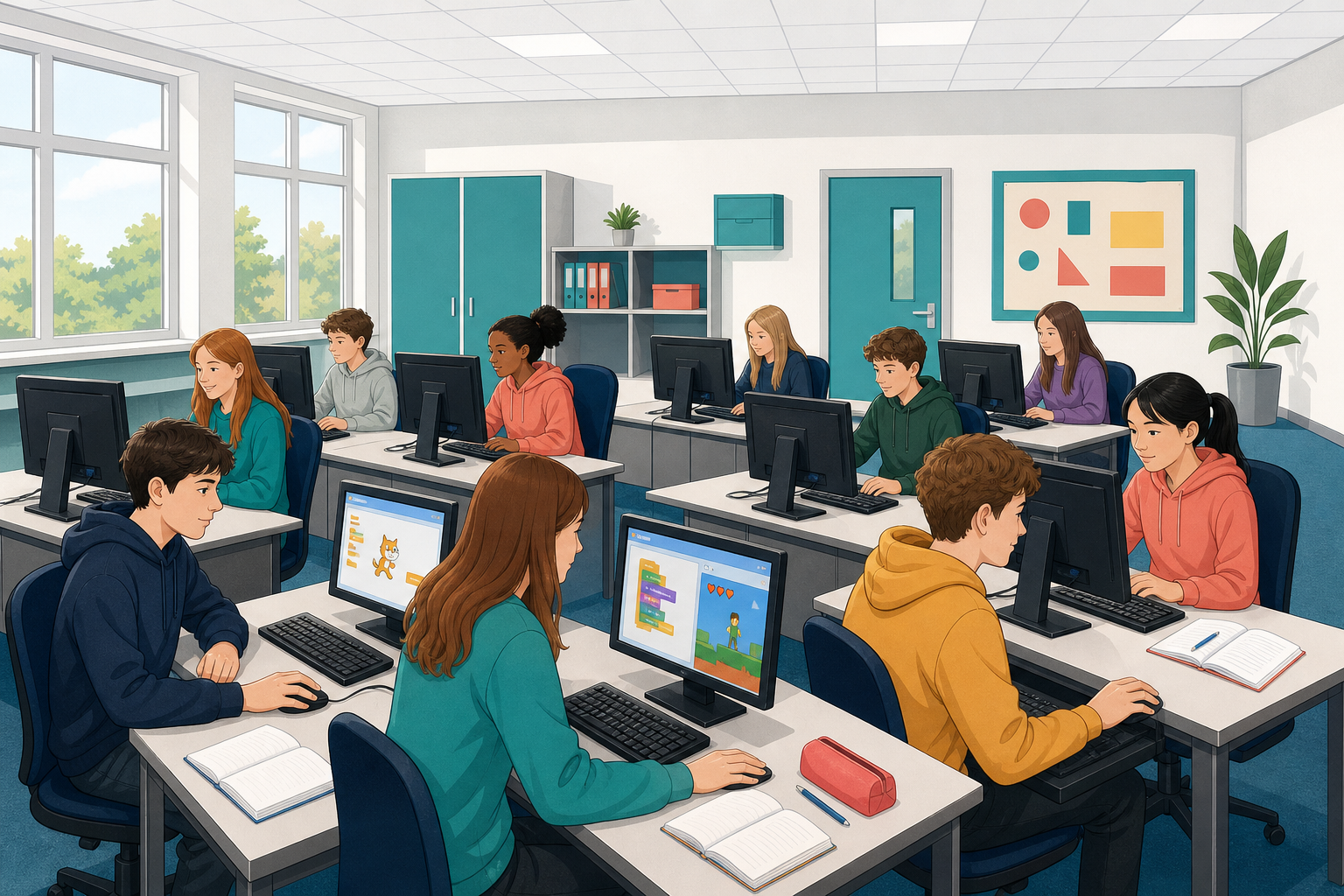
 You have built Scratch programs, planned with pseudo-code and flow charts, made arcade games, evaluated each other's work, and looked at what is inside a computer and what computing means in the world. Today you put all of that together in one build of your own choosing: plan it, make it, test it, then show it and improve it from feedback.
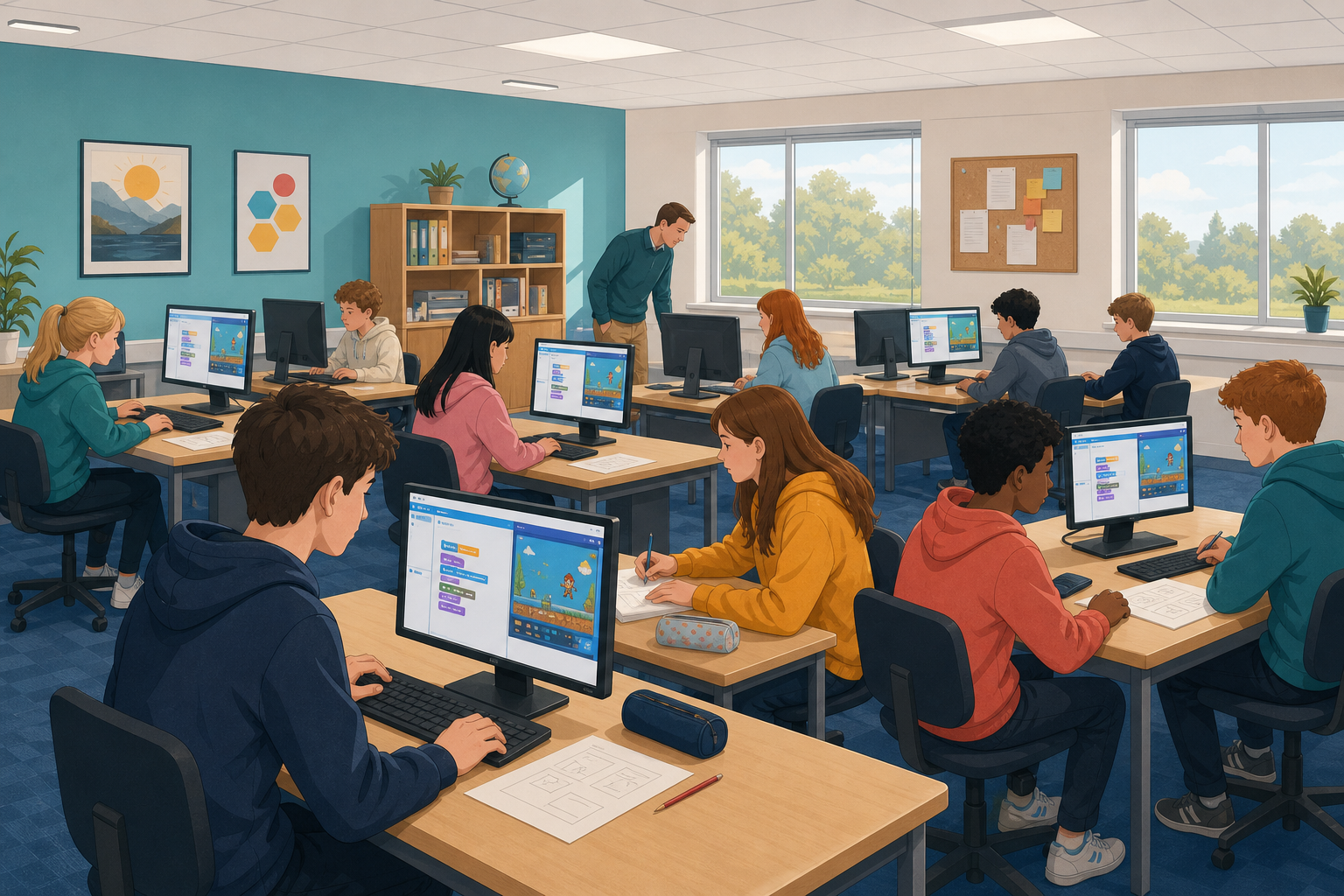 Your challenge is a small build you can finish in this lesson. Follow this order:
- Choose something small: a short quiz, a sprite that reacts in two different ways, a mini collector with a score, or one new feature on a game you already have.
- Plan first with either pseudo-code or a flow chart. Write the goal, the main steps, and any decision (if / else) you will need.
- Build it in Scratch or MakeCode Arcade, matching your plan.
- Test and debug as you go. When something breaks, use the routine: read the symptom, find the block or line, form a hypothesis, test it, revert if wrong.
- Show your build to a partner (or a group of three if needed), take one piece of feedback, and make that one change.
Done looks like: a short plan, a program with at least one working path that matches the plan (even if rough), one bug you found and fixed (or one test that passed cleanly), and one change made from feedback.
Scope example (mini collector):
- Goal: player picks up coins; score goes up; win at 5
- Step 1: set score to 0 when the program starts
- Step 2: move the player with arrow keys
- Step 3: when player touches coin, change score by 1 and hide coin
- Decision: if score = 5 then show You win, else continue
Bug I fixed: score stayed at 0 because change-score was outside the forever loop; I moved it inside so it runs on every touch.
Work through the challenge up to a working first version. Aim for plan plus one working path that matches it, even if the rest is still rough.
- Write your plan as pseudo-code or draw it as a flow chart. Keep it short. Use this frame if it helps:
- Goal: what the build should do
- Step 1
- Step 2
- Step 3
- Decision: if … else …
- Open Scratch or MakeCode Arcade. Start a new project, or open a saved game if you are adding one feature. If your earlier work is missing, start fresh from your plan.
- Build the program so it matches the plan. Use variables, loops, decisions or events where they help, not for show.
- Before you run it the first time, pause and say what you expect to happen. Then run it. When something is wrong, use the debugging routine: read the symptom, find the block, form a hypothesis, test it, revert if wrong.
- Checkpoint: about halfway through this block you should already have run the program once. If you have not, cut the scope now to one goal and one decision so a first run is working before you save.
- Save your project the class way before the share round.
By the end of this step you should have a short plan and a program that runs at least one clear path and roughly matches the plan.
Unlock the full learning experience
You're previewing this lesson. Get full access to this lesson and hundreds more — each one ready to teach, with interactive activities, printable resources and pupil progress tracking built in.
This lesson is copyright of Coding Ireland 2017 - 2026. Unauthorised use, copying or distribution is not allowed.