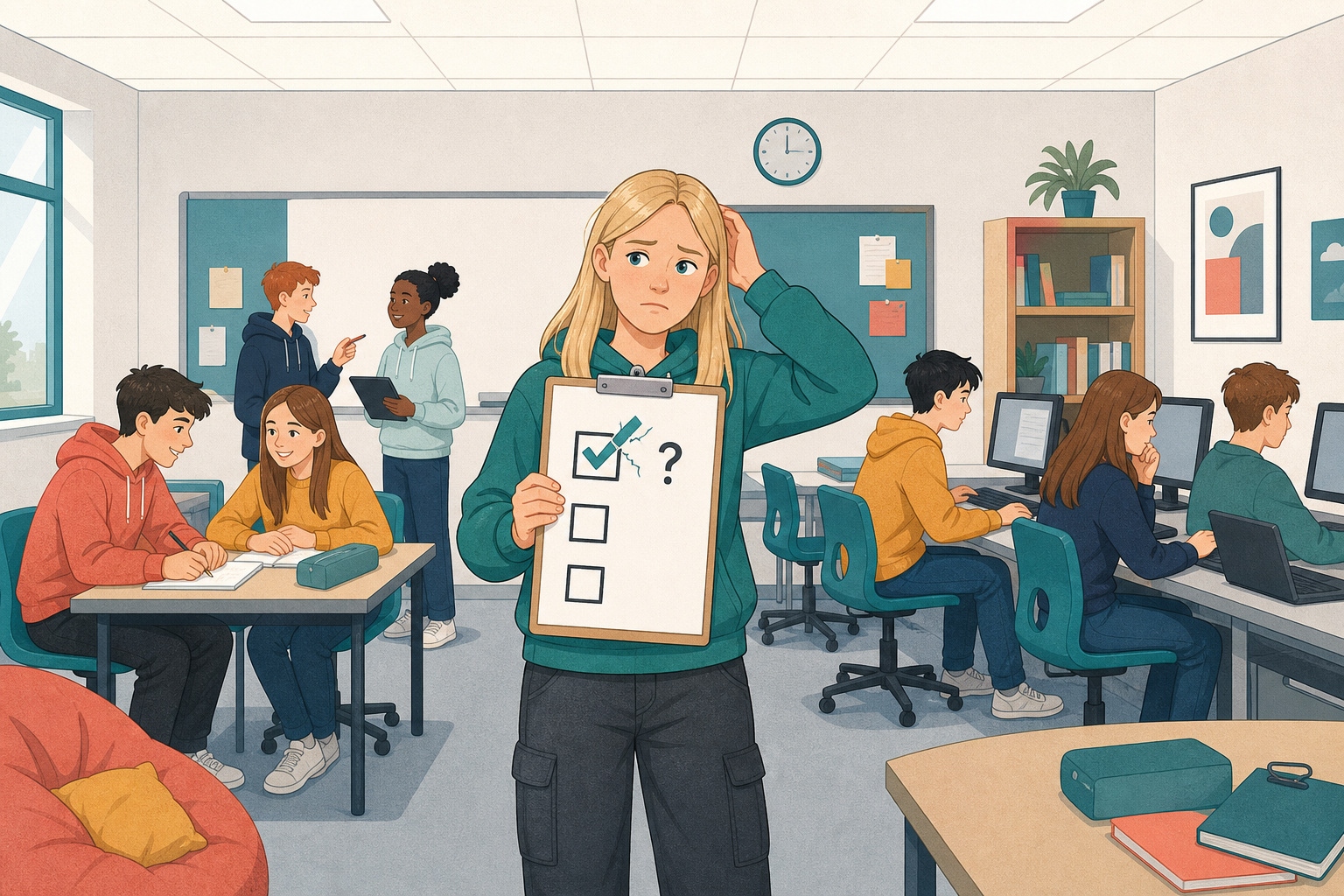
 You built a checklist. Today you get to attack it.
Your group's job is to build a source that passes every single check on that list and still should not be trusted. Then it goes to another group, who run the checklist on it and find out the hard way.
Everything you build is invented: no real outlets, no real people, no real products. It stays in this room.
Your class checklist is on the board, in the wording you agreed. Read it once and read it as an attacker would.
- Give it what it asks for. It wants a named author, so give it one. It wants a date, give it a date. Every box ticked, nothing behind them.
- Be honest about the small thing. A source that admits one limitation looks like a source that has admitted everything.
- Look right. Clean design does more for trust than any evidence on the page, and no checklist ever asks about it.
Which of your checks can be satisfied without the source being any more trustworthy than before?
Every picture in the library says whether it is free to reuse, needs a credit, or is off limits. One of them will refuse to be used. Check before you place, and open Credits at the end for anything that needs crediting.
In your group, you are going to build a news-style card on screen that ticks every box on the class checklist and still should not be trusted. Hidden inside it there will be one rot: a single thing that should stop a careful reader trusting the card, which your checklist never thinks to ask about. The full task is in the activity below.
Build a source that beats the checklist
Sources swap: move to the screen your teacher sends you to. You are holding another group's card and your own checklist.
- Run every check. Mark each one pass, fail or no steer, and note the line on the card that decided it.
- Give your verdict: trust it, check it further, or do not rely on it.
- If you found the rot, name it. If you did not, say so honestly and hand back.
Then the authors read out their answer key.
For every rot that got through, one sentence: what question would the checklist have had to ask to catch it? That sentence is what you are about to add to the list.
Every rot that got through is a hole in the list, and now you fill them. In the activity below you will:
- Take the sentences on the board, one at a time.
- Agree the smallest wording change that would have caught it: a new check, or a sharper version of one you already have.
- Only adopt it if it would have changed a call on one of today's cards. If it would not, it is not earning its place.
- Save the improved checklist the class way, so later work uses this version and not the old one.
Mend our source-evaluation checklist
Unlock the full learning experience
You're previewing this lesson. Get full access to this lesson and hundreds more — each one ready to teach, with interactive activities, printable resources and pupil progress tracking built in.
This lesson is copyright of Coding Ireland 2017 - 2025. Unauthorised use, copying or distribution is not allowed.