Mathematics
Intermediate
50 mins
Teacher/Student led
+65 XP
Teacher-led from the board. Pupils do not need a device, but can follow on one.

Subtracting Decimals
Learn to subtract decimals by lining up the decimal points, adding trailing zeros, and regrouping tenths into hundredths using the same ten-for-one trade you already know.
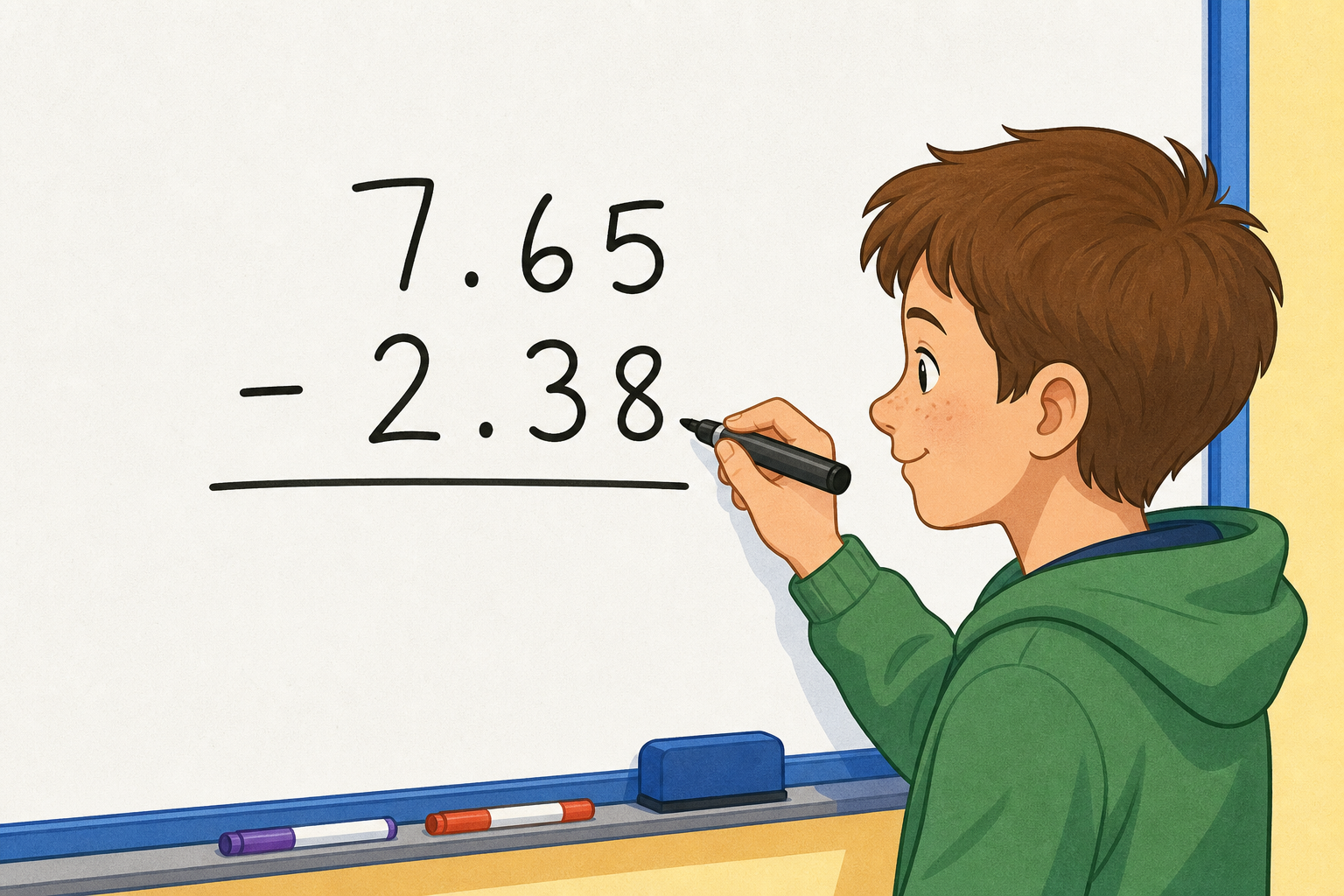 Here is a subtraction laid out ready to work:
 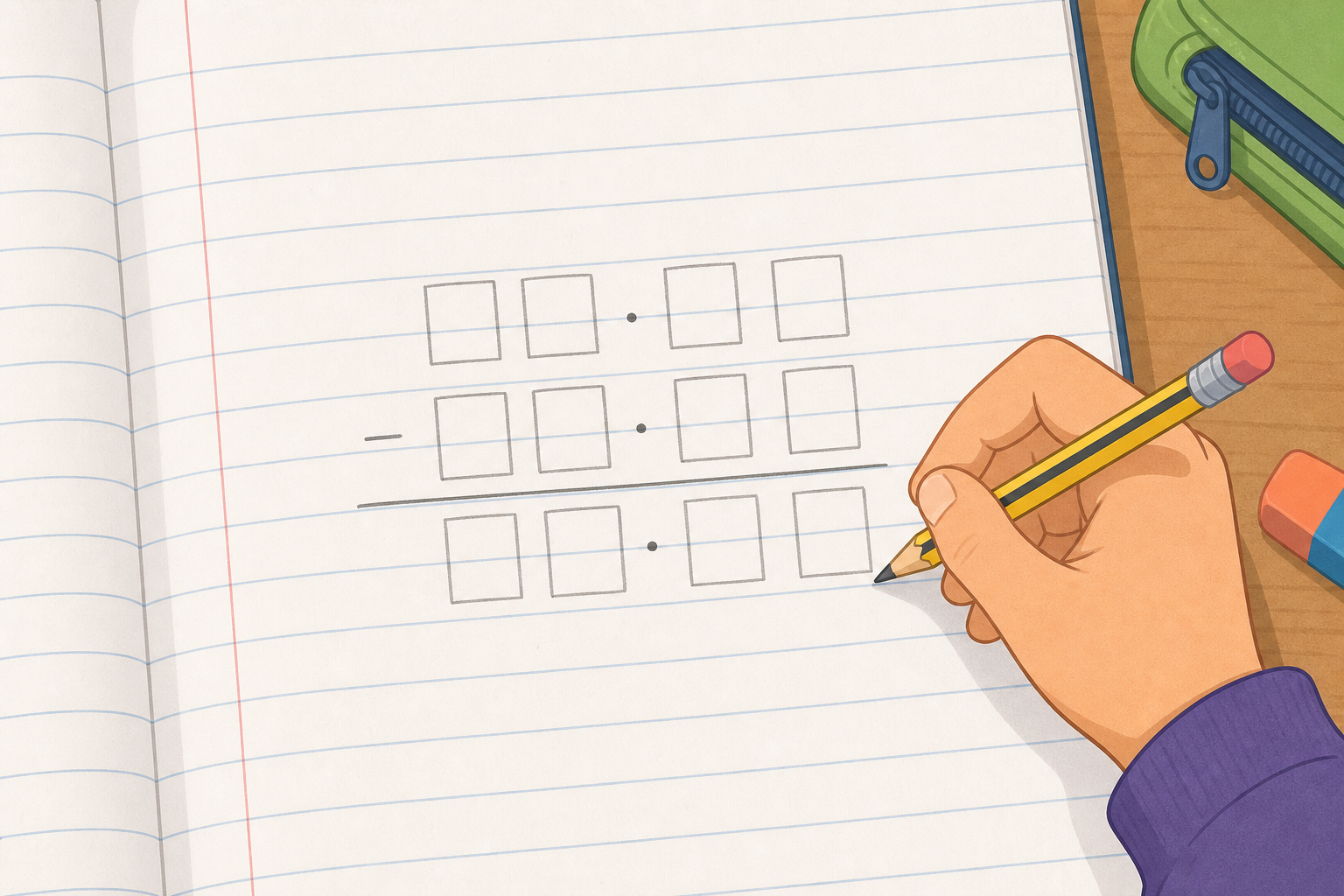 In your maths copy, set up each of these decimal subtractions vertically, with the decimal points lined up in one straight column. Write in any trailing zeros you need so both numbers have the same number of decimal places.