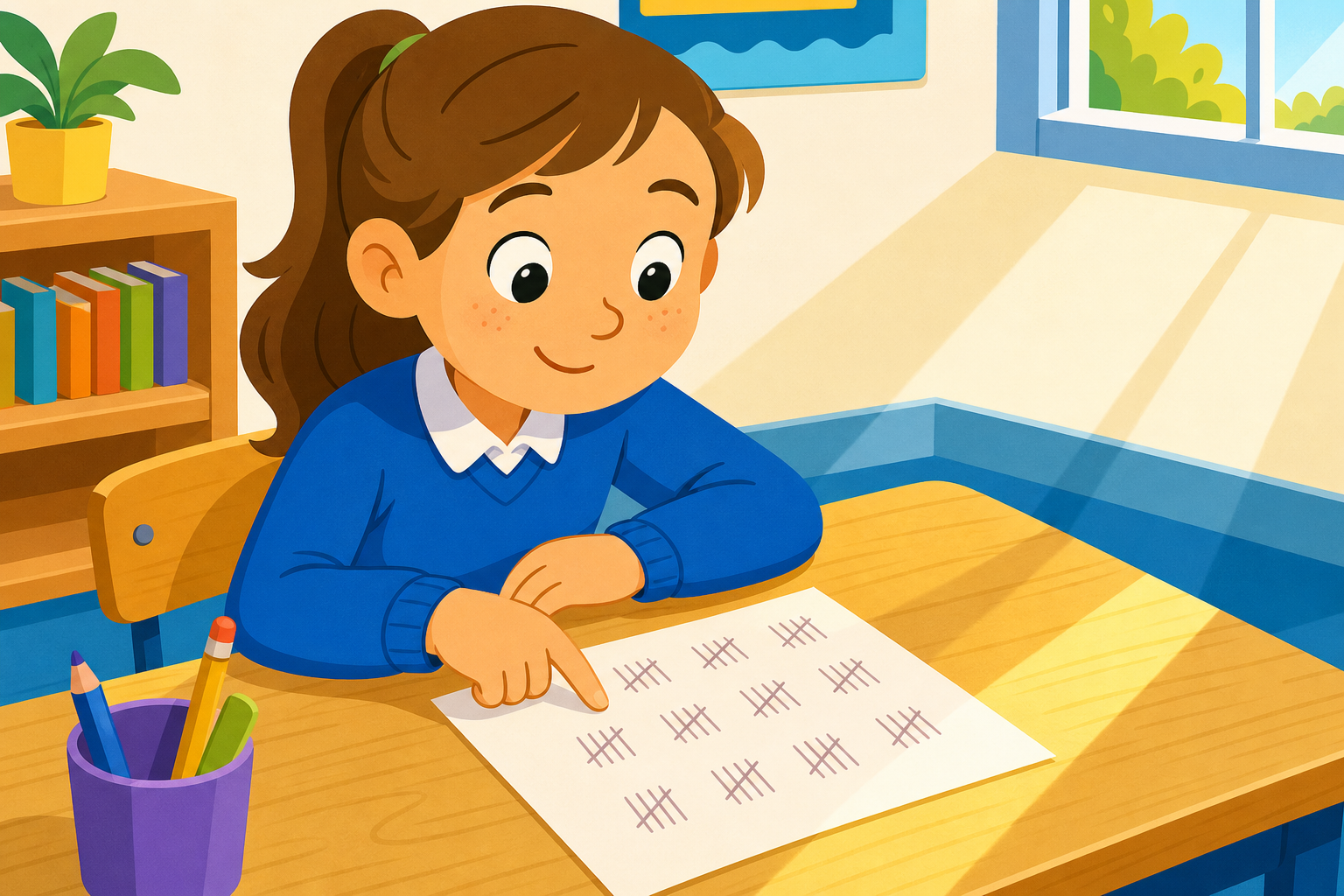
Here is a finished tally of our class's favourite school dinners, all the marks filled in. Look at it for a moment. How many children chose each dinner? And here is the real question: how did you count those gates of five so fast?
A gate of five is four upright strokes with one laid across them; the frequency is just how many marks are in the row. Watch as we turn each tally row into a frequency number. Count the full gates of five first, then add on the single marks left over.
Today we work through a real class tally together: turn each row of marks into its frequency number. We will count every full gate of five aloud before we check it, and then read off which playground game won.
In your maths copy, copy the tally chart from the board and add a frequency column. Write the number for each row beside its marks, counting the gates of five first. When you are finished, underline the row with the most.
Now we work out the frequency for some rows described to us in words, then add them all up. First a row with four single marks and no full gate yet, then a row with one gate and four more, then a row with two gates and three more, and finally the total of all three rows added together. We will say how we worked out each number before checking it.
Work out the frequency for each described tally row, then find the grand total of all the rows added together.
Ways to start:
Stretch:
How does a frequency table make it quicker to see which answer won than looking at the tally marks alone? What did the numbers tell you at a glance that the marks did not?
Next we will turn our frequency numbers into a pictogram, where one little picture stands for each thing counted.
You're previewing this lesson. Get full access to this lesson and hundreds more — each one ready to teach, with interactive activities, printable resources and pupil progress tracking built in.