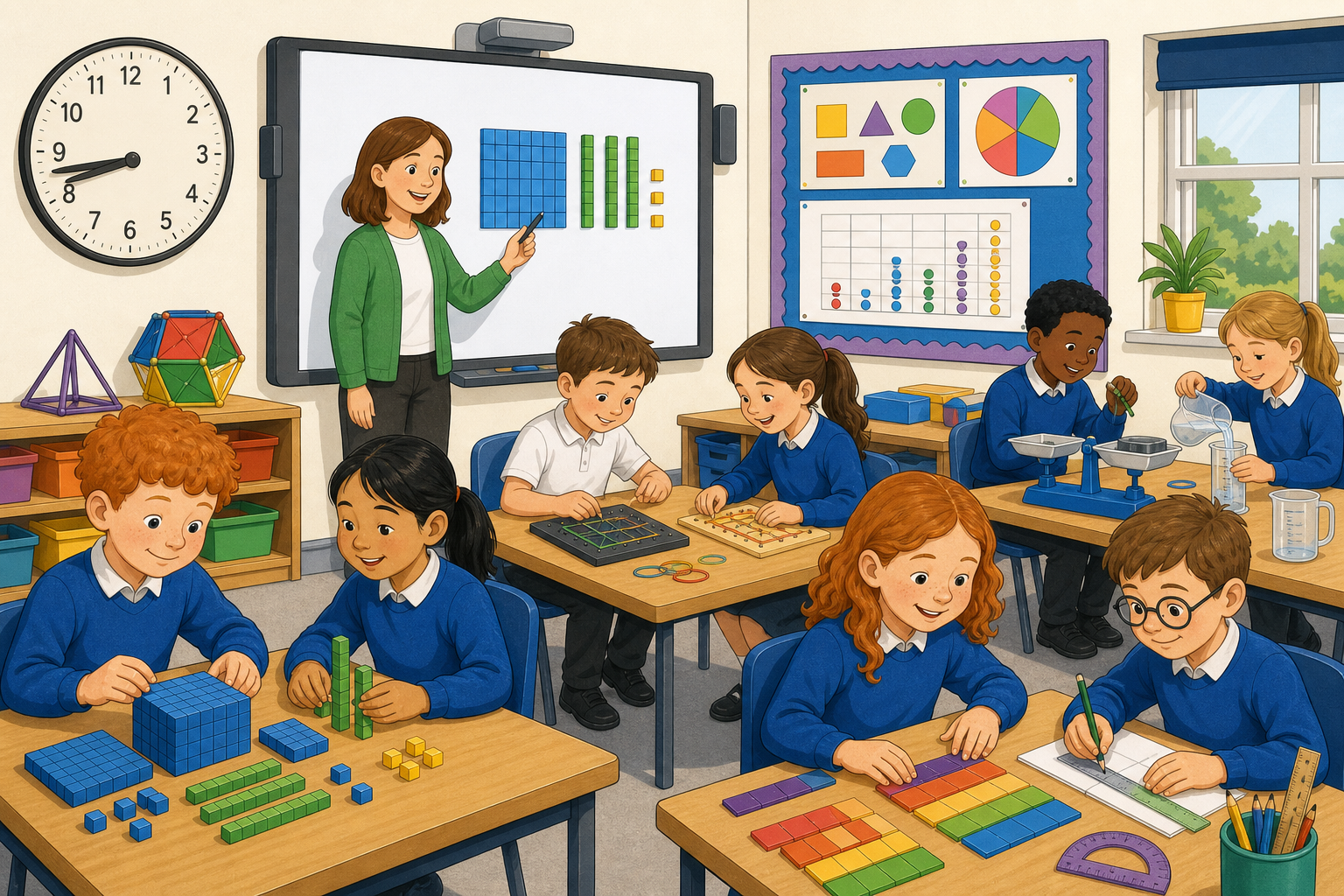
Look at the clock in the picture. The minute hand is sitting somewhere between the 8 and the 9. It is not exactly on a number, so it is not a tidy 'past five' time.
What exact minute could it be? Could it be 41, or 42, or 43, or 44? How would you work out which one?
Take three hands-up answers, not open call-outs. Give five seconds of quiet think-time before any hands go up.
Listen for whether pupils know to start from the nearest five (40, on the 8) and count single minutes on. That is the whole hook for the lesson.
Each clock shows the same time two ways: hands and digits. Watch where the minute hand sits and how we read it out. Some are easier to say as 'past', some as 'to'.
Eighteen past three: core skill, counting on the single minutes. Hand just past the 3, so fifteen, then count sixteen, seventeen, eighteen.
7:43: say both ways so pupils hear the link. Forty-three minutes past seven, or seventeen minutes to eight.
2:09: nine minutes past two. Pause on the leading zero. Ask why not 2:9? Revoice: keep two digits after the colon.
11:56: four minutes to twelve. Minute hand nearly at the top. Watch for misreading the hour hand as 12.
Today we set these to-the-minute times on the clock together, and check the digital readout matches each one: 3:12, then 6:47, then 8:09.
While one pupil sets the hands at the board, the rest of us follow along: count the single minutes aloud together, then read the digital screen and confirm it matches before we move on.
For each one we will start from the nearest five and count the single minutes on, then read what the digital screen says.
This round is for talking it through together — pupils take turns at the board while the watching class counts the single minutes aloud and agrees or corrects.
The digital readout is shown, so after a pupil sets the hands the class confirms the digits match. Watch for the 8:09 case: pupils tend to set the minute hand a touch too far. Revoice: nine minutes, so just past the start, and we write the zero in front.
In your maths copy, copy these four digital times, one under the other. Beside each, write whether it is a 'past' time or a 'to' time, and how many minutes.
Remember: minute hand after the 12 = past, before the 12 = to.
Walk the room glancing at the past/to label and the minute count — this is whole-class copybook practice, not marking. Watch for 1:06 written as 'six minutes to' instead of 'six minutes past'.
Today we work through these fresh times together: 5:23, then 9:41, then 4:07, then 11:59. The single minutes past the nearest five catch people out, and so does the zero before a single-digit minute, so we will count each one aloud before we check it.
These are the practice questions — pupils take turns at the board, check each answer, and the class confirms before moving on. Keep the board work brisk rather than over-explaining.
Watch the single minutes past the nearest five (the 5:23 and 9:41 cases), and mind the zero before a single-digit minute on 4:07. For 11:59, the hour hand is almost on the 12; say one minute to twelve to head off pupils reading the hour as 12.
Why is 7:43 the same time as 'seventeen minutes to eight'? What helps you switch between the two ways of saying it?
Listen for pupils noticing that 43 minutes past plus 17 minutes to make a full 60-minute hour. Revoice a strong answer: so once you pass the half-hour, it is often quicker to count back to the next hour. Head off the idea that 'to' times use a different clock — it is the same hand, just named from the hour ahead.
Next we meet the 24-hour clock, where the afternoon and evening hours keep counting on instead of starting again at 1.
Keep this brisk. The leading-zero rule and the 'past/to' switch are the two things worth one last sentence each before the lesson closes.
You're previewing this lesson. Get full access to this lesson and hundreds more — each one ready to teach, with interactive activities, printable resources and pupil progress tracking built in.