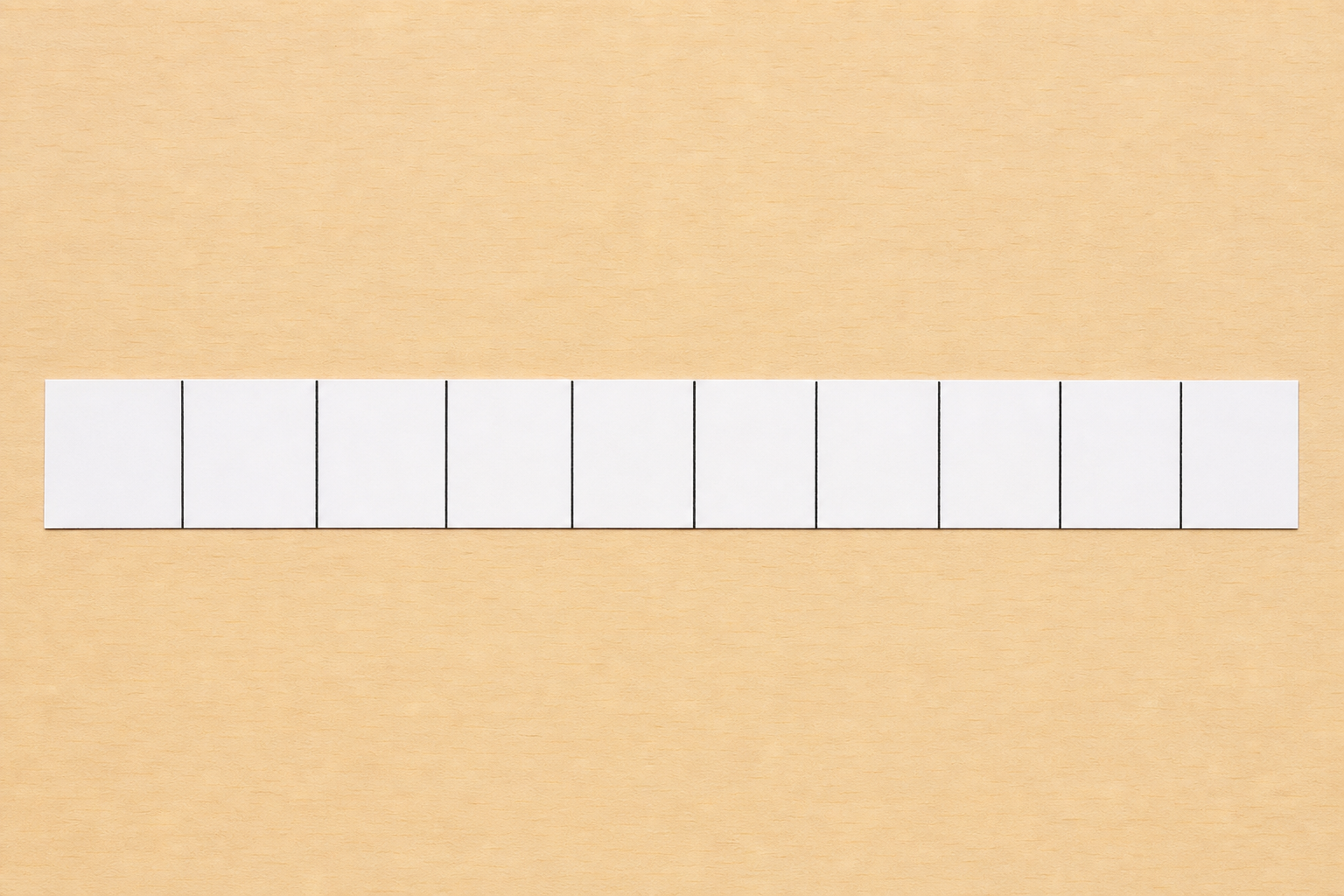
Here is a one-metre strip of paper, split into ten equal parts, the way a baker might mark a long loaf into ten fair slices.
We have a name for one whole and we have a name for one half. But what shall we call just one of these ten equal parts of the whole strip?
This is the same whole loaf as our paper strip, now shown as ten equal sticks on a place-value mat. Watch which sticks are shaded each time, and read the amount both as tenths and as a decimal.
Now we build tenths together on the place-value mat, in this order: 0.2, then 0.5, then 0.8, and finally 0.9. For each one, one pupil taps the sticks at the board while the whole class joins in by saying the two names aloud together: first the words, like two tenths, then the decimal, zero point two.
The one to watch is 0.5 — that is exactly half of the whole, so one half and five tenths are the same amount.
In your maths copy, draw a bar and split it into ten equal parts. Shade four of the parts.
Underneath your bar, write the amount two ways: as four tenths and as 0.4.
Today we work through these tenths, one after another: 0.1, then 0.3, then 0.7, and finally 0.9. Each one adds more shaded sticks, so watch how the tenths digit climbs while the point stays exactly where it is.
You're previewing this lesson. Get full access to this lesson and hundreds more — each one ready to teach, with interactive activities, printable resources and pupil progress tracking built in.