Engineers do not guess whether a design works. They test it against the job it was meant to do.
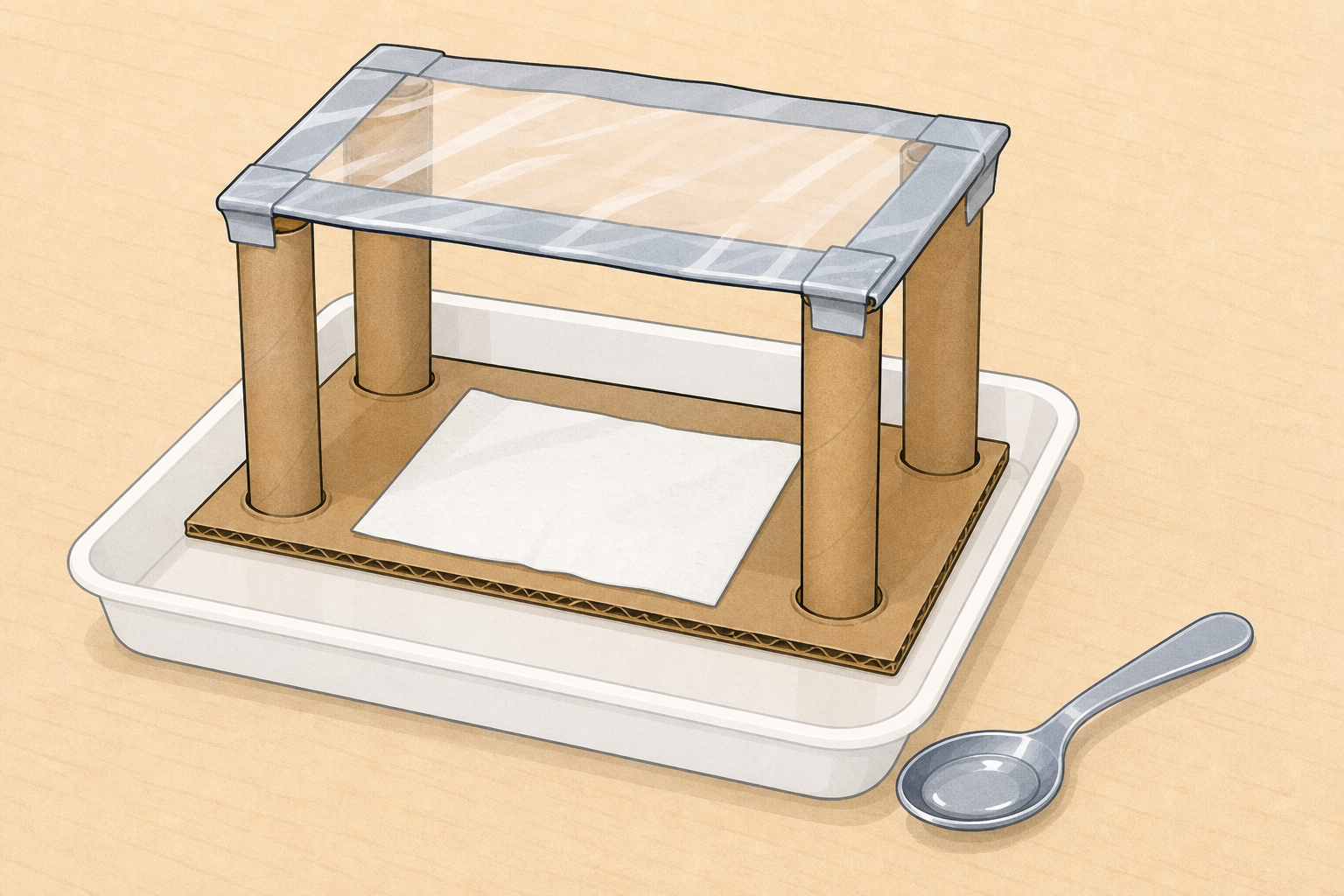 Today is the day your prototype goes on trial: not a guess, a real check. Open the Design Brief you wrote earlier in this project. What were your success criteria? How will we know today if your prototype really meets them?
 Before we touch the prototypes, three quick ideas so everyone tests fairly.
First: success criteria: the checks we already agreed. Second: evidence: what the test actually shows, not what we hoped for. Third: one improvement: change one thing, then check again.
Watch this quick live test. We will use the same method every time, write what we saw, and only then decide what it means.
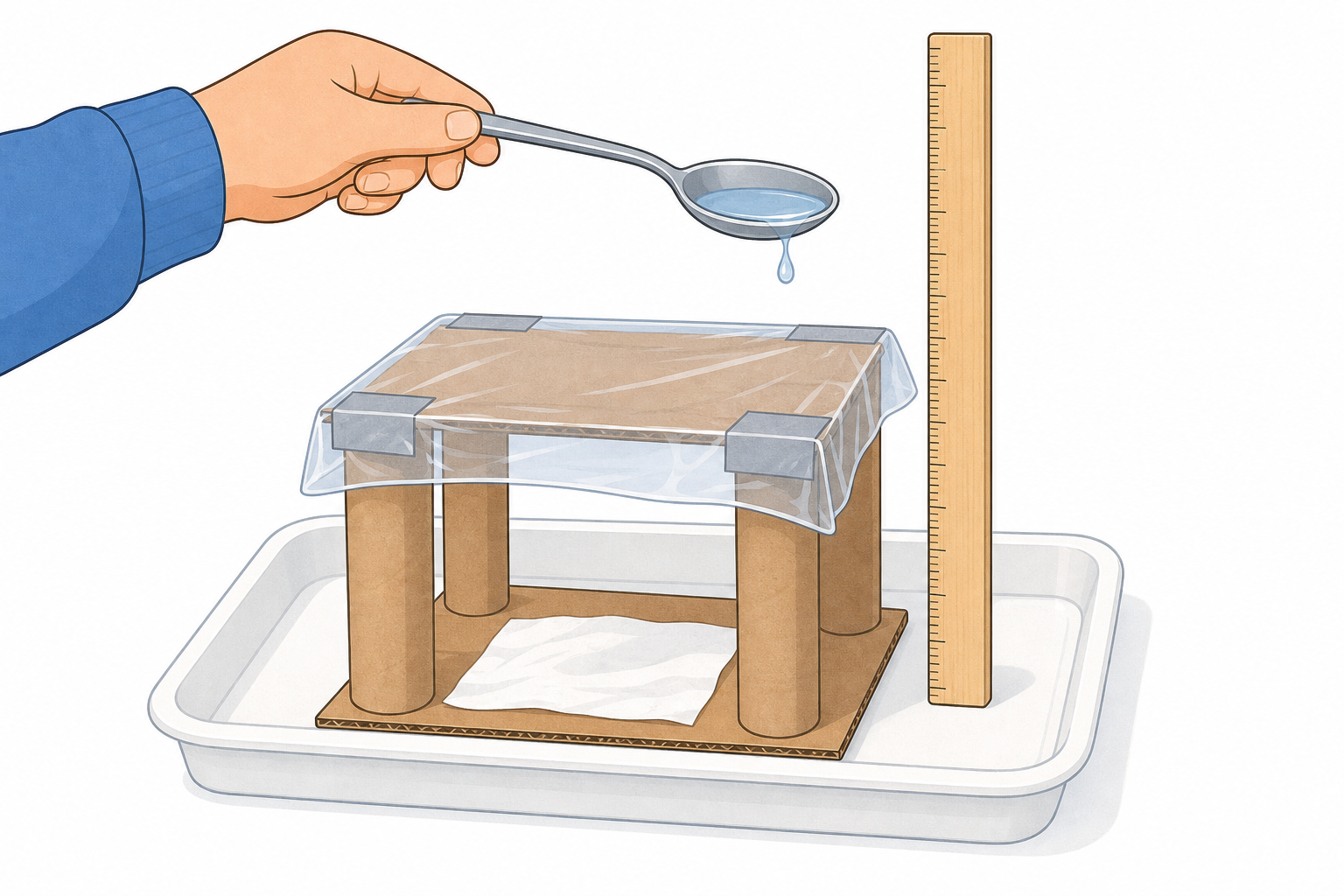 In your group, test your prototype against every success criterion on your Design Brief. Use the same method each time. A fail is still useful evidence. Do not change the design yet.
Match your test to the problem on your Design Brief. Use the bullet that fits your type:
- Shelter or cover: place over a dry tissue; pour a counted amount of water (for example 3 teaspoons) from the same height; check if the tissue stays dry.
- Ball barrier: roll the soft ball three times from a marked start line; count how many times it is stopped.
- Book stand or holder: load the same books each time; time how long it stays upright.
- Draught-stopper: place at a door base or board gap; fan gently with folded paper and watch a tissue strip for movement.
Jot each result on your Investigation Journal testing page as you go: criterion, how you tested, and the result.
Engineers separate what they saw from what they think. That is how the next change stays honest.
Check your Investigation Journal testing page. Fill any gaps, keep observation separate from opinion, and star the criterion that most needs an improvement. Then we move straight to one change.
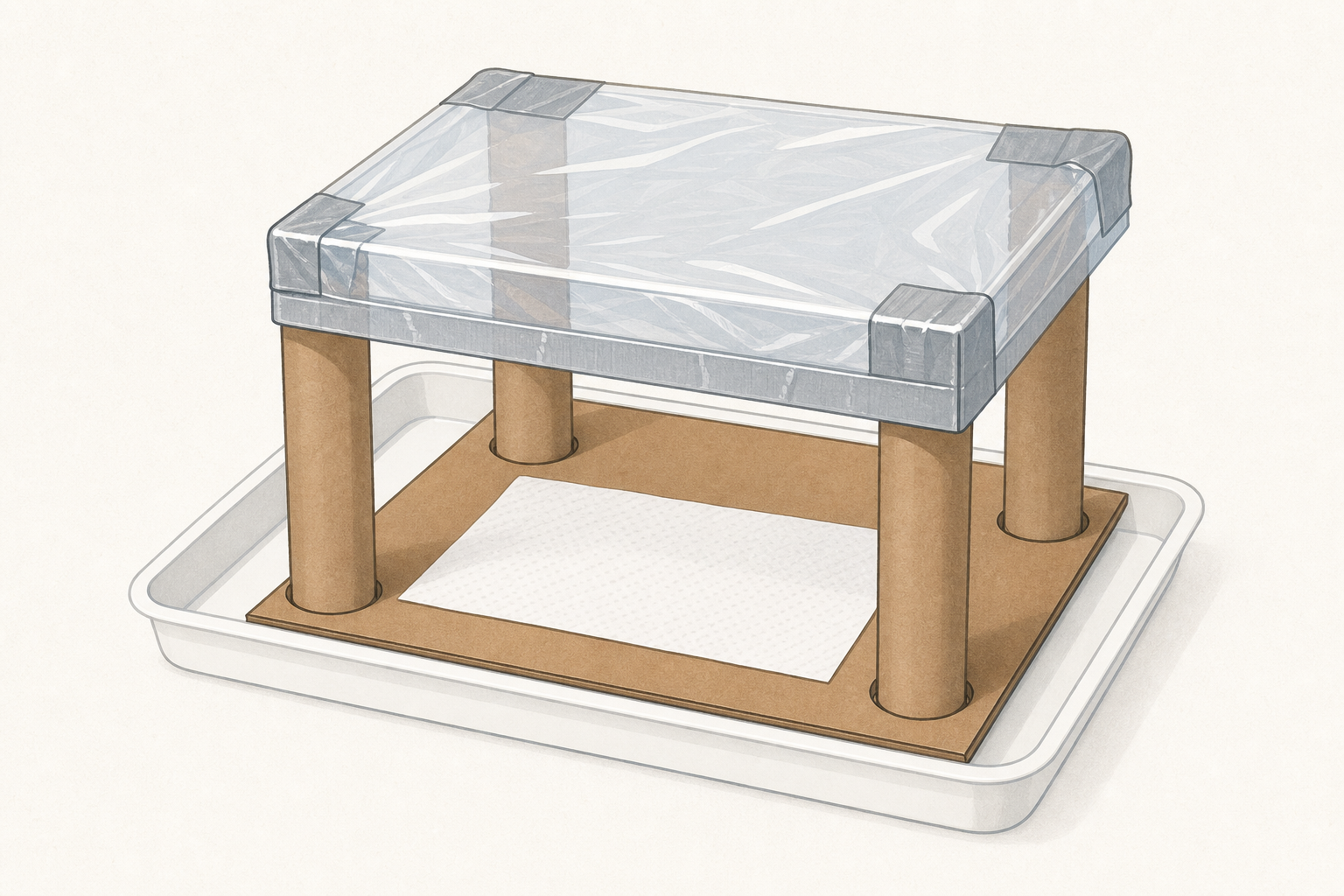 Choose one change that the first-test evidence supports. Improve only that part of your prototype. Engineers change one thing so they know what helped.
Then re-test the criterion that failed or was weakest, using the same method as before. Record the re-test result and a short conclusion on your Investigation Journal results page: what you changed, whether it helped, and how close you are to meeting the brief.
Unlock the full learning experience
You're previewing this lesson. Get full access to this lesson and hundreds more — each one ready to teach, with interactive activities, printable resources and pupil progress tracking built in.
This lesson is copyright of Coding Ireland 2017 - 2026. Unauthorised use, copying or distribution is not allowed.