1 - Getting Started ~3 mins
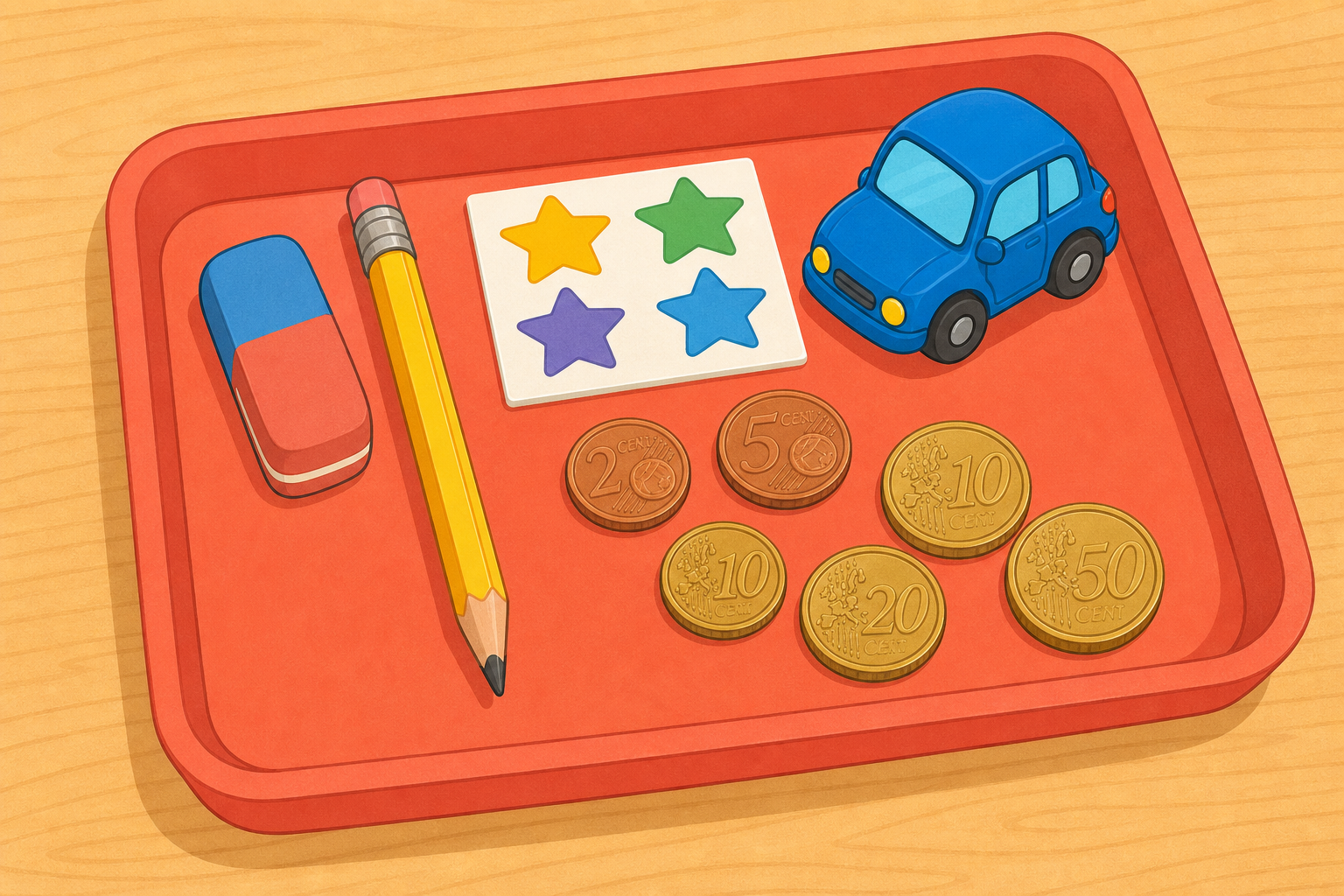 The class shop is open on the board. A rubber costs 5c, a pencil costs 10c, a sticker costs 20c, and a little toy costs 35c.
Exact price means your coins add up to the tag, with nothing left over and nothing missing.
Hands up: who can pay the exact price for the rubber?
2 - Watch and Notice ~8 mins
Look at each shop tray. Say the price aloud, then check the coins on the tray.
Rubber at 5c: one 5c coin.
Rubber another way: 2c + 2c + 1c.
Pencil at 10c: two 5c coins. One 10c coin makes the same total.
Sticker at 20c: one 20c coin.
Counting on from the biggest coin means you start with the coin worth the most, then add each next coin one by one.
Toy at 35c: start at 20c, then 30c with a 10c, then 35c with a 5c.
Check: the coins match the price with nothing left over.
3 - Try It Together ~8 mins
We build exact coins on the board for each shop price. Watch the board. Pupils take turns at the tray; everyone else agrees or corrects aloud.
Pay 5c for the rubber. Then pay 10c for the pencil, and make 10c a second different way. Then pay 20c for the sticker.
Pay at the class shop
4 - Write a Price in Your Copy ~3 mins
In your maths copy, write one shop price and the coins to pay it.
- Price: ___c
- Coins: ________
5 - Class Challenge ~9 mins
Quick check on the board: pay 5c for the rubber, then 10c for the pencil.
Now the new work: pay 35c for the little toy. Build exact coins each time. The 35c toy needs more than one coin, so count on from the biggest coin out loud before you check. Say 20, then 30, then 35.
Pay the exact price
Unlock the full learning experience
You're previewing this lesson. Get full access to this lesson and hundreds more — each one ready to teach, with interactive activities, printable resources and pupil progress tracking built in.
This lesson is copyright of Coding Ireland 2017 - 2026. Unauthorised use, copying or distribution is not allowed.