A number sentence is a maths statement with numbers and an equals sign, like 5 + 2 = 7. Look at this claim on the board: 5 + 2 = 7, and then 7 = 5 + 2. Is the second one allowed? Hands up: does the equals sign only work with the answer on the right, or can the answer sit on the left too?
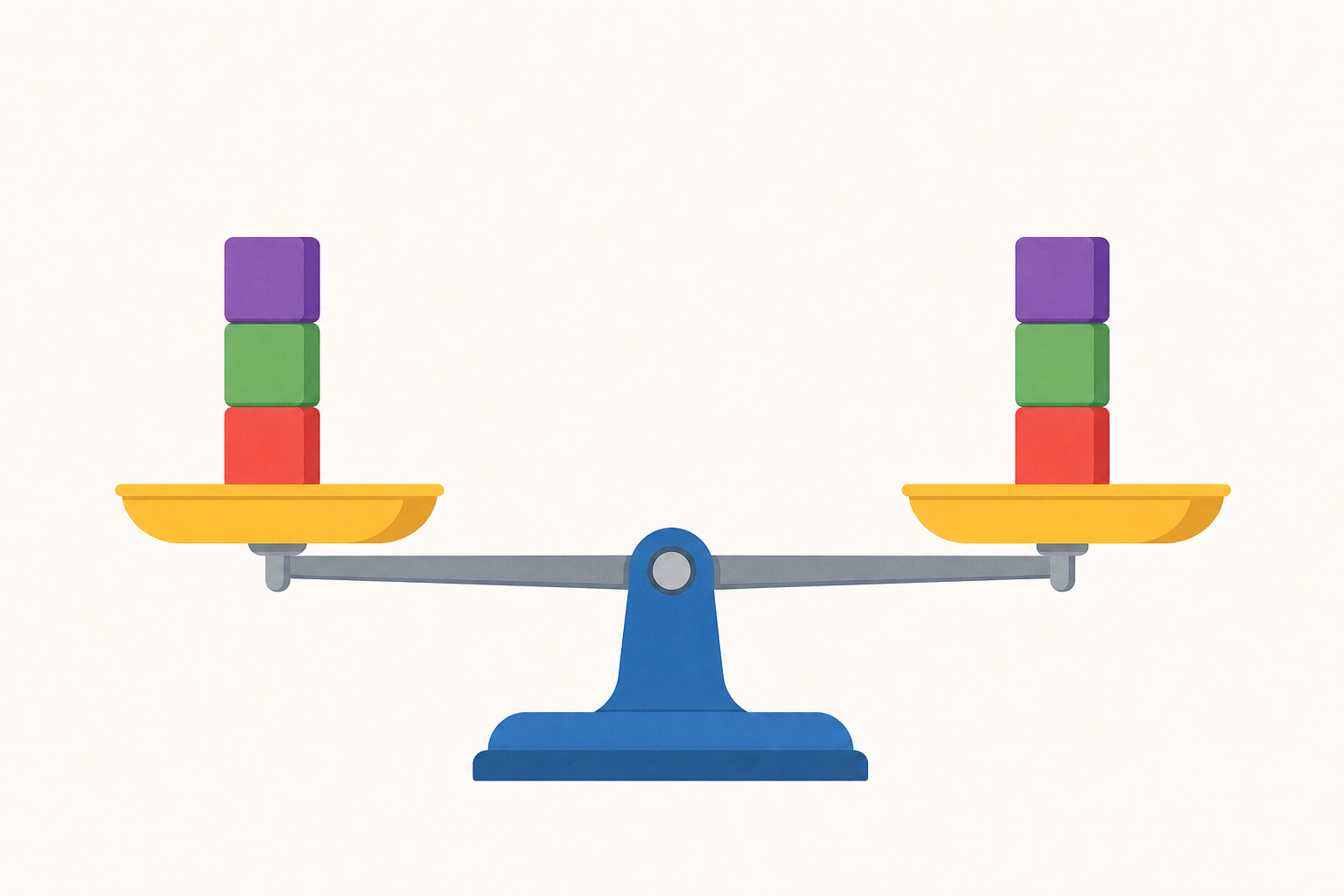
Watch three sets of scales. Look at whether the beam is level or tilted, and read what is on each pan. When is the beam level, and what does a level beam tell us?
Hands up: is that beam telling us the two sides match, or not?
This last one is the surprise. One pupil predicts: can two different-looking sides still balance?
Now it is your turn on the board. One pan shows 7 and the other pan is empty. Build a sum on the empty pan so the beam sits level. There is more than one right answer, so find a few different sums that all make 7.
In your maths copy, write three true number sentences that balance. Use a different total for each one, for example:
Then write one number sentence that does not balance. Tick the three true ones.
Now you balance scales where one pan already has a sum. Work these in order: 8 = ? + 5, then 4 + 6 = ? + 3. Each time, find the missing number that keeps the beam level, and check it before moving on.
The last two are bigger, so build them the same way each time: total the whole side you can first, then work out the missing part. For 12 = 5 + 4 + ?, add 5 + 4 to make 9, so you need what plus 9 makes 12. For 7 + 8 = 10 + ?, total the left side first: 7 + 8 = 15. Now ask: what plus 10 makes 15? Find each missing number and let the beam confirm it.
You're previewing this lesson. Get full access to this lesson and hundreds more — each one ready to teach, with interactive activities, printable resources and pupil progress tracking built in.