1 - Getting Started ~3 mins
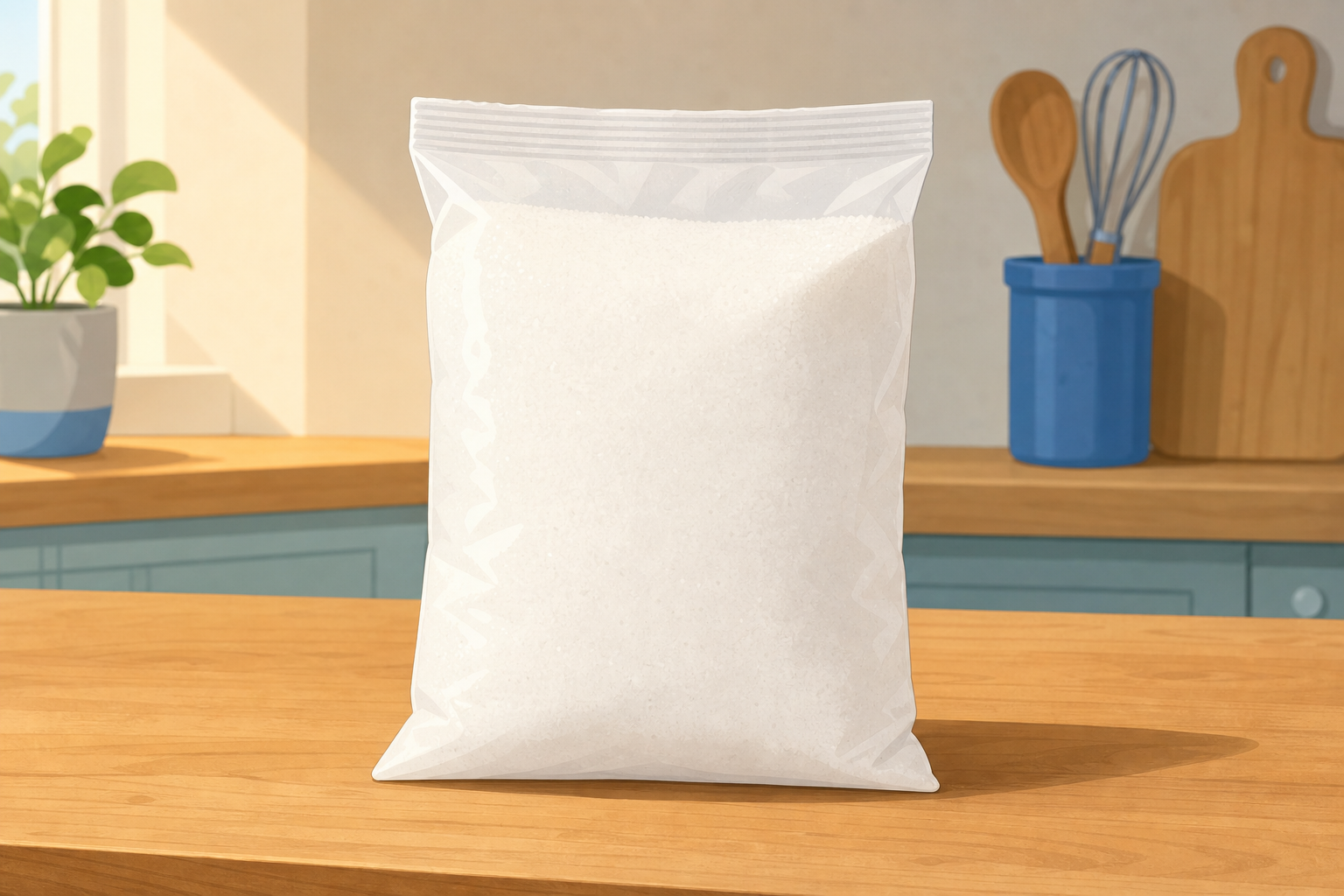 A bag of sugar from the shopping. The label says 1 kg — one kilogram.
Hands up: heavier or lighter than the sugar bag — your schoolbag? Your lunchbox? Your shoe?
2 - Watch and Notice ~8 mins
Three weighings on the balance, each against the 1 kg sugar bag. The sugar bag side is marked 10 — that mark means one kilogram. A smaller number means lighter than a kilogram; a bigger number means heavier. Watch which pan sinks — that side is heavier. When the pans sit level, the two sides weigh about the same.
3 - Try It Together ~10 mins
Today we weigh against the 1 kg sugar bag: a tin of beans, then a welly boot, then a big dictionary, then a schoolbag. Before each pan settles, predict: heavier, lighter, or about a kilogram?
Heavier or lighter than 1 kg?
4 - Write Heavier and Lighter in Your Copy ~4 mins
In your maths copy, draw or write one thing heavier than a kilogram and one thing lighter than a kilogram.
5 - Class Challenge ~8 mins
Your turn at the board. The right pan stays as the 1 kg sugar bag. Move the left pan to match each object, then say heavier, lighter, or about a kilogram.
Objects today: a lunchbox, a water bottle, a bag of flour, a heavy coat.
After the four, put them in order from lightest to heaviest.
Against the 1 kg sugar bag
Unlock the full learning experience
You're previewing this lesson. Get full access to this lesson and hundreds more — each one ready to teach, with interactive activities, printable resources and pupil progress tracking built in.
This lesson is copyright of Coding Ireland 2017 - 2026. Unauthorised use, copying or distribution is not allowed.