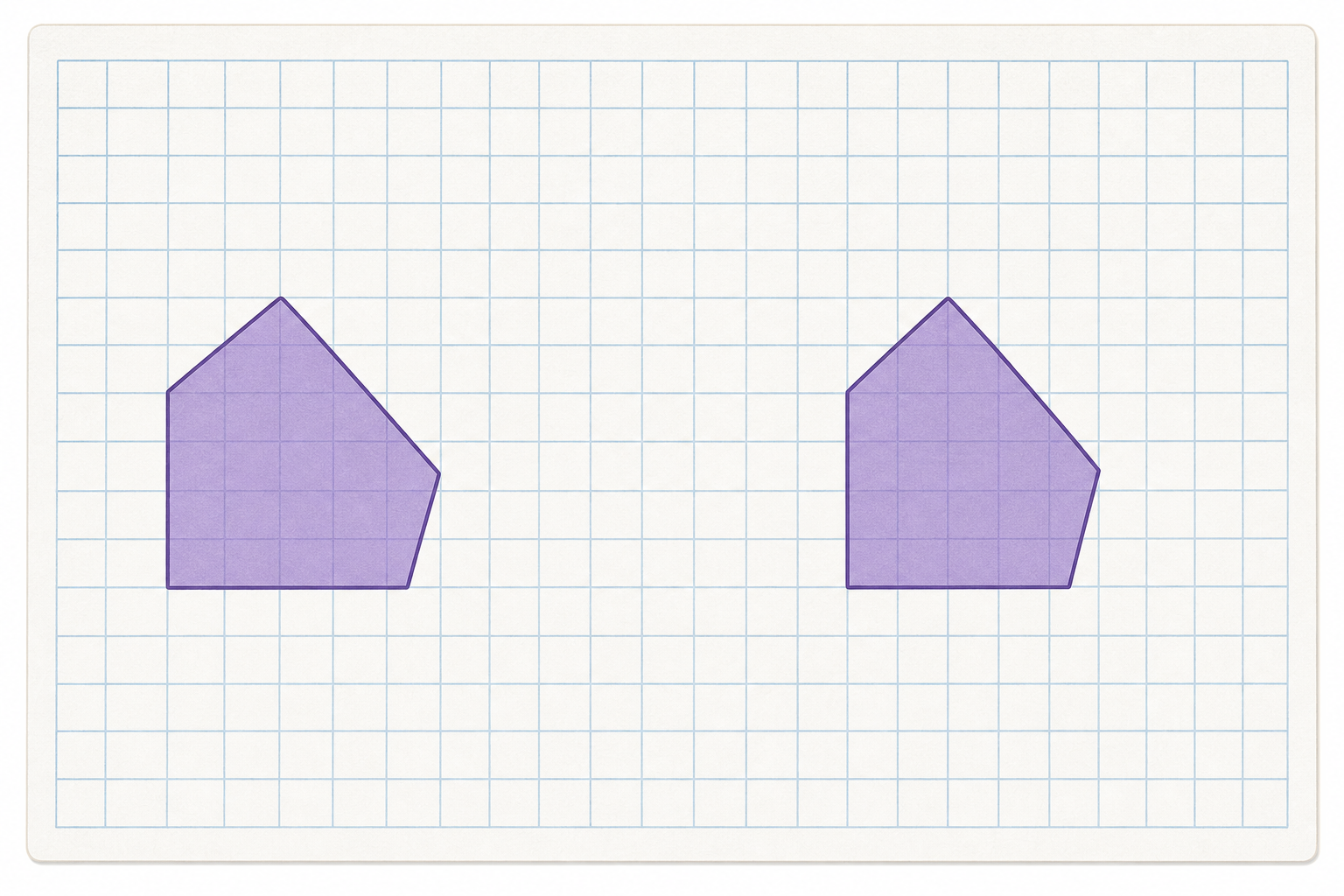
Picture a shape sitting on squared paper. Now picture the very same shape a few squares away in a new spot.
What would be the same about the two, and what would be different? Would the shape need to turn, flip, or just move across?
Take three hands-up answers, not open call-outs. Steer toward the idea that nothing changes except where it sits — same size, same direction. Hold the word slide until Watch and Notice.
Watch three arrow shapes on the grid. Each one starts in its first spot, then a copy appears in a new spot. Nothing turns and nothing flips — the copy just moves.
For each one, watch how far the shape travels: how many squares across, then how many squares up. Every corner takes the same journey.
For the last one, be ready to say the across-and-up move out loud before the copy lands.
Today we slide the arrow together on the board, one slide at a time:
A slide can go left or down too. Left is just across the other way, and down is just up the other way — so across-and-up words still describe it.
Each time, check that every corner has moved the same amount, and that the arrow still faces the same way.
Talk this one through together — pupils take turns at the board and the class agrees or corrects out loud.
Call one slide at a time; a pupil drags the arrow to match. Before the class agrees, ask did any corner move a different amount? — the answer must always be no. Watch for the pupil who turns or flips the shape by mistake; revoice: a slide never turns it, it always faces the same way. The 3 left, 2 down move is the one that catches people — left and down are still slides.
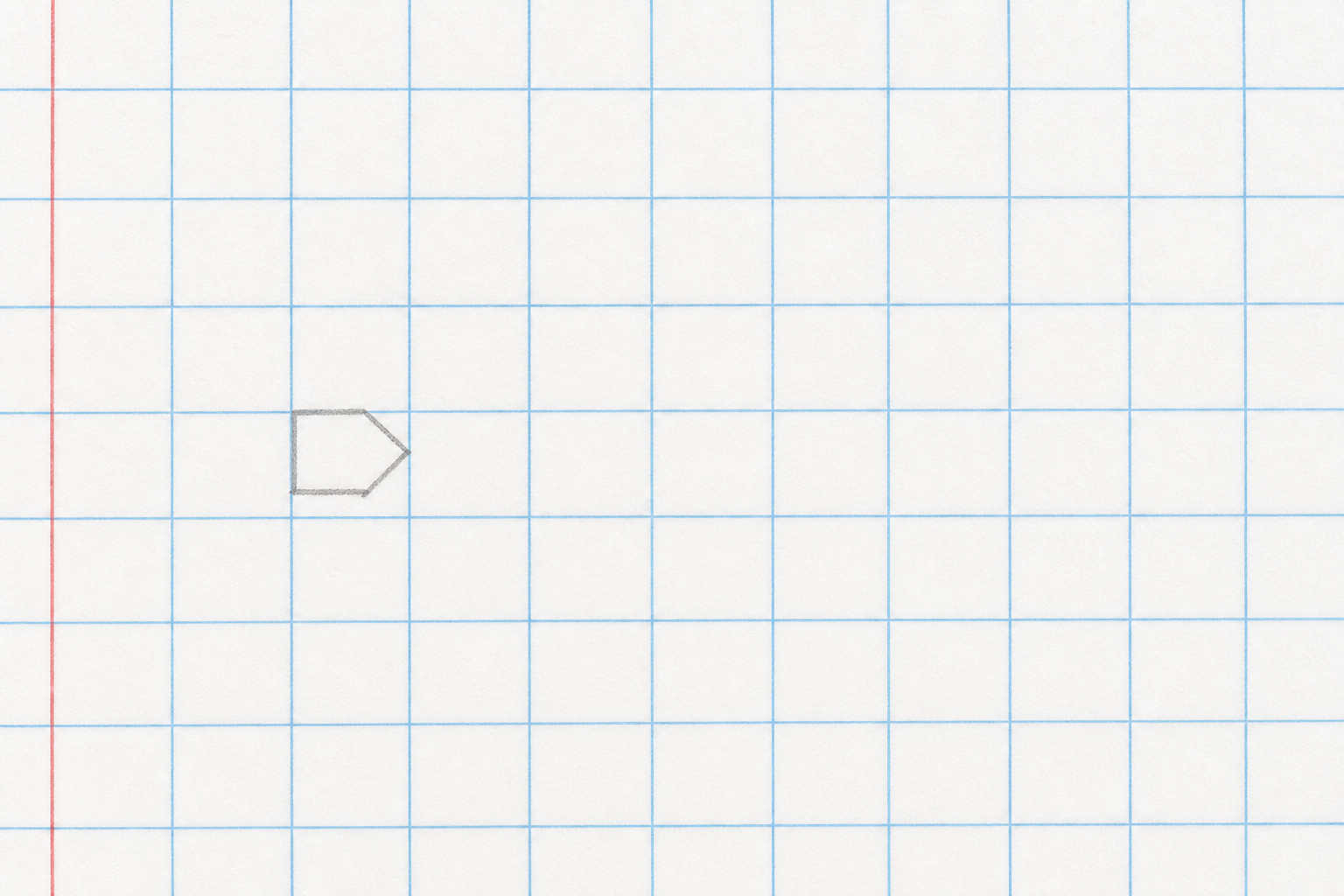
In your maths copy on squared paper, draw a small arrow shape. Then draw it again after a slide of 5 squares right and 3 squares up.
Check every corner has moved the same: five across and three up. The slid arrow should face exactly the same way as the first one.
Walk the room glancing at whether every corner moved the same across-and-up amount, and that nobody has turned or flipped the arrow — this is whole-class copybook practice, not marking.
Today we slide the arrow shape on squared paper, one slide building on the last:
Now find the single slide that would take the arrow from its very first spot straight to its last. Add up the across moves on their own, and the up moves on their own. For a stretch: find the slide that brings the arrow all the way back to where it began.
This is the practice round — pupils take turns at the board, check each answer, and the class confirms before moving on. Keep the board work brisk rather than over-explaining.
Track the running across total and the running up total on the board as pupils call each slide, so the class can see the moves adding and cancelling. Across: 3 right then 2 left leaves 1 right overall. Up: 4 up then 3 down leaves 1 up overall. Let a pupil reason it out before you confirm the single slide is 1 right and 1 up. Watch for anyone slipping in a turn on the left-and-down move.
You're previewing this lesson. Get full access to this lesson and hundreds more — each one ready to teach, with interactive activities, printable resources and pupil progress tracking built in.