1 - Start ~4 mins
2 - Examine ~6 mins
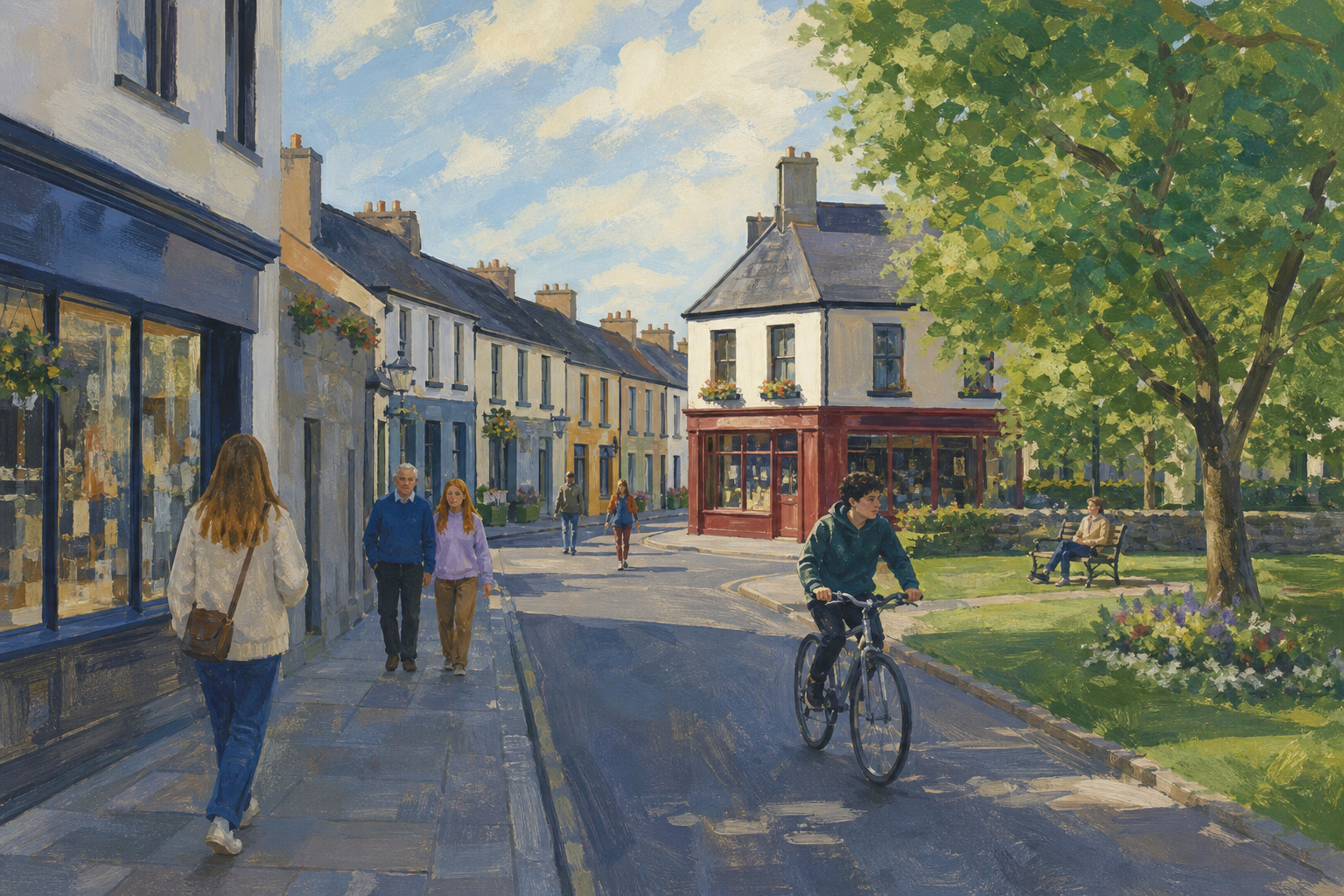
Development is not only something that happens far away. In your lifetime, things have been built, closed, widened or moved where you live. Almost every change was good for somebody and costly to somebody else.
Three kinds of effect help you sort the evidence:
- Economic: money, jobs, prices, trade, the cost of getting about.
- Social: how people meet, who feels safe, who gets left out, what a street feels like.
- Environmental: land, air, water, noise, green space, wildlife.
Watch one short worked example on the board (for instance a local bypass). The same fact can land as a gain in one cell and a cost in another. Your job is not to pick a side first. It is to place evidence in the right place.
3 - One Change, Six Angles ~19 mins
Choose one real change in your local area from the last few years, and fill in the organiser below. If you need a starting point, use the list on the board: a new supermarket or retail park; a bypass or widened road; a shop, bank or post office closing; a new housing estate; a playground or sports pitch; a green field built on; a new cycle lane; a local workplace opening or closing.
Fill the grid: positive and negative, crossed with economic, social and environmental. Use short notes of evidence you can point to. The same change can sit in several cells. Aim for at least four cells. When most grids have four cells filled, be ready to say which cell surprised you.
One local change, six angles
4 - Make Sense of It ~8 mins
Look back at the change you chose.
Talk in pairs, then share:
- Who gained most from that change, and how do you know?
- Who paid for it, in money, time, quiet, space or something else?
- Where did the same development show up as both a gain and a cost?
A fair account of local development holds both sides at once. Evidence in two columns is stronger than a cheer or a complaint.
5 - What You Covered ~3 mins
Unlock the full learning experience
You're previewing this lesson. Get full access to this lesson and hundreds more — each one ready to teach, with interactive activities, printable resources and pupil progress tracking built in.
This lesson is copyright of Coding Ireland 2017 - 2026. Unauthorised use, copying or distribution is not allowed.