1 - Start ~4 mins
2 - Examine ~5 mins
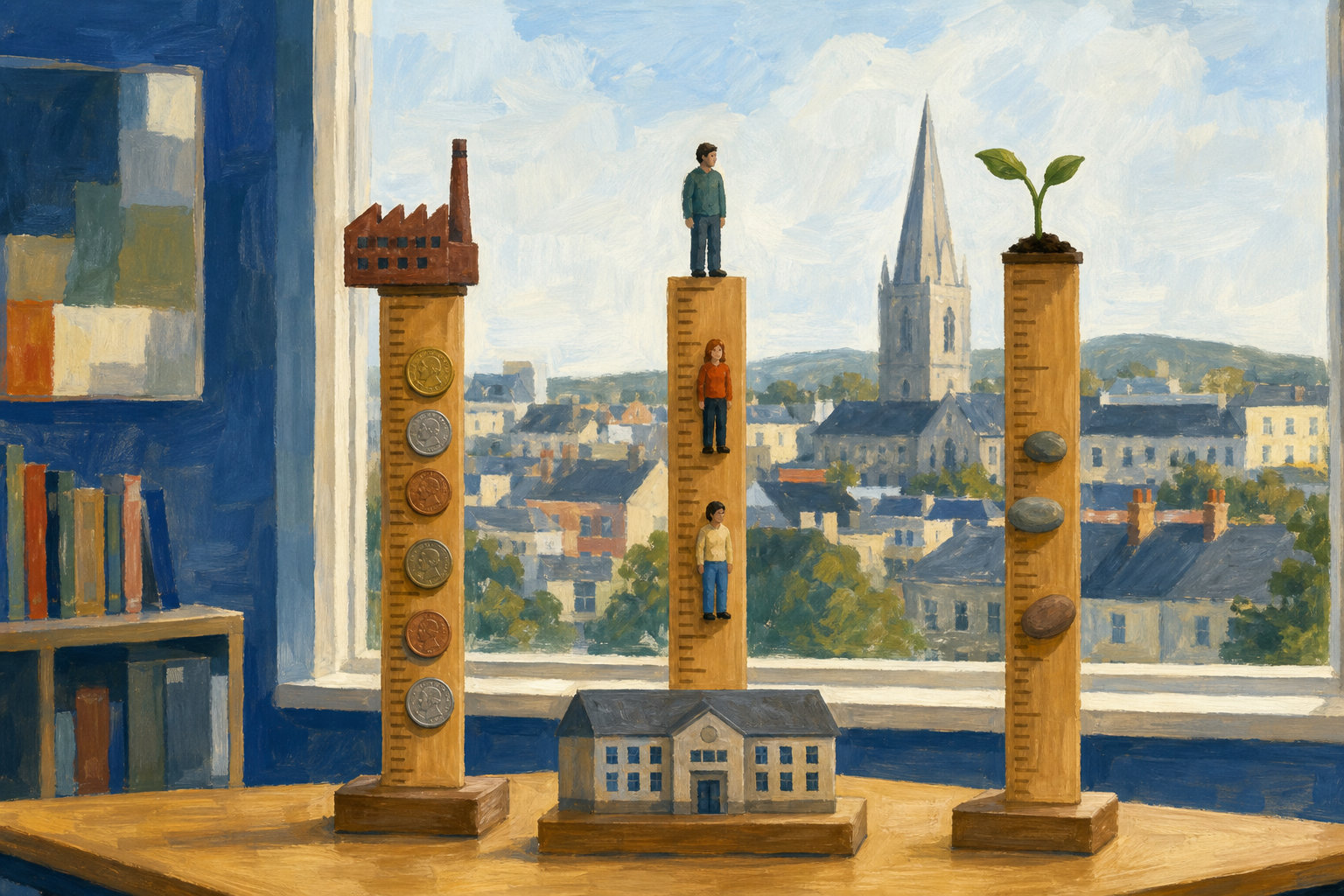
When somebody calls a country or a town 'developed', they are using a measuring stick. Different people hold different sticks. Here are three of them:
- Economic growth: rising production and income.
- People's lives: health, schooling, and a decent standard of living.
- Lasting gains: meeting needs now without using up what the next generation will need.
None of these is the official answer. Each was shaped by the job the people who use it had to do. Next, on your devices, you will compare the three definitions row by row.
3 - Three Definitions Side by Side ~19 mins
Open the comparison. Start on the row 'What it quietly leaves out'. Your teacher models one click with the class, then you take the remaining rows one at a time. For each row, decide which definition handles that question most clearly for you and click it. There is no official winner: they do different jobs. You do not need to finish every row before you move on to the two places below.
Halfway through, your teacher will tell you to move on. Then test each definition against the two places below, which are also on the board.
Riverside. A factory opened five years ago. Average wages roughly doubled. The river runs grey after heavy rain. There are not enough secondary school places. Most young people who can leave, leave.
Hillside. Incomes rose only a little. The woodland was kept. The primary school is strong. People live longer than twenty years ago. There are few new jobs.
For each place, say which definition would call it more developed, and which would not. Give one reason.
Three definitions of development
4 - Make Sense of It ~9 mins
In pairs, spend two minutes on this question. A council can fund a factory upgrade or a secondary school. What does each definition push them toward, and why does that choice of measuring stick matter for what gets funded?
On your own, write one or two sentences:
Which definition do you prefer right now, and what is the one important thing it leaves out?
5 - What You Covered ~3 mins
Unlock the full learning experience
You're previewing this lesson. Get full access to this lesson and hundreds more — each one ready to teach, with interactive activities, printable resources and pupil progress tracking built in.
This lesson is copyright of Coding Ireland 2017 - 2026. Unauthorised use, copying or distribution is not allowed.