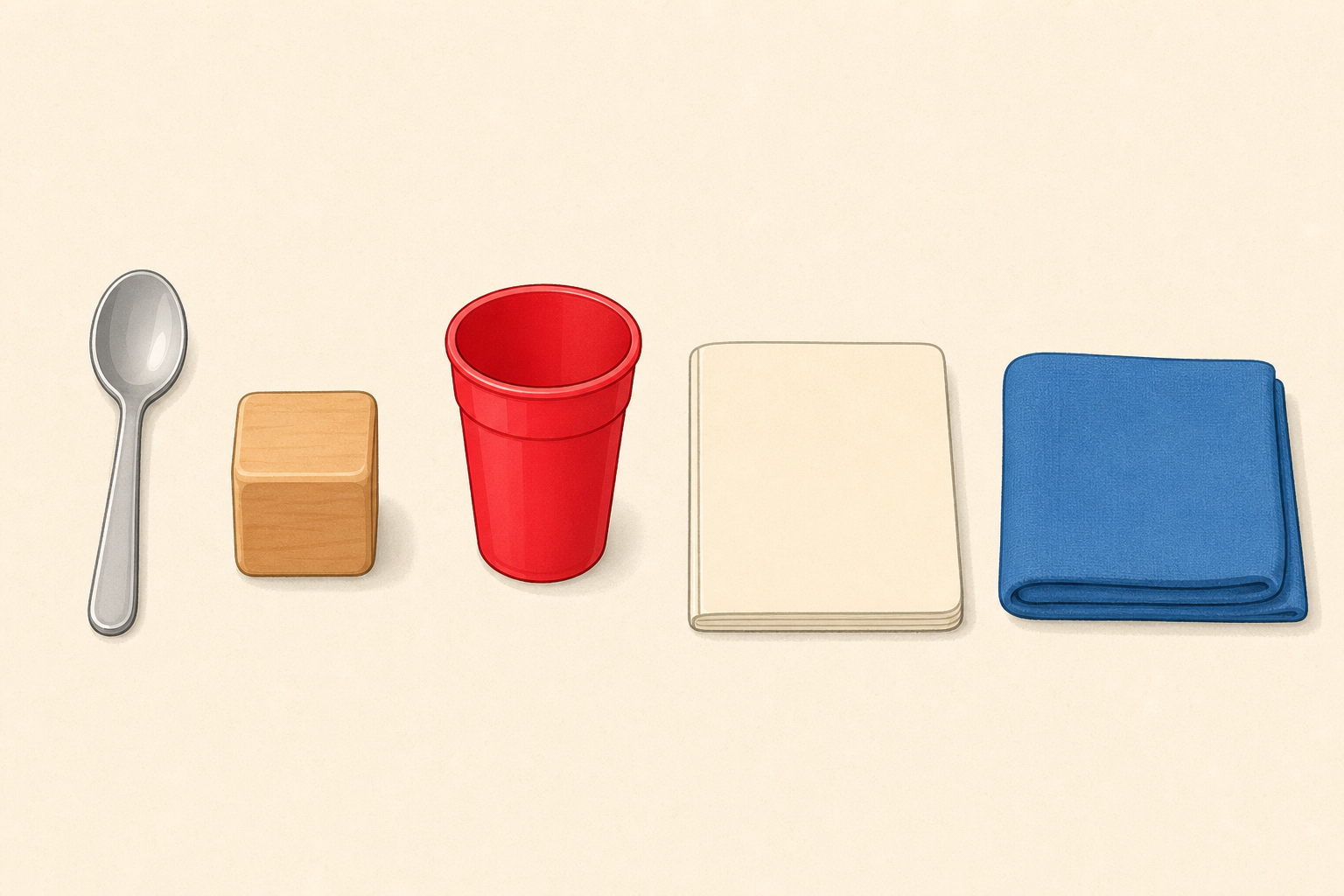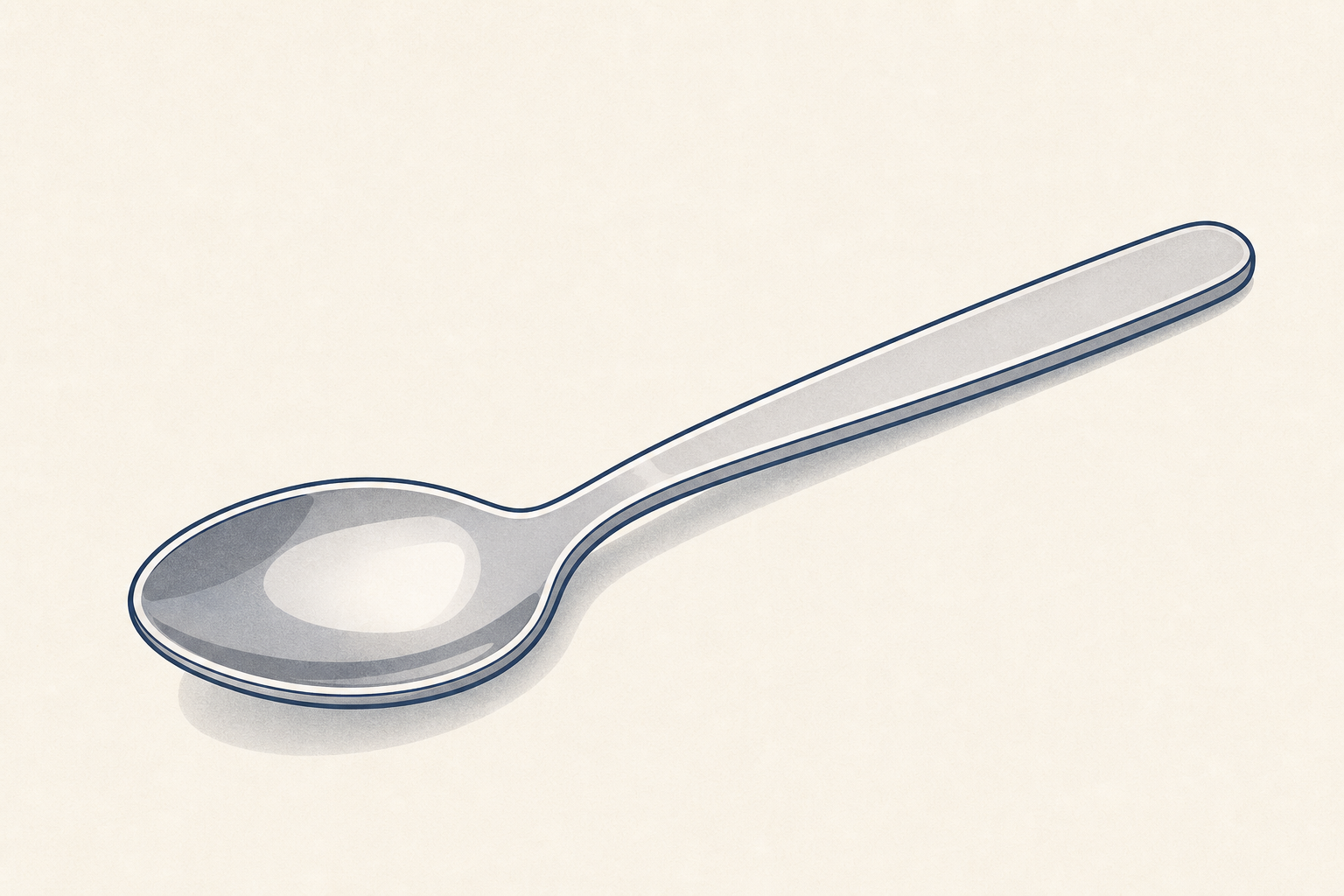
Look at this spoon. What do you think it is made of?
Today we will hunt around our classroom, touch things gently, and find out what they are made of.
Hold up one everyday metal spoon (or a wooden block if you prefer). Keep the hook light: one object, one question, then move on. Do not lay out the full hunt tray or name all five materials yet.
Key question: What do you think this is made of? Accept every guess warmly. Guesses are never wrong; they are the start of the fun.
Have the five sample objects ready nearby for the next step, but keep them out of sight for now so the hook stays simple.
Today's word: material. Material means what something is made of.
Watch and listen while I show you some things. We will say what each one is made of.
Children stay seated and look and listen; hands-on hunting comes next. Keep the board simple: one word, then your live samples do the rest.
| Concept | Why it matters | Example |
|---|---|---|
| Material — what something is made of | Naming the material helps us talk about everyday things we can touch | A classroom chair leg is often wood or metal; a lunch box is often plastic |
Model one full noticing cycle with the wooden block:
Then hold up each of the other four samples in turn for a rapid name-and-feel pass (about 10–15 seconds each). Children only look and listen; you name the material and one feel or look cue:
Stop there. Do not ask children to touch yet, and do not expect them to hold all five names at once; they will meet them again in short hunt bursts.
Misconception to head off: children may say an object is "hard" or "red" instead of naming the material. Gently revoice: Yes, it feels hard. The material it is made of is metal.
It is hunt time! See our sharing tray on the low table. That is where your favourite find will go later.
Walk gently. Touch things carefully. First find something made of wood or plastic. Then we will hunt again for metal, paper or fabric.
Clear a low central table for the sharing tray and point to it so every child can see where finds will go. Set out chunky magnifiers where groups can reach them. Point out the classroom boundaries for the hunt (stay inside the room; no climbing; teacher cupboards stay closed).
Run as two short bursts with a quick regroup, not one long free roam. Match what you say to each burst:
Guiding questions while you circulate: What does it feel like? Is it hard or soft? What do you think it is made of? Can you find something shiny and cool?
Differentiation: less confident children can hunt with you and choose from two objects you offer ("Is this wood or plastic?"). Confident pairs can try to name more than one material in a burst before choosing a favourite.
Safety: gentle touches only; nothing near mouths; magnifiers held with two hands; no running.
Bring your favourite find to our sharing tray. Look closely. Touch it gently.
Tell us: what is it made of? Wood, plastic, metal, paper or fabric?
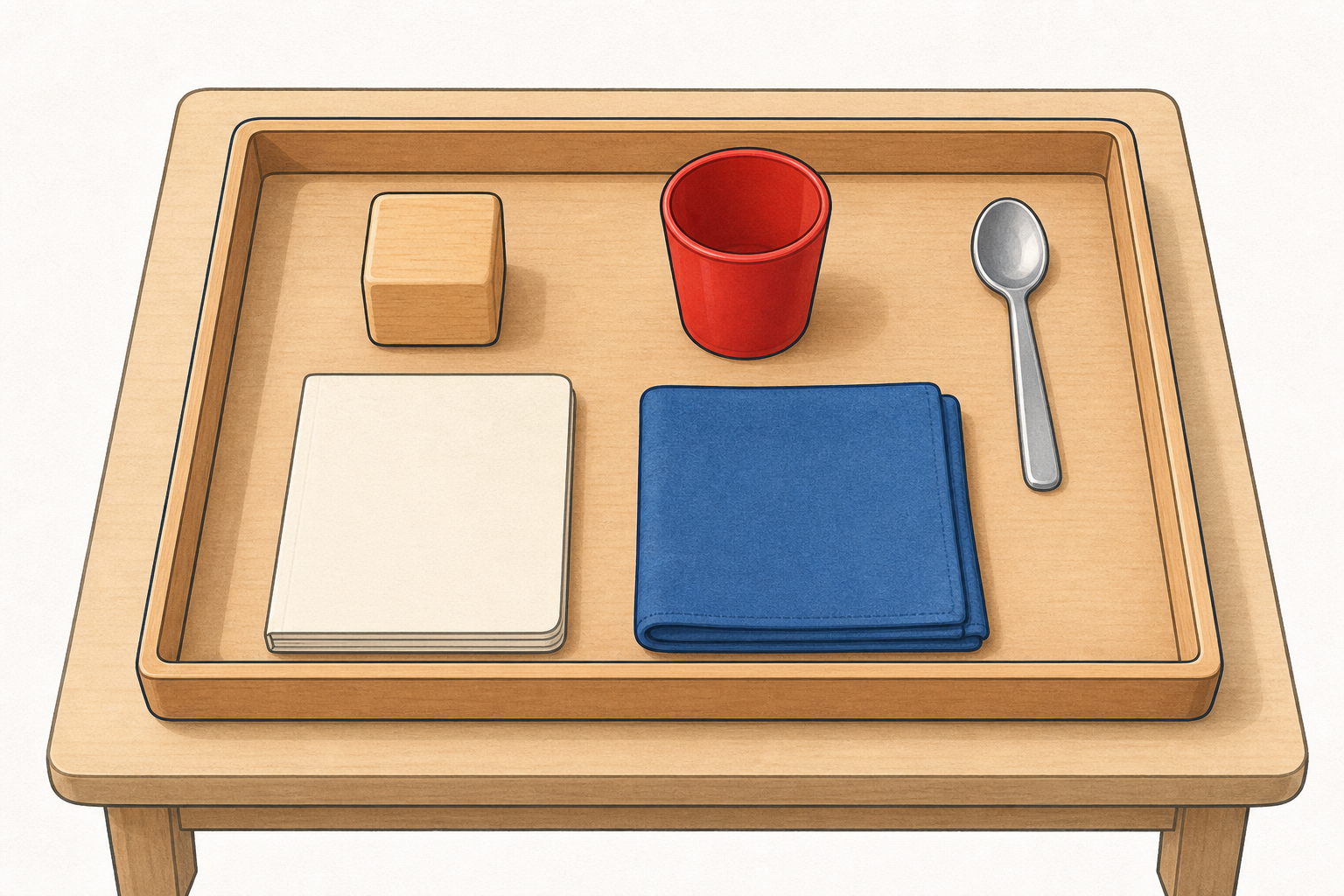
Every child places a find on the tray so everyone has a place. Keep the spoken share brisk with a whole-class pacing plan so 6 minutes works at real Junior Infants numbers (often 20–28 children).
As finds arrive, group similar materials together on the tray (all wood near each other) so the class can see the pattern. Sticky labels can mark the groups for you; children do not need to write.
Observation prompts: What colour is it? How does it feel? Is it hard, soft, shiny or bendy? What is it made of?
What to expect: many children will name wood and plastic confidently. Metal and fabric may need a gentle prompt from the feel (cool and shiny; soft like clothes).
Revoice material language: if a child says "it's a spoon", reply Yes, a spoon made of metal.
Look at our sharing tray. Which materials can you see?
Point with me. Can you find wood? Plastic? Metal? Paper? Fabric?
Now look at our classroom door. What is it made of?
This is a short, oral make-sense talk only. No writing and no journal page. Stay on today's naming objective: point and name materials on the tray and one familiar classroom part.
Draw out:
Do not ask why a builder chooses materials or why wood is good for a door. That property-and-job talk belongs in a later lesson once naming is secure. If a child offers a job idea unprompted, smile and revoice the material name: Yes — and that handle is metal.
Success look-fors: child can point to a find and name its material; child can say one material word from today's list; child can point to the classroom door (or another familiar part) and name its material with your support.
Revoice stem for a quieter child: if they point but do not speak, say You found the wood — well done! and invite a nod or a repeated whisper of the word.
You're previewing this lesson. Get full access to this lesson and hundreds more — each one ready to teach, with interactive activities, printable resources and pupil progress tracking built in.