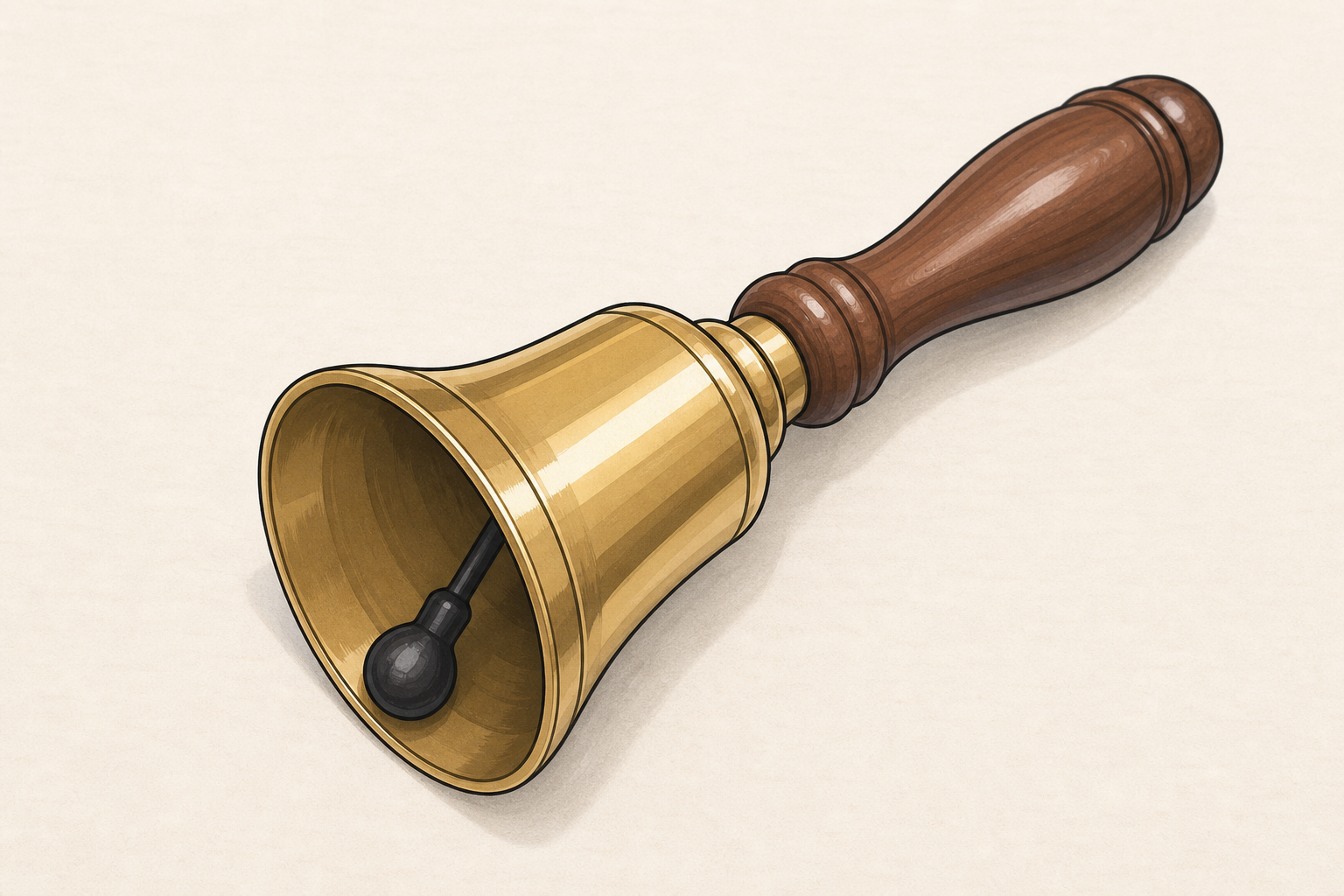
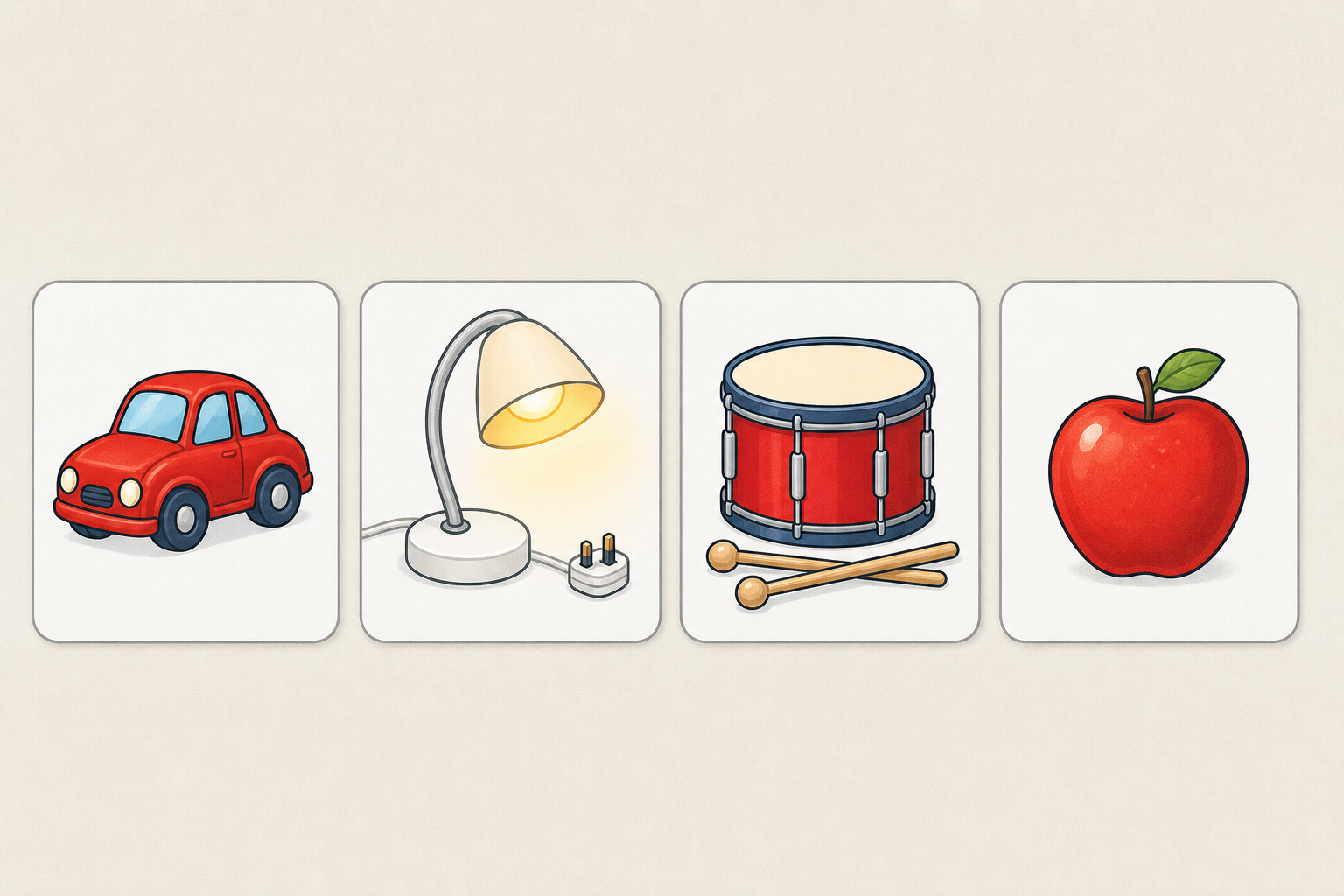
Listen. What can you hear?
Something made that sound. What do you think made it go?
Stand at the front and give one clear, loud clap. Pause so the class can listen. Then ask: What made that sound? How did the sound start?
Keep this beat light and playful. Do not name energy yet. Let children offer ideas such as hands, a bang or a noise. Smile at every idea.
Before the lesson: print the provided energy-in-action picture cards and clear a small open floor space for acting. Have the cards face down beside you, ready for the next steps.
Today's word is energy: what makes things move, light up or make a sound.
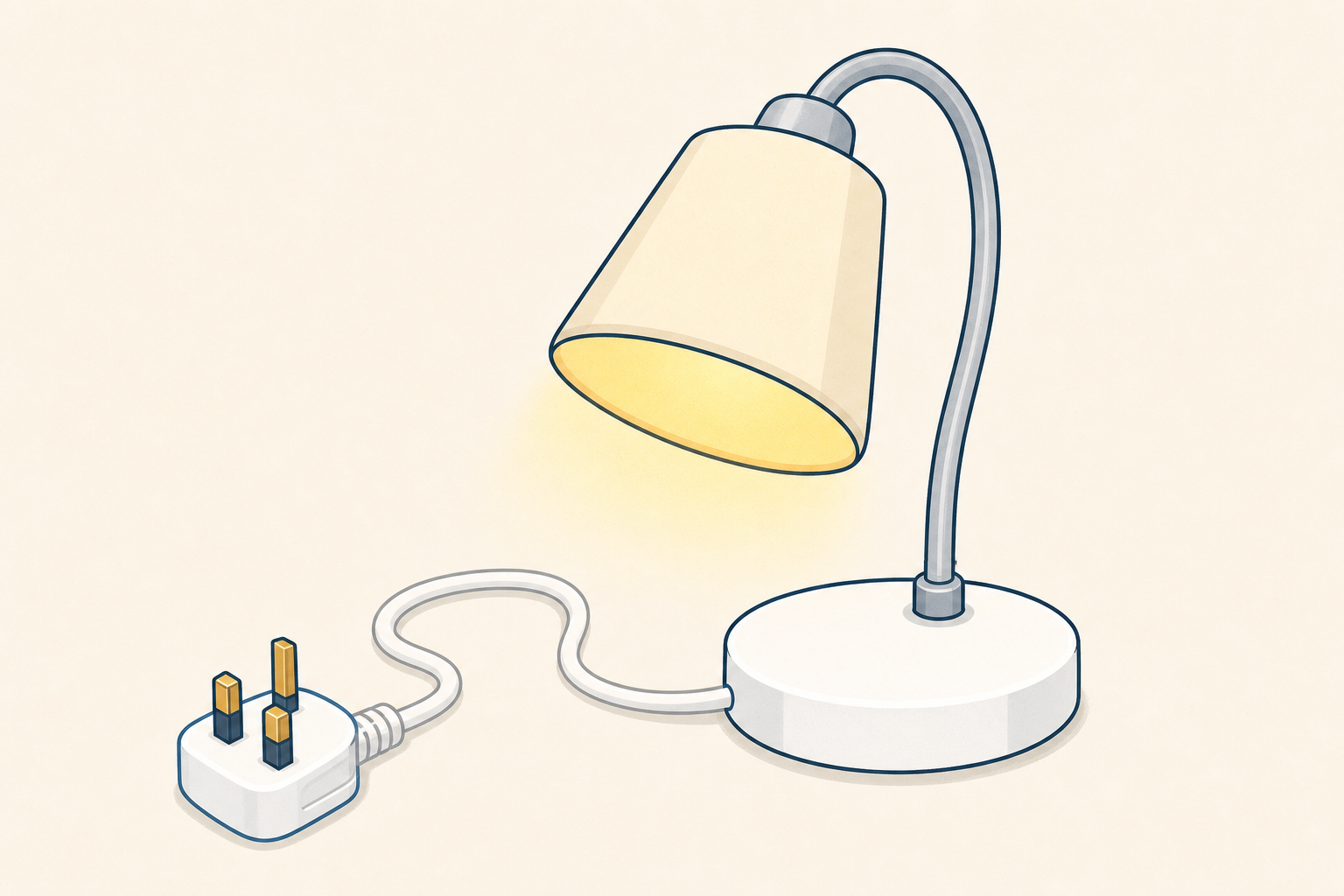
What do you think makes a lamp light up?
Hold up one picture card of a lamp (or point gently to a classroom lamp without switching anything on). Ask the board question and take a few short answers. Then ask aloud only (do not put on the board): What makes you run and play? Take one or two ideas. Say the word energy clearly and point to it on the board.
| Concept | Why it matters | Example |
|---|---|---|
| Energy — what makes things move, light up or make a sound | When we know energy makes things go, we can spot it in toys, lights, sounds and our own bodies | A fan spins, a lamp shines, a clap makes sound, and food gives us energy to run in the yard |
Worked model (say aloud, do not project):
Misconception to head off gently: children may say energy is only electricity or only food. Keep the idea wide: energy is what makes things go in lots of everyday ways. Do not teach circuits, plugs or mains. At this age we only name everyday effects (move, light, sound) and food for our bodies.
Who helps us: later, in the make-sense talk, you may briefly name an electrician who helps put in and look after the wires so energy can reach our lights. Keep that for the talk so this step stays short. It is a hear-and-echo only, not a lesson objective.
We are going on an energy hunt. Look at each picture. What is happening? Show me with your body.
One picture is different. It shows food that gives our bodies energy to play.
Spread the six provided picture cards face up on the floor or along a low table so every child can see. Keep the class together as one group. Work in short bursts: show one or two cards, act, regroup, then the next cards. Do not run one long sit-down talk.
For Cards 1–4 and Card 6 (fan, lamp, clap, running, torch):
Card 5 is different (food). Do not use the move / light / sound triad for this card. After naming it, say: This one is different. What gives our bodies energy to run and play? Then mime eating and running gently on the spot. Invite the class to copy. Praise: Yes, food gives our bodies energy to play!
If the room has a real classroom lamp, a battery torch or a small fan the school already owns, point to it after the matching card. Do not open battery covers or use mains switches with the children. Pictures alone are enough.
Card 1 — Fan: A fan spins and blows air. Energy makes it move.
Card 2 — Lamp: A lamp shines light in a room. Energy makes it light up.
Card 3 — Clap: Two hands clap and make a sound. Energy makes the sound.
Card 4 — Running: A child runs and plays. Our bodies use energy to move.
Card 5 — Food: Food like bread, fruit and milk. Food gives our bodies energy to play. (Use the different prompt above.)
Card 6 — Torch: A torch shines a beam. Energy makes the light.
Keep acts tiny and safe: run on the spot, not across the room. Stop between cards for a breath and a smile. If a child says a car or a tablet needs energy, welcome it: those are good energy spots too.
Differentiation: less confident children can point or copy your action; more confident children can choose which card to act next and say move, light or sound (or, for the food card, say that food gives energy to play).
Look at the cards again. Point to one that moves. Point to one that lights up. Point to one that makes a sound.
Which one shows food giving us energy?
Lay the six cards in a clear row on the floor or IWB ledge. This is a calm noticing beat after the active hunt. Oral pointing and talking only; no paper or diagram.
Ask the class to point (not shout over each other) as you name each prompt. Scan for every child joining in with eyes or a finger.
Look-fors:
If someone points to the wrong card, smile and try again together: Let's look once more. Which one is lighting up? Do not mark anyone wrong.
Optional real-room link: point once more to a classroom light or a battery torch and say, Energy helps that go too.
Energy makes things move, light up and make sound.
Food gives our bodies energy to play.
Gather the class on the carpet. Keep this oral and short. Lock the talk on the two lesson objectives. Revoice their hunt in simple words:
Optional brief helper name (teacher-led hear-and-echo only, not on the board and not a success look-for): After the food line is secure, you may say once: An electrician is a person who helps put in and look after the wires so energy can reach our lights safely. Invite one or two children to say the word electrician with you. Do not ask them who helps with lights as an open question. Do not explain wiring, plugs or mains safety beyond a gentle grown-ups look after the wires; we leave switches to teachers and families.
Success look-fors (oral): a child can act or name one energy example (move, light or sound); a child can say that food gives energy to play.
Display-only discussion. No typing and no journal page for this lesson.
You're previewing this lesson. Get full access to this lesson and hundreds more — each one ready to teach, with interactive activities, printable resources and pupil progress tracking built in.