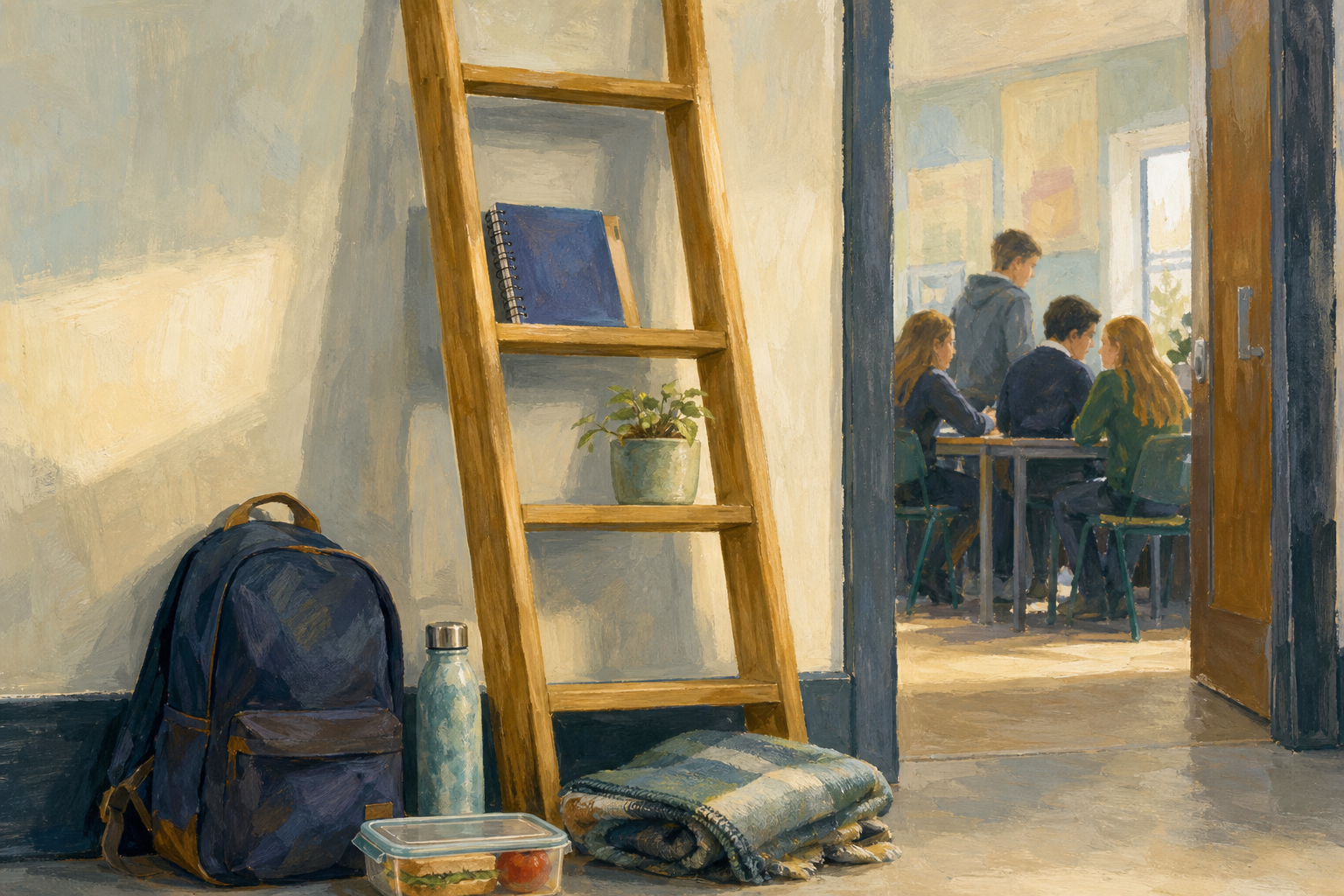
 Before you left home this morning, some things had to be true or you could not have got here: something to drink, somewhere safe enough to sleep, a way to get to school. Other things made the morning better without being the difference between managing and not.
Today the class puts human needs into tiers, from the ones a person dies without to the ones a person only really flourishes with, and then asks how those tiers connect to human rights.
People who study human needs often arrange them in layers, using five tiers from base to top: Survive, Stay safe, Belong, Be valued, Flourish.
That order is a claim, not a settled fact. Some people put belonging near the base because isolation harms people badly. Others rearrange the middle and upper tiers differently. The order is worth arguing about because it shapes what a community treats as urgent.
Rights often grow out of needs. Once a need becomes a right, somebody is supposed to act so that need is met. Agreement about a need and strength of rights protection are not always the same thing.
Today the class builds one big ladder of needs together on the wall or the board, using paper slips. The ladder on the screen shows the five empty rungs.
First, as a whole class, place these three needs on the Survive rung: clean drinking water; enough food each day; a place to sleep that keeps out the weather.
Then, in pairs, draw the five tiers in your copy and write each of the remaining nine needs on the rung you would give it, arguing any placement you disagree on. After that the class builds the wall ladder together, one need at a time: a pair proposes a rung and says why, and anyone who disagrees argues before the slip goes up.
The nine needs left for pairs are: protection from violence; healthcare when you are ill; friendship; privacy; education; being listened to when decisions affect you; time and space to rest; a language you can use and be understood in (e.g. being taught in a language you follow); the chance to take part in community life (e.g. joining a club or local event).
When your ladder is filled, match human rights from the bank to the needs on each rung. Three solid right-matches with a clear link beat nine rushed ones. Use the bank first before inventing your own.
Rights bank (from the Universal Declaration of Human Rights and the UN Convention on the Rights of the Child):
- right to life
- right to an adequate standard of living
- right to health
- right to education
- right to privacy
- right to non-discrimination
- right to be heard
- right to rest and leisure
- right to take part in cultural life
Notice where the class agrees on a need but struggles to match a strong right, and where a right is clear even though the need's place on the ladder is disputed.
Where does each need sit?
Look back at your ladder and the rights you matched beside it.
In pairs, talk through these two only:
- Which need was hardest to place, and why?
- Where did you agree a need mattered, but struggle to match a strong right that protects it?
Then your teacher will ask the whole class one last question: if a need becomes a right, who owes the duty to act on it?
There is no single correct ladder. Be ready to say why you placed something where you did, and what difference a right makes once it exists.
Today you arranged human needs in tiers, from survival up to flourishing, and you tested how those tiers line up with human rights.
You can now:
- explain why people group needs in a hierarchy, and why the order is argued about
- place everyday needs on that ladder and defend the placement
- say how a need relates to a right, and notice when a widely shared need has weaker protection than you expected
Next time the class turns to what the numbers say about who actually has the basics.
Unlock the full learning experience
You're previewing this lesson. Get full access to this lesson and hundreds more — each one ready to teach, with interactive activities, printable resources and pupil progress tracking built in.
This lesson is copyright of Coding Ireland 2017 - 2026. Unauthorised use, copying or distribution is not allowed.