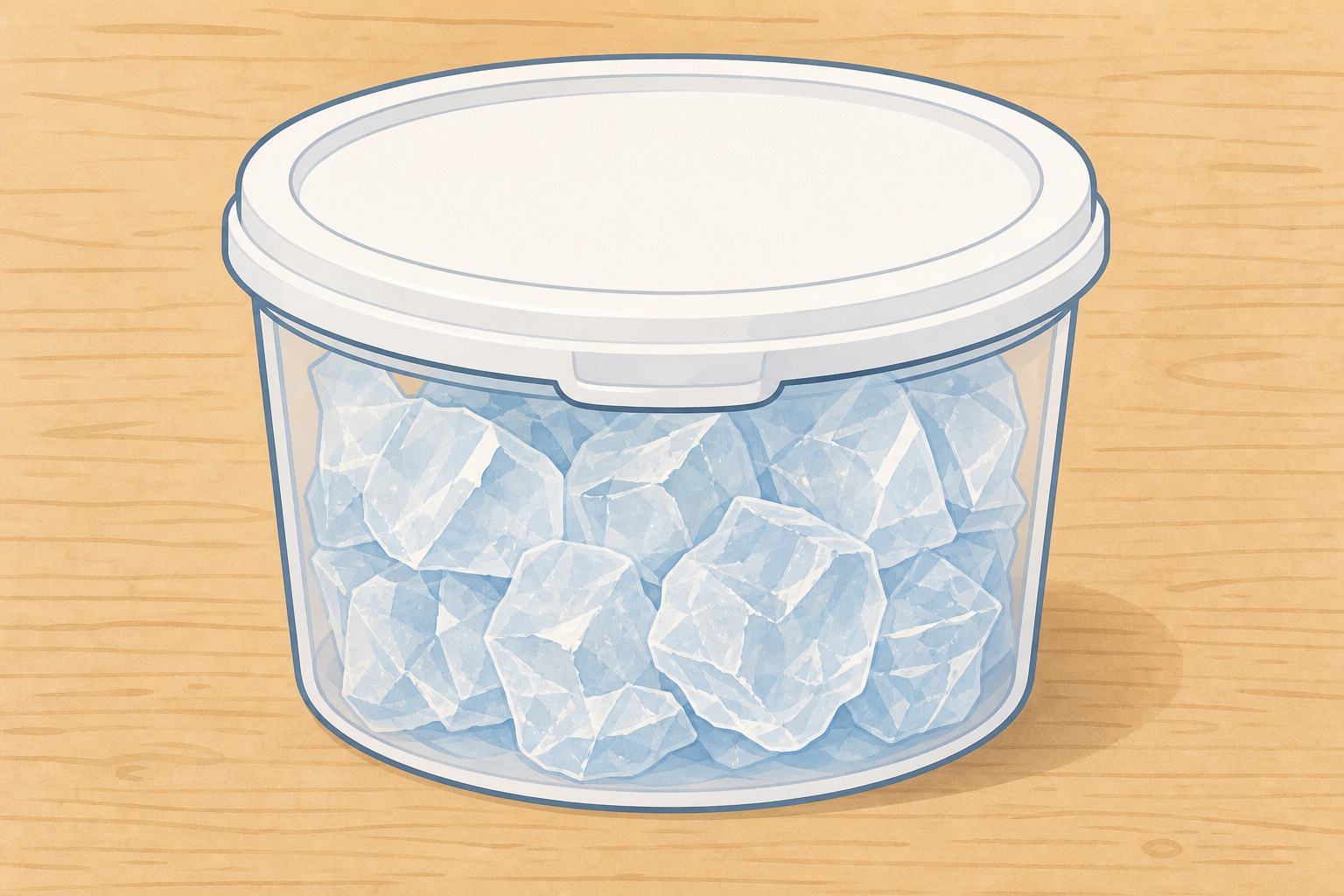
 Here is a sealed tub of ice. Soon it will be a puddle of water inside the tub. Will it then weigh more, less, or exactly the same?
Hands up your guess.
 Today's words: state means solid, liquid or gas. Mass is how much material there is, read on the balance, and a bigger mass reads heavier. Particles are the tiny pieces the material is made of.
When ice melts, does the amount of material change, or just its shape?

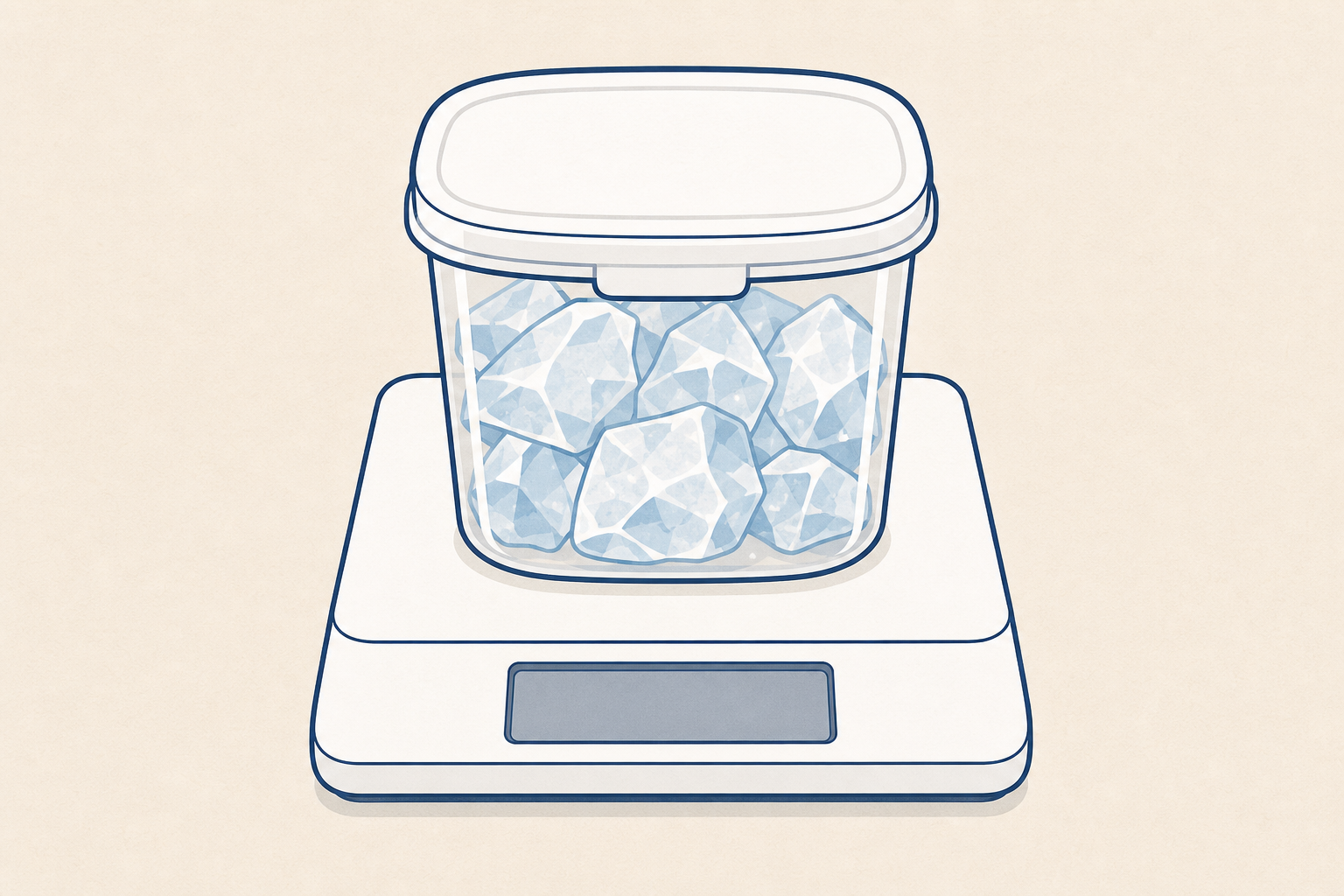
 Each group has a sealed tub of ice. If the class shares one balance, we weigh every tub together at the front bench. Read the prediction on the card below and decide whether you agree.
Before you weigh, say your own prediction out loud to your group: after melting, will the tub read more, less or exactly the same?
One step on the card asks your group to test one more thing, using only the kit already out. You get three ideas to choose from. Say what you expect before you try it.
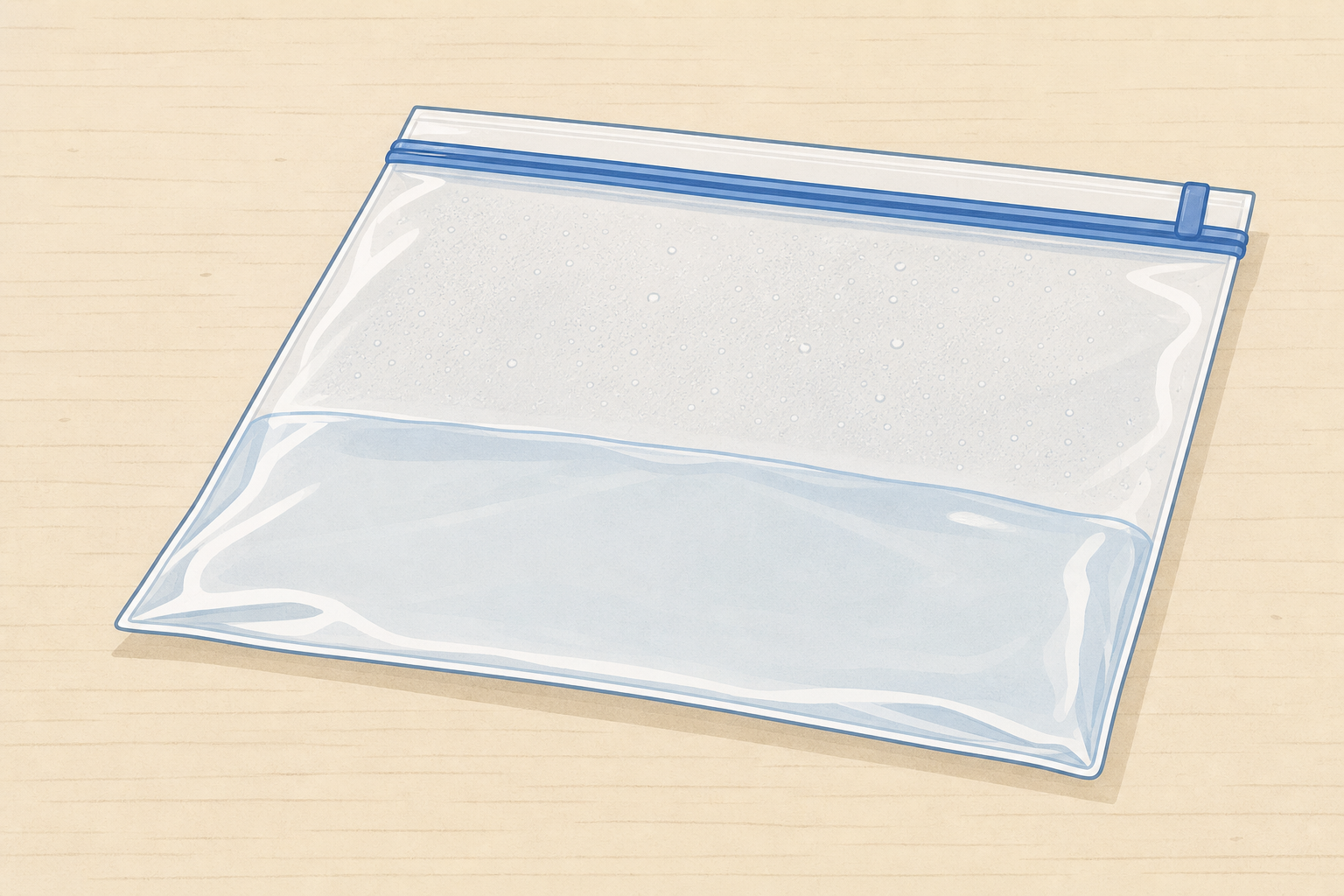
While your tub melts, watch the clear bag of warm water. The water turns into an invisible gas (water vapour), then back into tiny droplets on the cold side. It is the same water, still trapped in the bag.
The particles in your tub are far too small to see, so the screen gives you a model of them instead: one material in a container, with the temperature in your hands. The state name only appears after you have watched what the particles do, so watch first and read the name second.
Notice: the particles never change or disappear. Only the way they move changes.
What are the particles doing?
Now finish your Investigation Journal page on your own, answering the questions on the board.
If the class shared one balance, copy the two front-bench readings onto your own page before you start. Write the numbers exactly as the balance showed them, not "heavier" or "lighter", and then use your own words for the sentence.
Unlock the full learning experience
You're previewing this lesson. Get full access to this lesson and hundreds more — each one ready to teach, with interactive activities, printable resources and pupil progress tracking built in.
This lesson is copyright of Coding Ireland 2017 - 2026. Unauthorised use, copying or distribution is not allowed.