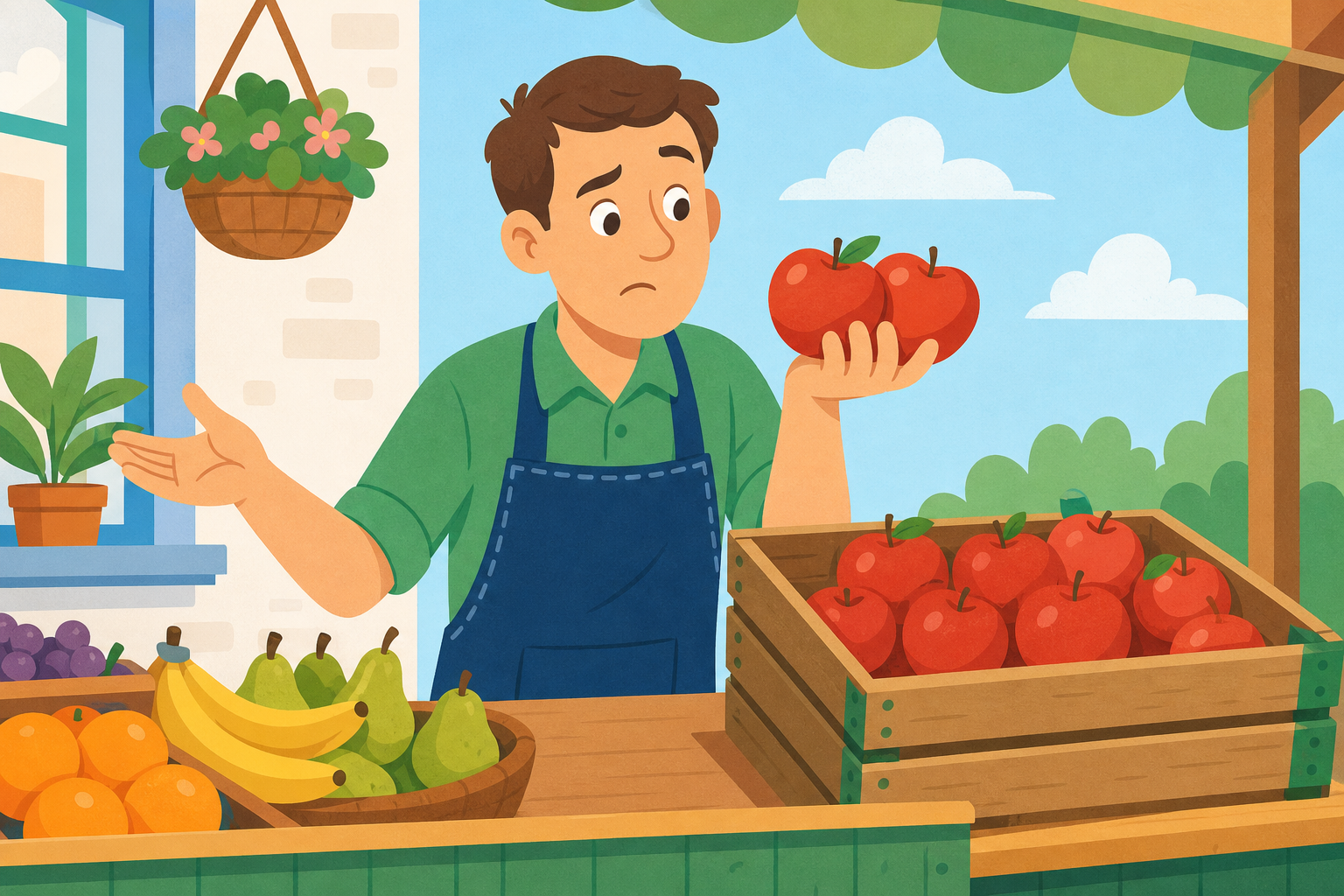
Here is a subtraction from the shop: a stall had 342 apples and sold 158 of them. Look at the units column for a moment. Can you take 8 apples away from 2 apples?
Hands up: what could we do when the top number in a column is too small to take away from?
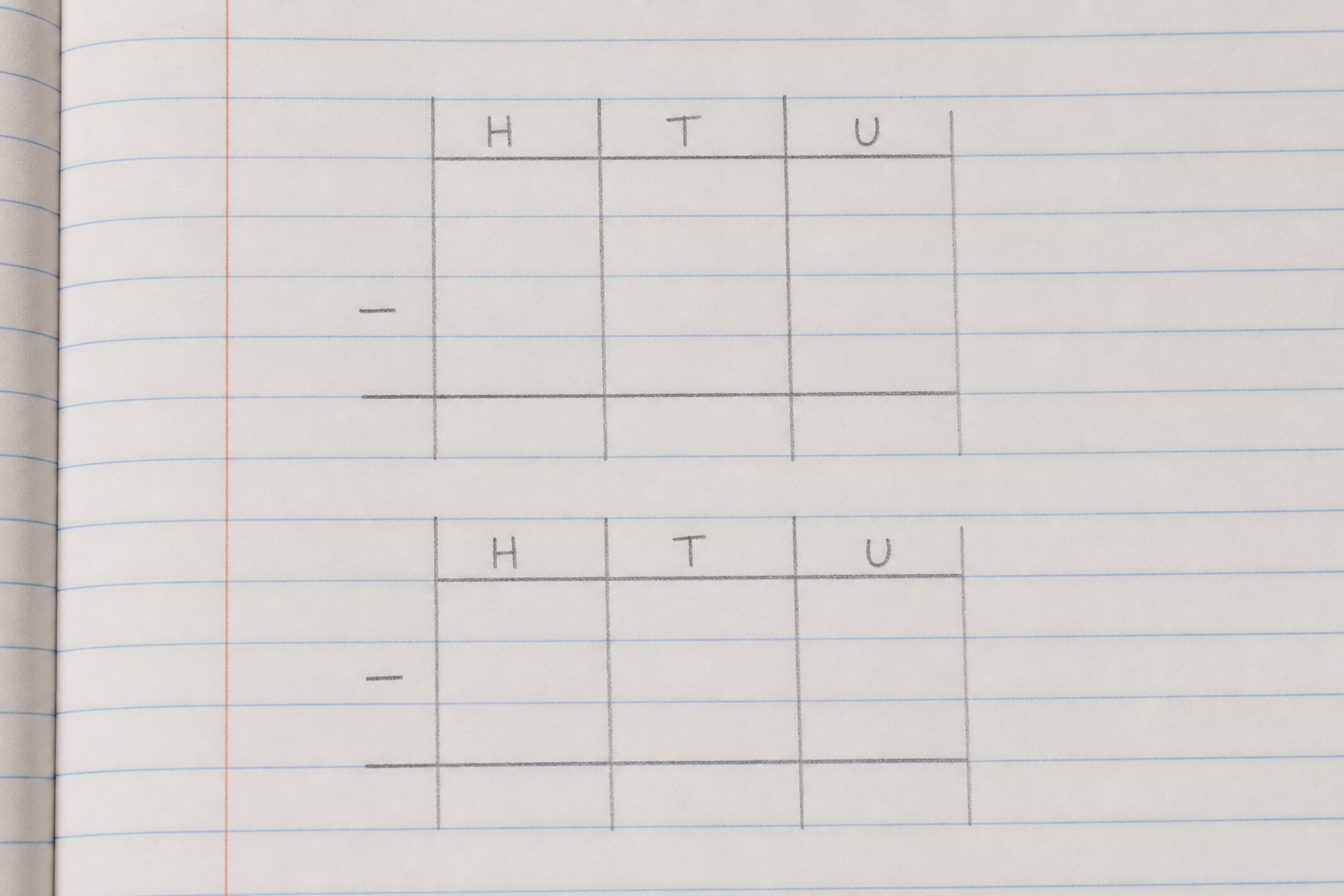
Display 342 − 158 stacked on the board as pupils settle. Take three hands-up answers, not open call-outs. Listen for the idea of borrowing or getting more from the next column — you'll name this renaming in the next step. Don't resolve the sum yet.
We work four subtractions on screen, one at a time. Watch the crossed-out borrow-note in each column and follow where the ten travels. Get ready to predict which columns will need renaming.
Work each example aloud from the right, one column at a time. Pause between examples to keep the watching class with you.
342 - 158: can't take 8 from 2, so rename one ten as ten ones, giving 12 ones; 12 - 8 = 4. Name the crossed-out mark the borrow-note and point out it means one fewer ten. Thumbs up if they can see where it went.
524 - 287: before revealing, ask which columns will borrow, take two hands-up. Renames twice, units then tens. Turn-and-name the two columns after.
403 - 176: the make-or-break one. Tens is 0, nothing to borrow yet; a hundred moves to the tens as ten tens first, then the tens pass a ten to the units. Stress the zero can't give until it receives. Slow right down, check thumbs before moving on.
600 - 354: tens and units both 0. Borrowing travels across the two zeros one column at a time, each 0 becoming 9 as it passes a ten along; hundred to tens, then ten to units. Give this one the most time.
Now we work these three subtractions together on the board. Start each one by writing the borrow-note where a column is too small, then read down the answer row column by column.
Before each column, say out loud whether we can take away straight off, or whether we need to rename first.
Try this together on the board, then confirm the answer as a class before moving on.
Call one pupil per subtraction to stack the numbers and tap the answer cells from the right. Before each column, ask the class: can we take this away, or do we need to rename? The interactive stacks whichever sum the pupil enters, so type each one in turn.
Before you open your copy, we check one subtraction together on the board. We already know 342 − 158 gives 184. Watch how we add 184 back onto 158 in columns, starting at the units, and see that we land on 342 again. That match means the subtraction was right.
In your maths copy, set out these two subtractions in columns and rename where a column is too small:
When you have each answer, check it the same way by adding your answer back to the smaller number. It should bring you back to the number you started with.
Whole-class demo first, then copy work. Do not skip the add-back.
On the board, stack 184 + 158 under the known result 342 − 158 = 184. Work right to left:
Total 342 matches the start number, so the subtraction checks. Point: answer + subtracted number = original.
Then copy work. Walk the room glancing at column alignment and the borrow-notes, this is whole-class copybook practice, not marking. Look for the rename across the zero in 502 − 247. Prompt any pupil who forgets the add-back check. Slip to watch: adding the two original numbers instead of answer + smaller number.
Now we solve these shop and school problems together on the board, each one a step harder. One pupil works each problem while the rest of the class follows on the board and gets ready to agree or correct.
First, 268 people leave a crowd of 345 at a match. Next, a shop with 524 items sells 287. Then a library of 403 books lends 176 — watch the zero in the tens. Last, a hall of 600 seats has 354 taken — two zeros, so the borrow has to travel the whole way across. Read each story, decide it is a take-away, then work the columns from the right.
These are the practice questions — pupils take turns at the board, check each answer, and the class confirms before moving on. Keep the board work brisk rather than over-explaining.
For each problem: circle the words that show it is a take-away, then work the columns from the right. The library problem is the renaming-across-a-zero case — flag it as the tricky one and let the class predict where the rename will travel. After each Check, ask a pupil to add the answer back to confirm.
You're previewing this lesson. Get full access to this lesson and hundreds more — each one ready to teach, with interactive activities, printable resources and pupil progress tracking built in.