 Watch the same ten seconds of video three times. What changes each time?
1. No sound
2. With music
3. With music and a voice
The video "Dublin snow benburb st" is from Wikimedia Commons. It is CC0, so anyone can use it for free. The narrator is invented. That is the voice in the third version.
Once all three have played
Nothing on screen moved. The picture was identical every time. What changed was the sound, and with it the whole meaning.
Download the practice audio file. It starts with a creaking door, which you will cut first.
Most digital media uses three kinds of sound.
In the table, a loop is music that repeats and a promo is an advert.
| Kind | What it does | Example |
|---|---|---|
| Voiceover | Carries the information. | Someone explaining what you are looking at. |
| Sound effects | Make actions feel real. | A door creak, a notification ping, footsteps. |
| Music | Sets the mood before anyone has said a word. | Slow strings under bad news; a bright loop under a promo. |
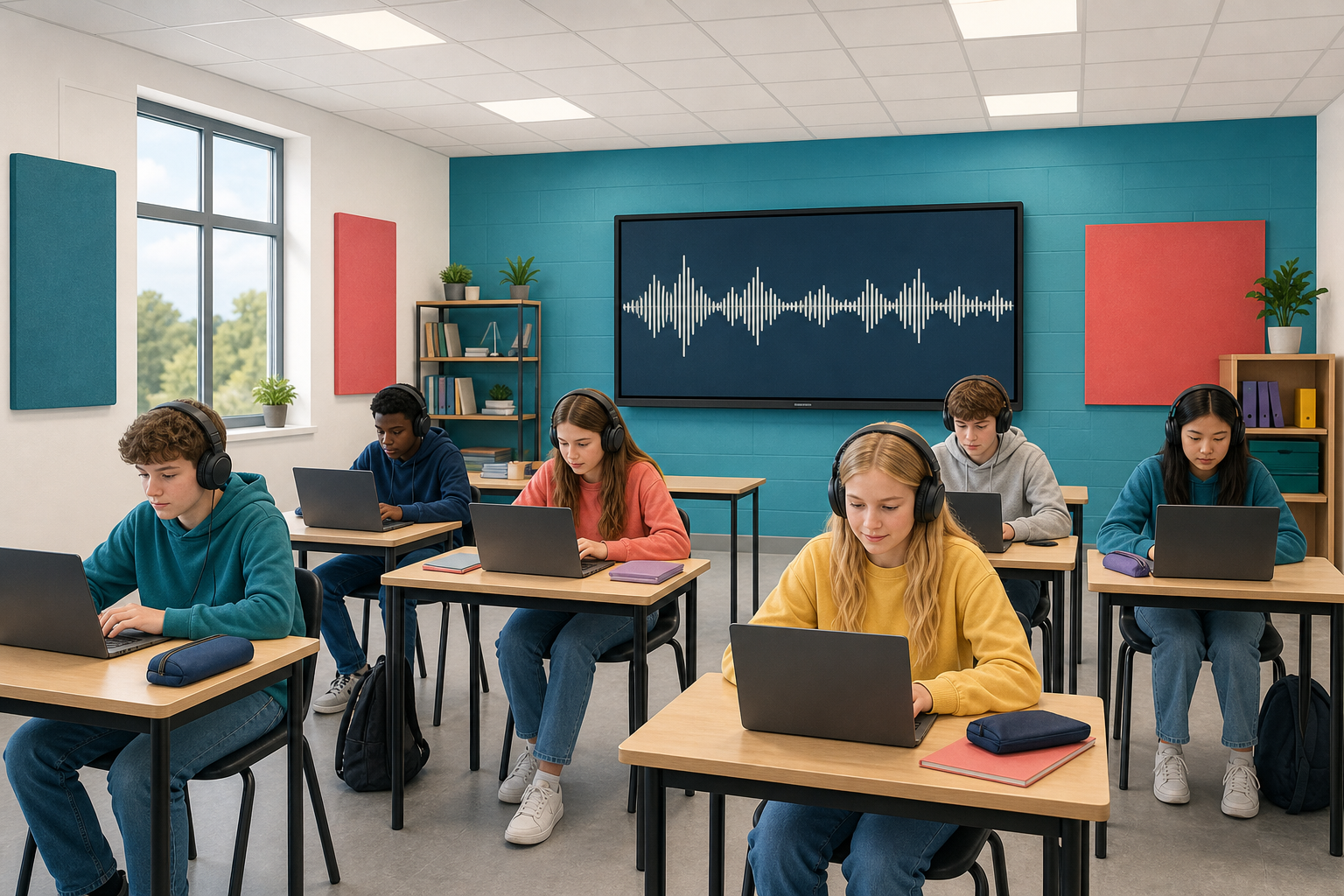
The green shape you will edit is a waveform, a picture of the sound. Tall parts are loud and flat parts are quiet, and you edit by selecting part of it.
AudioMass runs in your browser, so there is nothing to install and no account to make. Open it at audiomass.co. Make sure it ends in .co, because audiomass.com is a different site full of adverts.
You will make two cuts. First take the creak off the start, and then cut the end so the whole clip is exactly thirty seconds long.
| Cut | Target |
|---|---|
| From the start | Remove the creaking door, about the first 8 seconds |
| Final length | Exactly 30 seconds |
A clip that starts at full volume sounds like a mistake. A fade makes the sound slowly get louder or quieter, so it starts and stops on purpose.
Unlock the full learning experience
You're previewing this lesson. Get full access to this lesson and hundreds more — each one ready to teach, with interactive activities, printable resources and pupil progress tracking built in.
This lesson is copyright of Coding Ireland 2017 - 2026. Unauthorised use, copying or distribution is not allowed.