Intermediate
40 mins
Teacher/Student led
+65 XP
Pupils work on their own device
 Chromebooks, laptops, and PCs are crucial tools for coding and digital skills education. Chromebooks are ideal for web-based applications and collaborative projects, while laptops and PCs support a wider range of programming environments and software for more intensive tasks like software development and data analysis.
Editing Images with Canva, Part 2: Layers, Export and the Honest Edit
Students layer text over their image, export it in the right format, then judge their own edits against whether the result still represents what was there. This lesson counts towards outcome 3.8: students use these editing skills to build their digital montage in the montage lessons that follow.
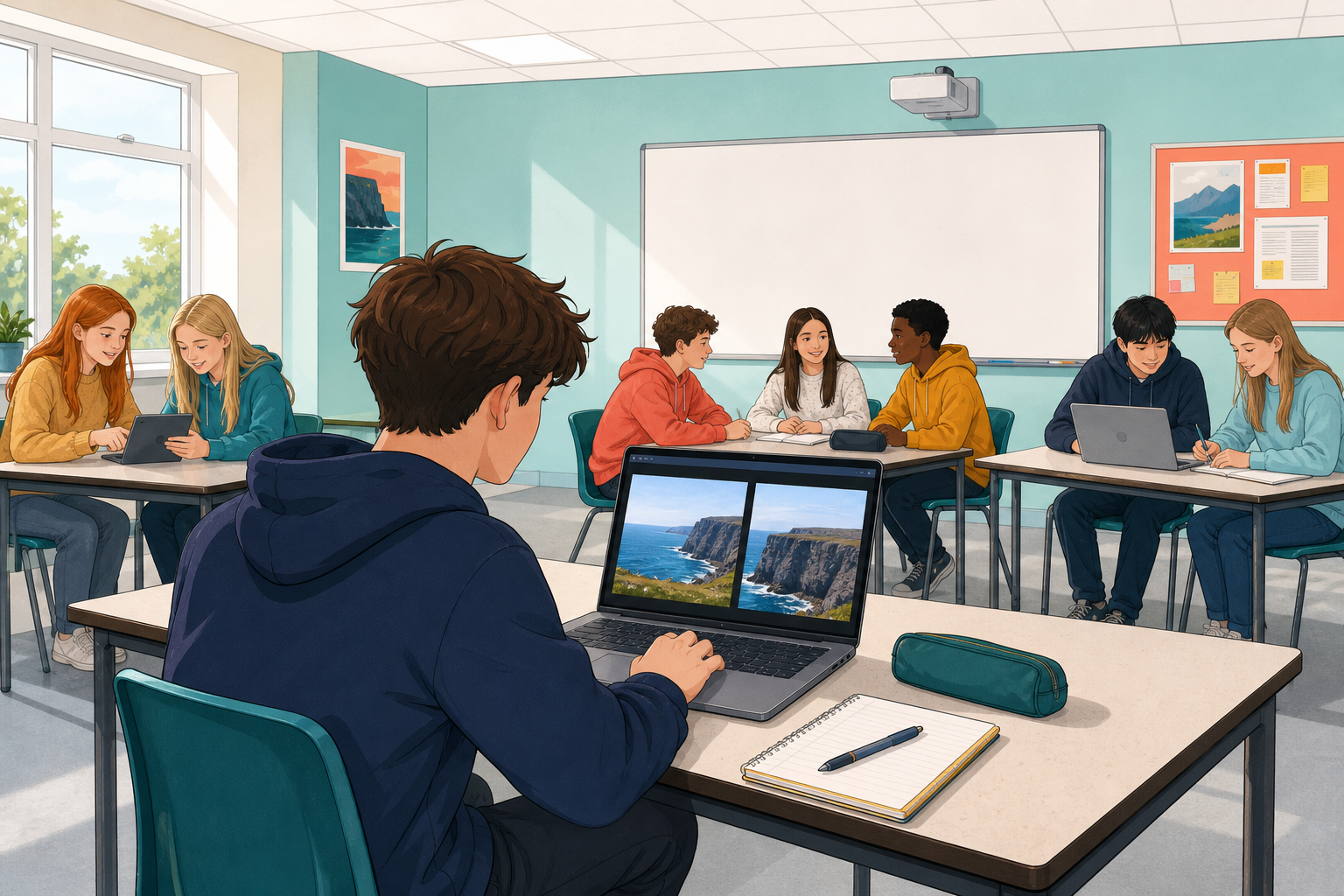 Open the design you made last lesson, the image you cropped, resized and adjusted.