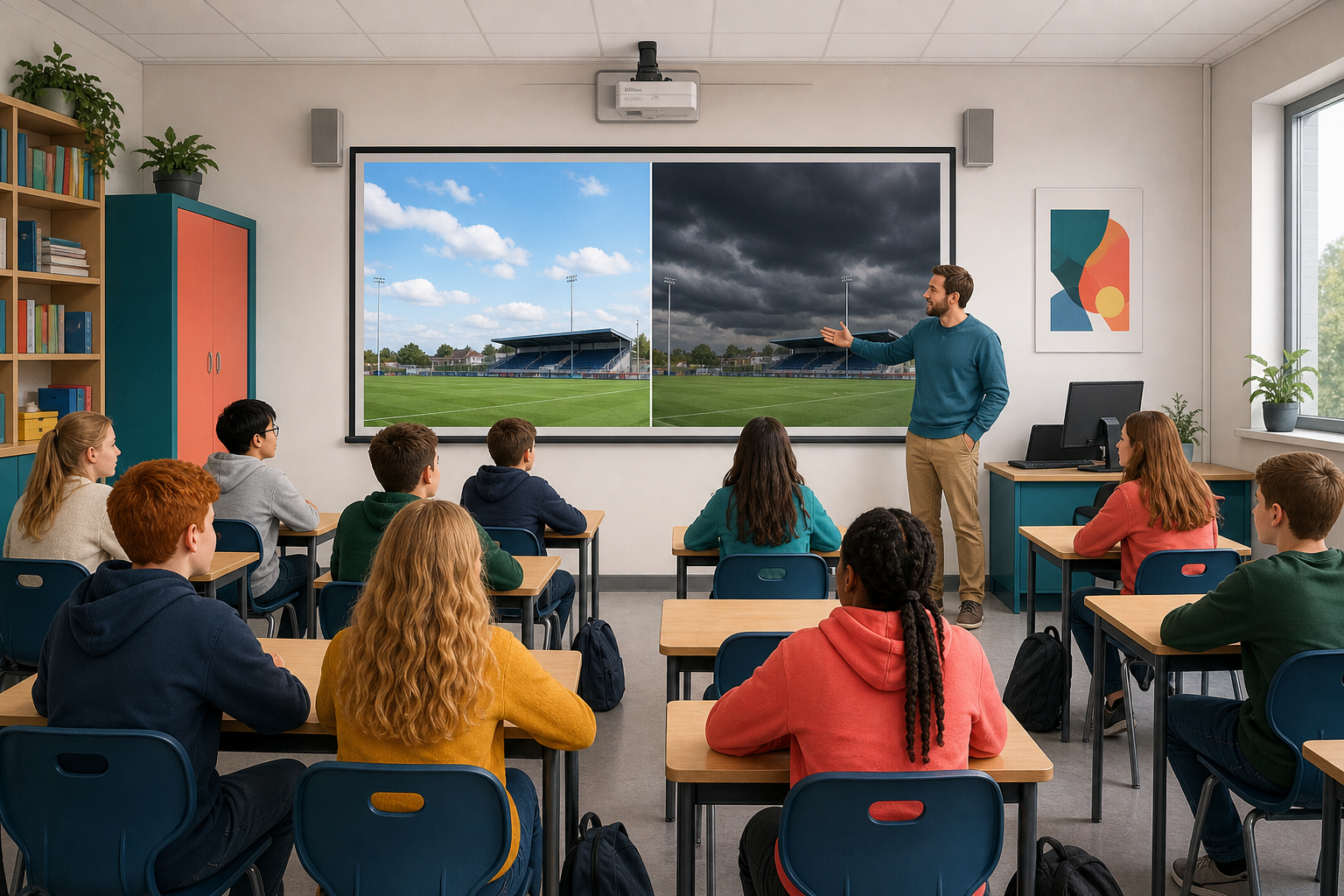
 You already know how to spot when a picture, video or audio clip has been changed, and whether the change is fair or meant to mislead. Today's question is different. When something has been changed, what does that change do to the person who sees or hears it? You will compare before-and-after pairs, name exactly what was changed, and say what reaction the change is meant to cause.
Manipulation means changing a picture, video or sound to affect how people react to it. Manipulation is about feelings as well as truth and lies. Look for three things in every example today:
- The change: exactly what is different from the original.
- The technique: a crop, cut, caption, soundtrack or colour grade (making colours darker, brighter or more dramatic).
- The engineered reaction: the feeling the edit was built on purpose to cause, such as anger, sympathy, fear, trust, excitement or hurry.
 A fair edit makes something clearer without changing what happened. A misleading edit makes people feel something the real event would not.
Work through the activity below as a class. Each item shows the changed version of a post. You cannot see the original, so it is described in the box below. Read that first, and then tap the zones to find what was changed.
For every zone you open, say out loud:
- exactly what was changed from the original
- which technique was used
- which reaction it is built to cause
One of the two posts is a fair edit. You still check each zone on that post, because you need to show why it is fair. Ask whether the zone is a trick to persuade you or just ordinary work to make the photo clearer.
StormWatch local weather post. Original: an ordinary grey sky over a pitch, with the plain caption Light rain possible near the east pitch this afternoon. Changed version (on screen): the sky has been made much darker, and the contrast has been turned right up, so the light parts look brighter and the dark parts look darker. Panic wording has been added too, along with messages pushing you to act fast.
Club Day sports photo. Original: a slightly dull, dark match photo of the real moment. Changed version (on screen): the brightness and colour have been fixed for a match report, and it shows the same people and action. Small print on the post says nobody was added or removed.
Media Detective
Now make the edits yourself in the activity below, building one picture from the library in two different ways.
Each picture says whether it is free to reuse, needs a credit, or cannot be used. One picture will refuse to go in, and that is meant to happen, so choose another. Check before you place a picture, and open Credits at the end for anything that needs a credit.
Your work saves as you go. Use the download button to keep a copy as a picture, and then press Send to Teacher under the activity. Your teacher will put some on the board in a minute.
One picture, two reactions
Your teacher will show two versions of one picture without saying which is which. Work out the reaction each is built to cause, and what in it made you feel that. Then decide whether either version was a lie.
After that, sum up as a class:
- A crop, colour grade, cut, caption or soundtrack can push the same scene towards fear, excitement, sympathy or trust.
- A fair edit makes things clearer without changing what happened. A misleading edit builds a feeling the original would not have caused on its own.
Naming what a change does to you helps you decide what to believe and share.
Unlock the full learning experience
You're previewing this lesson. Get full access to this lesson and hundreds more — each one ready to teach, with interactive activities, printable resources and pupil progress tracking built in.
This lesson is copyright of Coding Ireland 2017 - 2026. Unauthorised use, copying or distribution is not allowed.