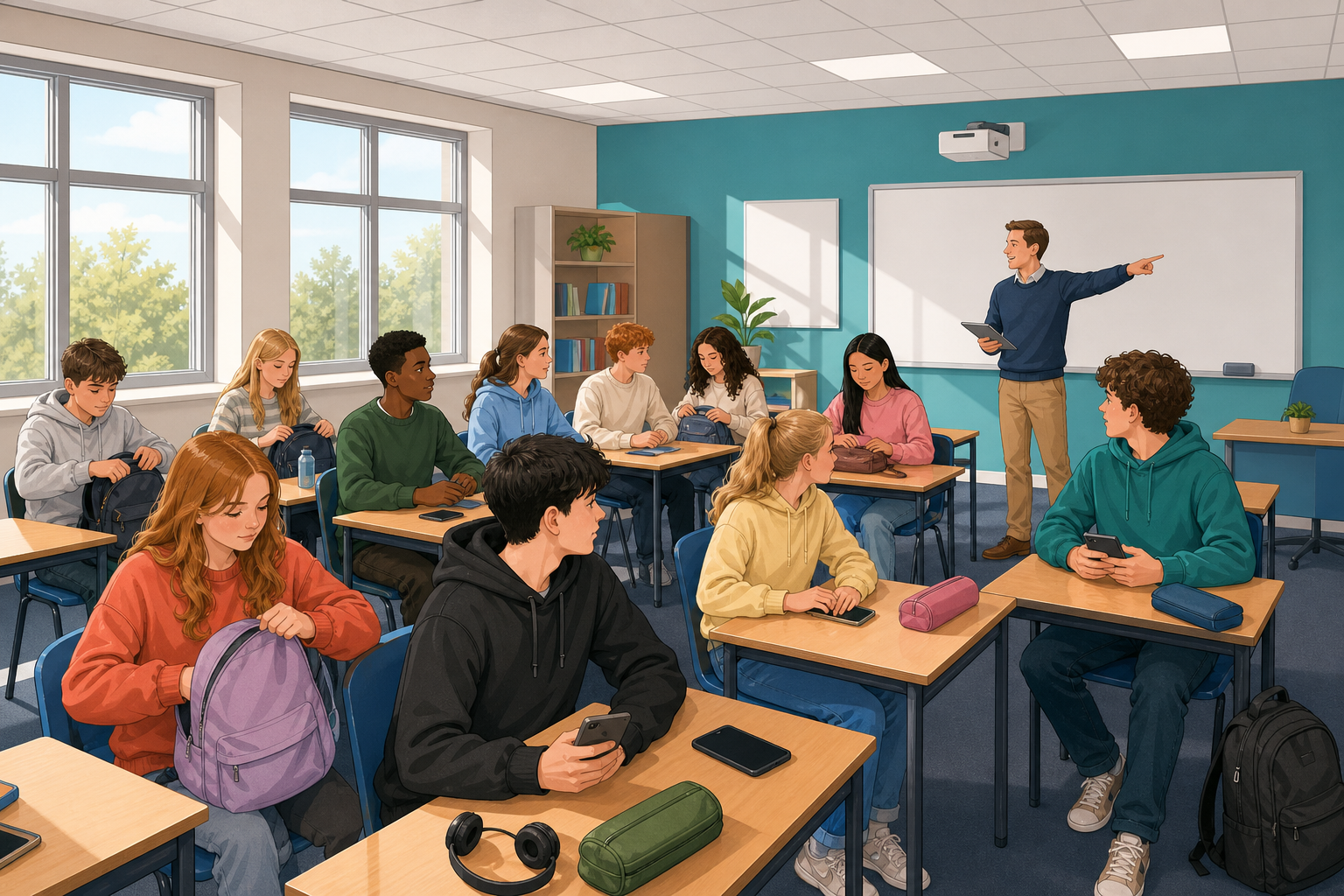
 Welcome to Digital Media Literacy. Over this course you will get better at four things you already do online:
- Understanding your own habits online
- Judging what to trust
- Following your interests
- Sharing your own work online
Near the end you will do a project of your own that uses all four.
Today you start with your digital footprint. That is a name for all the things you do on phones, computers and consoles in a day. You will make a card about it, using pictures and words.
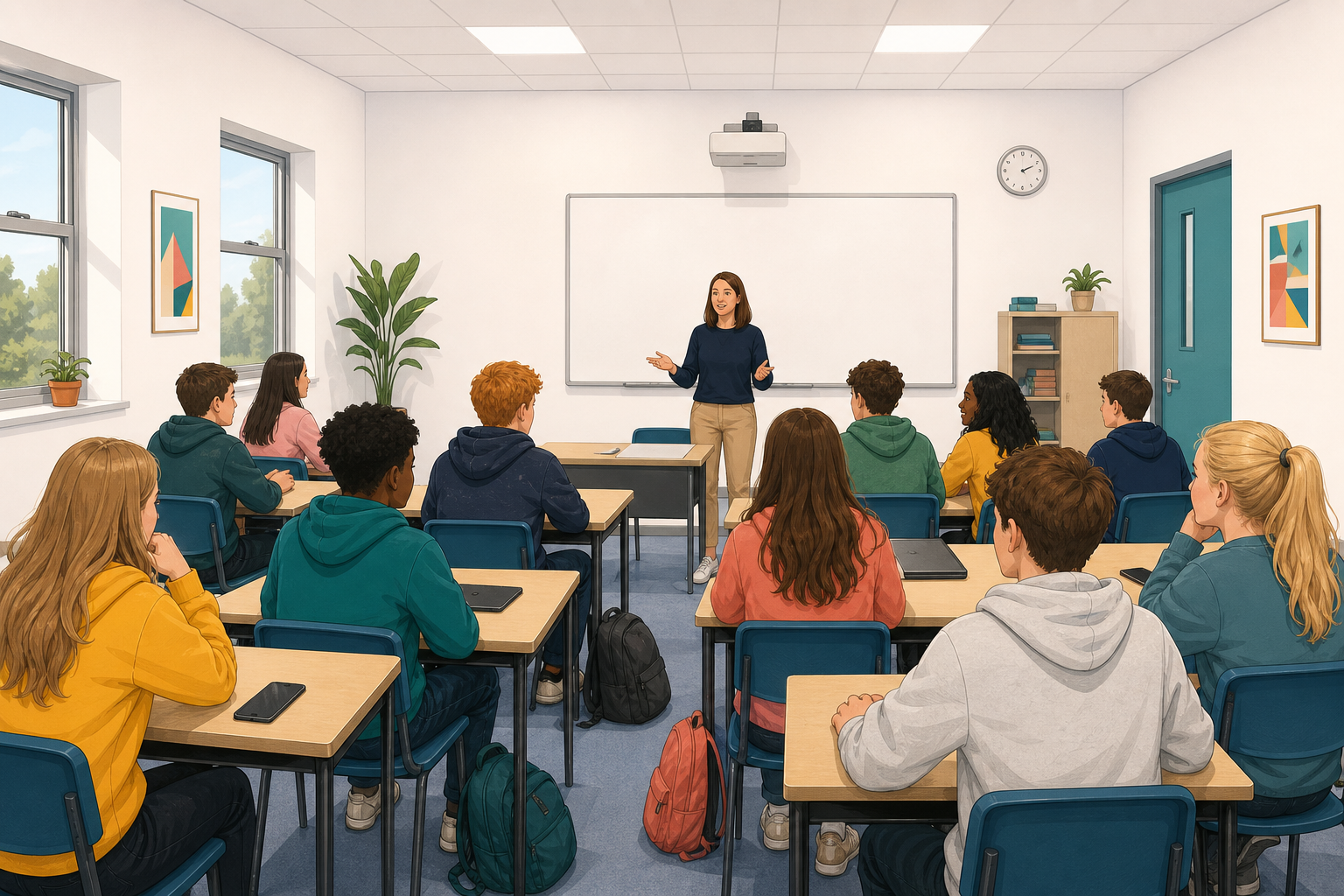 Picture a normal school day, from when you wake up to when you go to sleep. Which digital tools do you actually use?
For example: an alarm on a phone, a group chat on the bus, a quiz on the school laptop, a video while eating, a game before bed. Yours will be different.
Call out a few of yours. Next, you will put them on a card of your own. Nothing today is graded.
Now make your card in the activity below.
Each picture has a badge. FREE means you can use it. CREDIT means you can use it with a credit, which is a line saying who made it. NO means it is not yours to use, and the activity will not let you place it. That is meant to happen, so just pick another. At the end, open Credits and check the credit line for each CREDIT picture.
Your work saves as you go. When you finish, use the download button to keep a copy as a picture. Then press Enter Your Work under the activity and choose Send to Teacher. Your teacher will put three or four on the board next, with the names hidden.
My digital day
Your teacher shows three or four cards on the board without saying whose they are, then builds a class list on the board under three headings: Messaging and social, Video, music and games and School and learning.
- Keep your own card open.
- Guess whose each card is, and say what gave it away. Guessing wrong is fine: the clues are what count, and they are often habits a lot of the class shares.
- Call out one tool, app or habit from your card for the class list, only something you are happy to share. Each heading has a few suggestions your teacher can add with one click, or the class can word its own.
- Help the class mark the ones most people have. Your teacher ticks the circle beside each one.
Your teacher builds the list on the board, so you do not need to type anything in it.
Our class digital patterns
Look at the cards and the class list.
- In one sentence, what does the board tell you about how this class uses digital technology on a normal day?
- Which habit on the board do fewer people have than you expected?
Today you looked at how you spend your day online, and saw what is common in this class and what is different. Everything else in the course starts from here. Later you will judge what you see online, make media of your own and publish it carefully. Today you only needed to describe your habits, not judge them.
Unlock the full learning experience
You're previewing this lesson. Get full access to this lesson and hundreds more — each one ready to teach, with interactive activities, printable resources and pupil progress tracking built in.
This lesson is copyright of Coding Ireland 2017 - 2026. Unauthorised use, copying or distribution is not allowed.