You're previewing the student experience. You don't need to complete this lesson — your progress and XP aren't saved.
Artificial Intelligence
Beginner
40 mins
Teacher/Student led
+115 XP

What you need:
Chromebook/Laptop/PC or iPad/Tablet

What is AI?

In this lesson, you'll explore the fascinating world of Artificial Intelligence. Learn what AI is, see how it’s used in everyday tools like voice assistants, and understand its strengths and limits through engaging activities and reflections.
Teacher Class Feed

Load previous activity

    1 - Introduction

    Your Introduction to Artificial Intelligence

    Imagine a technology that enables your smartphone to recommend the next song you might enjoy, or adjusts the difficulty of a video game to match your skill level. This is the capability of AI.

    In this lesson, you will learn the definition of AI, explore examples of AI in everyday life, and consider its capabilities and limitations. By the end, you will have a foundational understanding of this important technology.

    Reflect on any 'smart' devices or applications you have encountered. For example, consider how you might ask a voice assistant like Siri a question, or receive personalised video recommendations on platforms such as YouTube.

    Think about how these experiences might relate to AI, and jot down one or two examples in your notebook.

    2 - Understanding What AI Is

    Understanding Artificial Intelligence

    Artificial Intelligence, commonly abbreviated as AI, refers to the branch of computer science that focuses on creating systems capable of performing tasks which typically require human intelligence. These tasks include activities such as recognising speech, making decisions, solving problems, and understanding natural language.

    In essence, AI involves the development of computer programs that can process information, learn from it, and adapt their behaviour accordingly. Unlike traditional software, which follows a fixed set of instructions without change, AI systems use data to identify patterns and improve their performance over time. It is important to note that AI is not a living entity; it simulates intelligent behaviour through advanced programming and algorithms.

    Artificial Intelligence is when computers or machines are built to do tasks that normally need human thinking. This can include learning from experience, solving problems, understanding language, or making decisions. In simple terms, AI helps machines act “smart.”

    But let’s be clear—AI doesn’t mean robots taking over the world like in sci-fi movies. Most AI today isn’t a walking, talking robot. Instead, it’s software that works quietly in the background of apps and websites we use every day. What makes AI different from normal computers is that it can improve over time by learning from data. The more it sees, the better it gets at guessing or helping.

    AI isn’t about replacing humans—it’s about creating smart tools that make life easier, faster, or more fun. It helps people do things like translate languages, find information quickly, play games, and even spot signs of illness in medicine.

    3 - AI in Your Everyday World

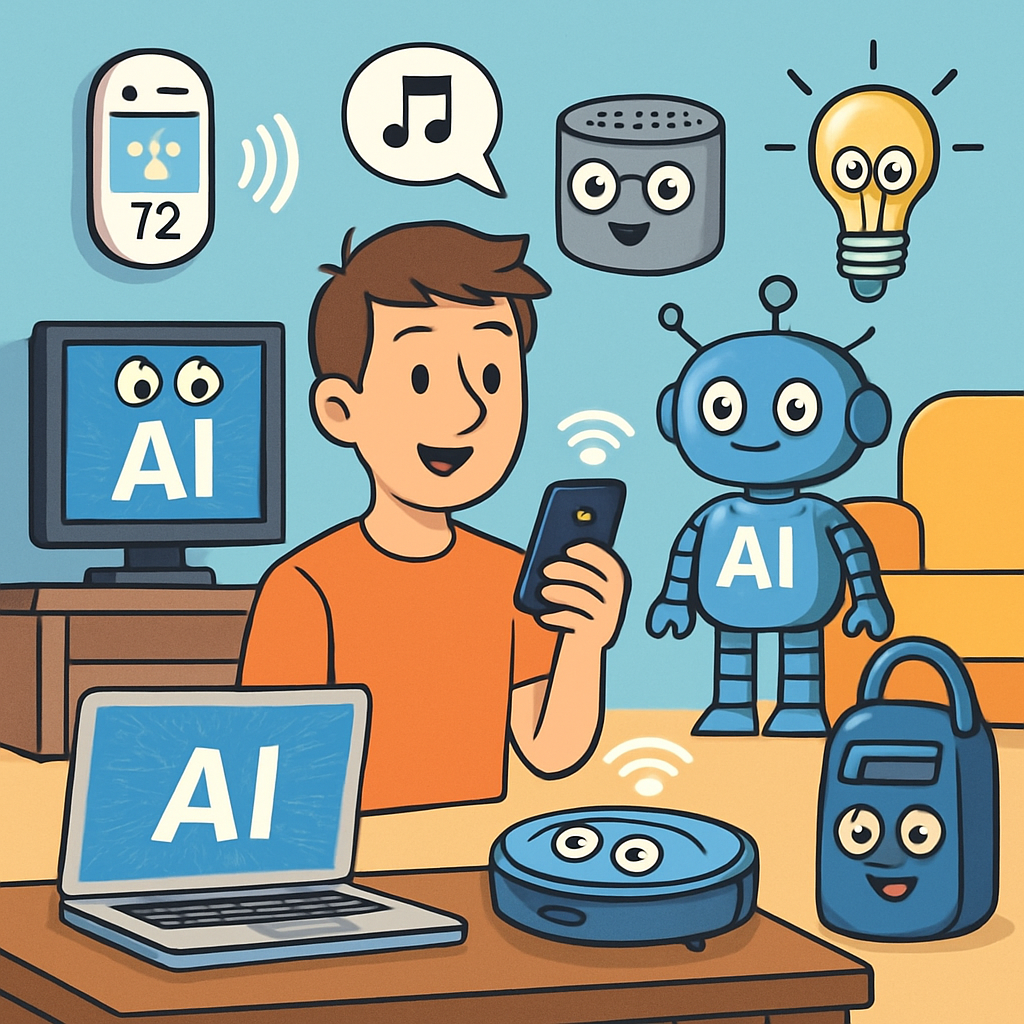
    Artificial Intelligence is integrated into many aspects of our daily routines, often without us noticing. In this step, you will explore common examples of AI and reflect on how it appears in your own experiences.

    Below are some examples of AI in action:

    • Voice Assistants: Devices such as Google Assistant or Amazon Alexa can respond to your spoken commands, for instance, by setting a timer or providing weather updates. These systems use AI to understand and process natural language.
    • Social Media Platforms: Applications like Instagram or TikTok employ AI to recommend content, such as videos or posts, based on your previous interactions and preferences.
    • Video Games: In games including Fortnite or Minecraft, AI algorithms control non-player characters that adapt to your actions, enhancing the gameplay experience.
    • Navigation Apps: Tools like Google Maps use AI to suggest the fastest routes by analysing traffic data in real time.
    • Personalised Recommendations: Streaming services such as Netflix utilise AI to propose films or shows tailored to your viewing history.
    Now, consider your own daily activities. Take a moment to think about any technologies you use that might involve AI. Spend 5 minutes writing down 2-3 examples from your life, and briefly explain how you believe AI is involved in each one.
    This activity will help you recognise the presence of AI in the world around you.

    4 - How AI Works

    The Basics of How AI Works

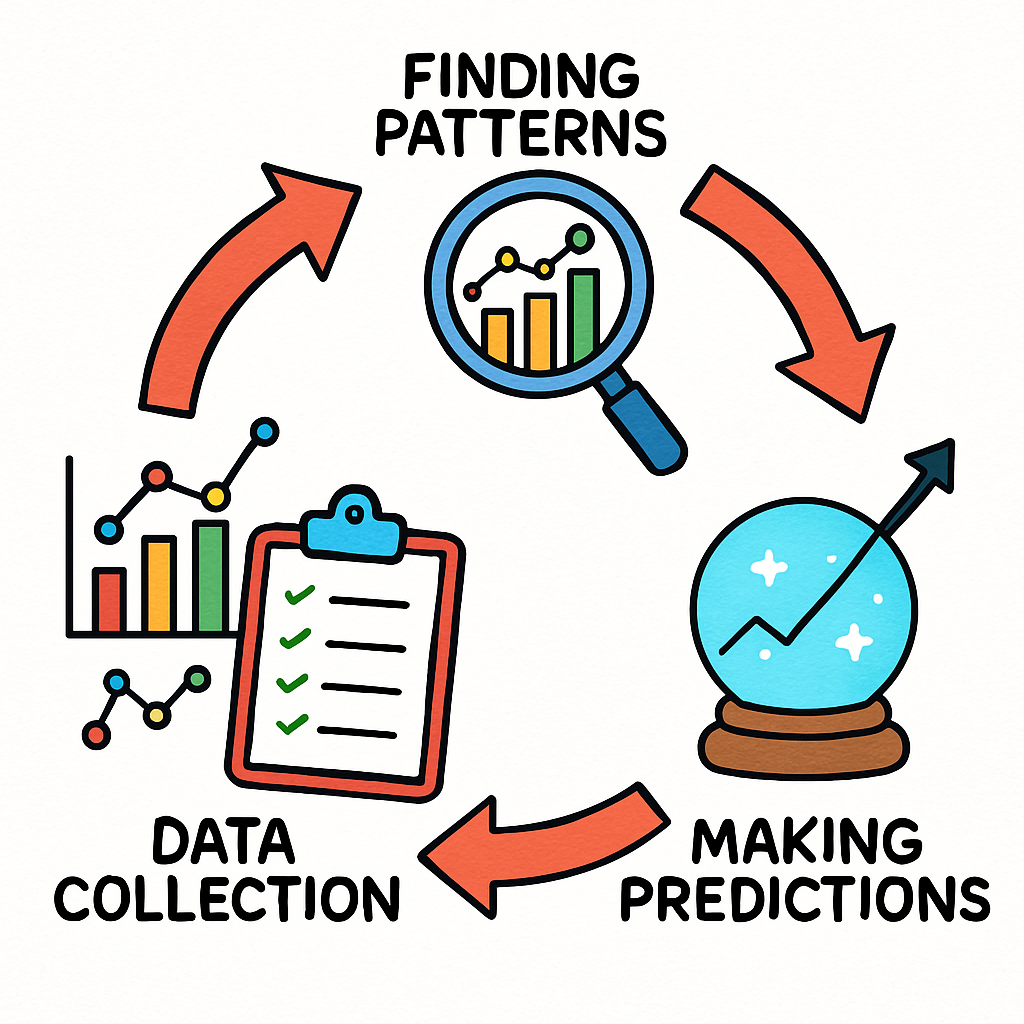
    Artificial Intelligence operates by processing large amounts of data to identify patterns and make informed predictions. This process is fundamental to many AI systems and can be broken down into key stages. In this step, you will learn about these stages in a structured way.

    To understand AI better, consider it as a system that learns from examples, much like how you might learn a new skill through practice and observation. However, AI relies on algorithms – sets of rules and calculations – to achieve this. There is no magic involved; it is all based on careful programming and data analysis.

    1. Data Collection: The first stage involves gathering information. For instance, an AI system in a music app collects data on the songs you have listened to, including details such as genre, artist, and duration.
    2. Finding Patterns: Next, the AI analyses this data to detect similarities and trends. It might notice, for example, that you frequently choose upbeat songs or tracks from a particular artist, establishing patterns in your preferences.
    3. Making Predictions: Using the identified patterns, the AI then makes educated guesses or recommendations. In the music app example, it could suggest new songs that align with your tastes, improving its suggestions as it receives more data.

    This cycle of collecting data, finding patterns, and making predictions allows AI to improve over time, a concept known as machine learning. Remember, the more high-quality data an AI system has, the more accurate its predictions become.

    Now, take 10 minutes to read through this explanation carefully. Afterwards, draw a simple diagram on paper illustrating these three stages. Label each stage and add a brief note on what happens in it. This will help reinforce your understanding of how AI functions.

    5 - Activity: Is It AI or Not?

    🧠 Can You Guess? Real or AI-Generated Image

    Look at each image and decide whether it's real or AI-generated. Click your answer to find out and then move on to the next image.

    Guess this image

    6 - AI Generated Images

    The Line Between Real and Fake

    AI generated image example of footballer.

    As you saw in the image quiz, it’s becoming increasingly difficult to tell the difference between real photos and those made by Artificial Intelligence. Tools like DALL·E, Midjourney, ChatGPT, Grok and Adobe Firefly can now generate incredibly realistic images just from a few words of text.

    These images can be of people, places, or events that never actually happened—and they often look 100% believable. AI models have learned to copy lighting, shadows, facial expressions, and details that trick even experienced eyes.

    Take the image on the right, for example. At first glance, it might look like a real photo of footballer Cristiano Ronaldo. But it's not—it's an AI-generated image that mimics his appearance in a way that looks incredibly convincing. That’s how powerful and realistic these tools have become.

    Why It Matters

    • Misinformation: AI-generated images can be used to spread fake news or hoaxes.
    • Digital Responsibility: You need strong skills to question what you see and know when to be sceptical.
    • Visual Literacy: Recognising visual clues and checking sources are now just as important as reading text critically.

    Think About It

    Have you ever seen a photo online and wondered if it was real? Would you be able to spot an AI fake on your own? That’s why these lessons matter—so you can stay informed and make smart choices online.

    As AI tools continue to improve, being able to question what you see is one of the most important digital skills you can develop. Always ask: "Who made this? Why does it exist? Can I trust it?"

    7 - Thinking About AI's Limits

    Exploring the Capabilities and Limitations of Artificial Intelligence

    Artificial Intelligence is a powerful technology that can perform many impressive tasks, but it is important to understand that it has limitations. Recognising both what AI can achieve and what it cannot is essential for using it responsibly and effectively. In this step, you will learn about some key strengths and weaknesses of AI, and reflect on why these matter.

    AI systems are designed to process information and make decisions based on data and algorithms. However, they do not possess human qualities such as emotions or independent creativity. Let us examine this in more detail.

    What AI Can Do

    AI excels in tasks that involve analysing large amounts of data quickly and accurately. Here are some examples:

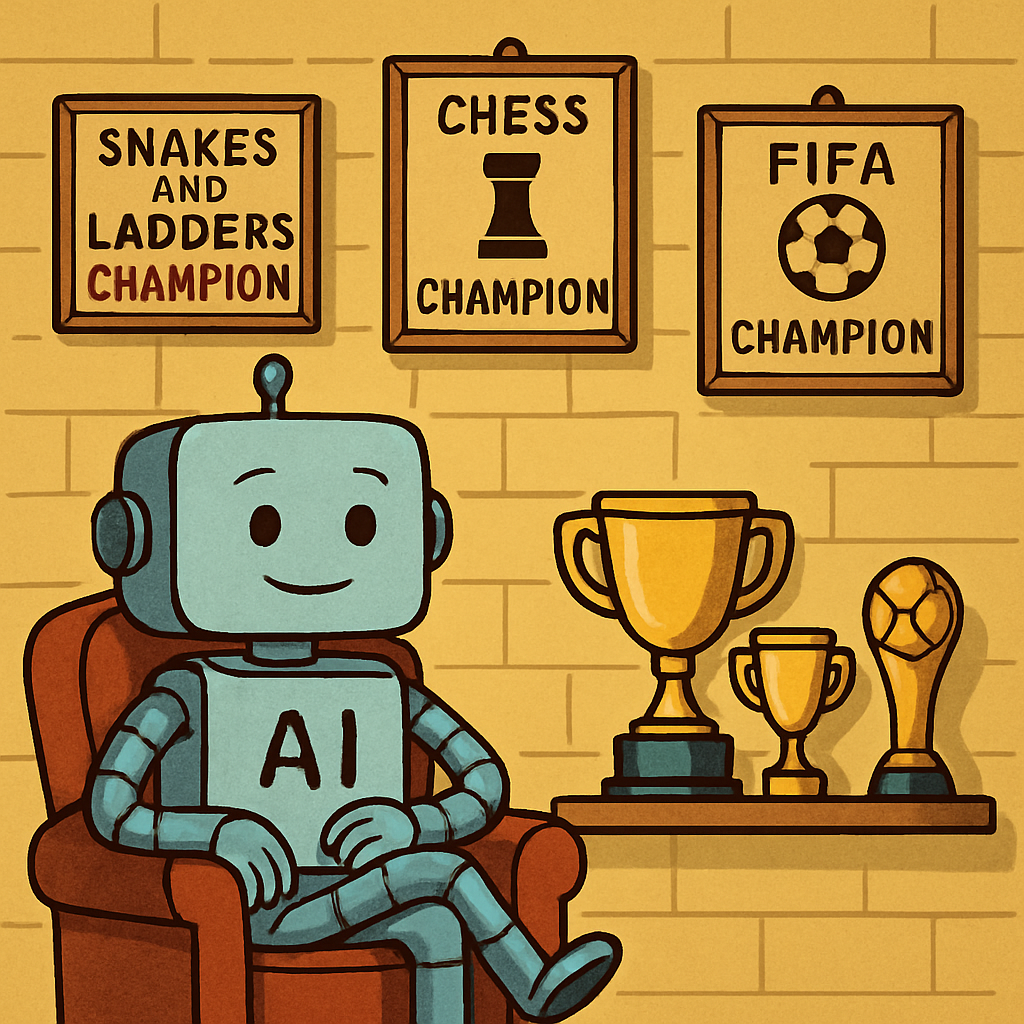
    • Playing Games: AI can outperform humans in certain games, such as chess, by calculating millions of possible moves in seconds.
    • Assisting in Healthcare: AI can help doctors by analysing medical scans to detect signs of illnesses, such as identifying patterns in X-rays that might indicate a disease.
    • Translating Languages: AI-powered tools can translate text or speech between languages almost instantly, making communication easier across the world.

    What AI Cannot Do 

    Despite its strengths, AI lacks certain human abilities and requires human oversight in many areas. For instance:

    • Feel Emotions: AI cannot experience feelings like happiness, sadness, or empathy, as it does not have consciousness or personal experiences.
    • Be Truly Creative: While AI can generate art or music based on patterns it has learned, it cannot create something entirely original without human input or data from existing works.
    • Make Moral Decisions: AI cannot understand ethics or make judgements about right and wrong on its own; it relies on humans to program rules and guide its actions.

    Understanding these limitations helps us avoid over-relying on AI and ensures that we use it as a tool to support human decision-making, rather than replace it.

    Now, take 5 minutes to think critically. In your notebook, write down one example of something AI can do well and one example of something it cannot do. Then, explain why it is important to know about AI's limits. This reflection will help you develop a balanced view of this technology.
    Remember, knowing AI's boundaries encourages us to combine its strengths with human skills for the best results.

    8 - Your Thoughts on AI

    Time for Reflection:

    Your Thoughts on Artificial Intelligence

    As you reach the end of this lesson, it is important to take a moment to reflect on the concepts you have explored. Reflection helps to consolidate your understanding and encourages you to connect the ideas to your own experiences. In this step, you will consider key questions about AI and record your thoughts in a structured way.

    • What surprised you about AI? Consider any facts or examples from the lesson that were unexpected or changed your previous views.
    • Do you have any questions about how AI works? Jot down any aspects that you found confusing or would like to learn more about.
    • How might AI change your life in the future? Think about potential impacts on your daily activities, education, or future career.

    By answering these questions, you are building a deeper appreciation of AI's role in the world. Remember, there are no right or wrong answers – this is about your personal insights.

    Please spend the next 5 minutes thinking carefully about the following questions. Write your responses in your notebook or a digital document. 
    This reflective exercise will help you process what you have learned and prepare for future lessons on AI.

    9 - Wrapping It Up

    Key Takeaways

    • Artificial Intelligence (AI) is a branch of computer science that enables machines to perform tasks requiring human-like intelligence, such as learning from data, recognising patterns, and making decisions.
    • AI is present in many aspects of daily life, including voice assistants like Siri, recommendation systems on social media and streaming services, and adaptive elements in video games.
    • AI functions through stages of data collection, pattern identification, and prediction, allowing it to improve over time via machine learning. However, it has limitations, such as an inability to experience emotions, exhibit true creativity, or make ethical judgements without human guidance.

    Reflecting on the Activity

    In the activity 'Is It AI or Not?', you examined a series of images and attempted to determine whether they were real photographs or photographs generated by AI. This exercise highlighted how advanced AI tools can create highly realistic images that are often indistinguishable from genuine ones. For instance, AI can produce detailed visuals of people, places, or events that never occurred, using techniques that mimic lighting, textures, and expressions with remarkable accuracy. This demonstrates the power of AI in creative domains but also underscores the importance of critical thinking to avoid misinformation.

    Understanding the realism of AI-generated images encourages you to question online content and verify sources, fostering responsible digital citizenship.

    You are now equipped with a foundational knowledge of AI and its implications. Consider how this technology might influence your interactions with devices and media in the future. To conclude, spend the remaining time reviewing your notes from this lesson, including your reflections on AI's examples, workings, and limits. This will reinforce your understanding and prepare you for further exploration of digital skills.
    End of lesson
    123learn · Sample lesson

    That was a sample lesson from Understanding and Using AI

    Every lesson in the course is ready to teach like this one. See what else comes with it, and how to order it.

    Copyright Notice
    This lesson is copyright of Coding Ireland 2017 - 2026. Unauthorised use, copying or distribution is not allowed.
    🍪 Our website uses cookies to make your browsing experience better. By using our website you agree to our use of cookies. Learn more