A complete year of Maths, delivered by teacher-led interactive-whiteboard lessons, a printed pupil Activity Book, and a Teacher Resource Book, built to the NCCA Primary Mathematics Curriculum.
Click any lesson with to preview it
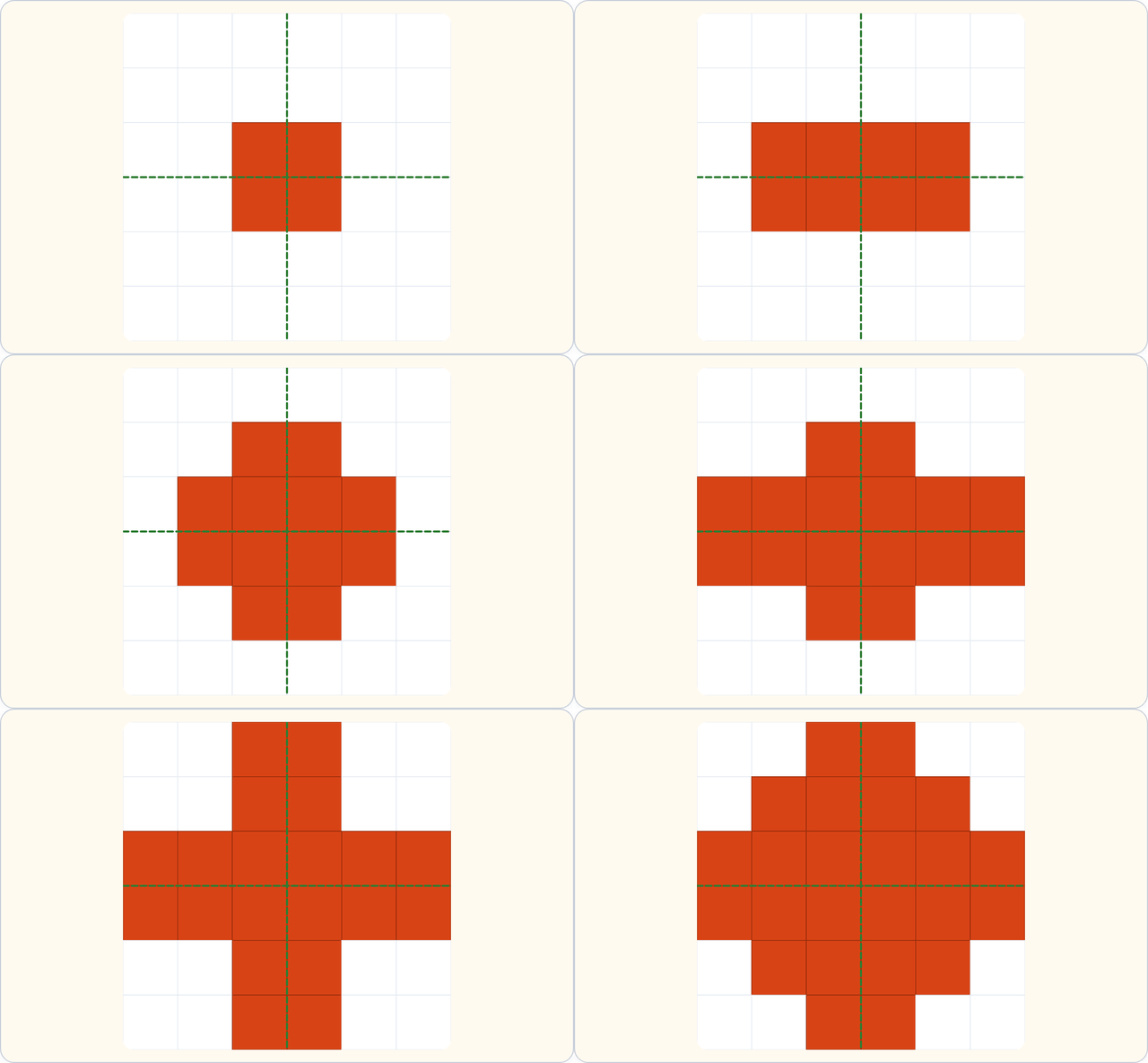
Open the year and Stage 2 by making every number to 20 an old friend. Re-anchor counting and numerals to 10, meet the teen numbers as a ten and some more on the ten-frame, then read, write, compare and order every number to 20 on the number line, with the hundred square in the closing review.
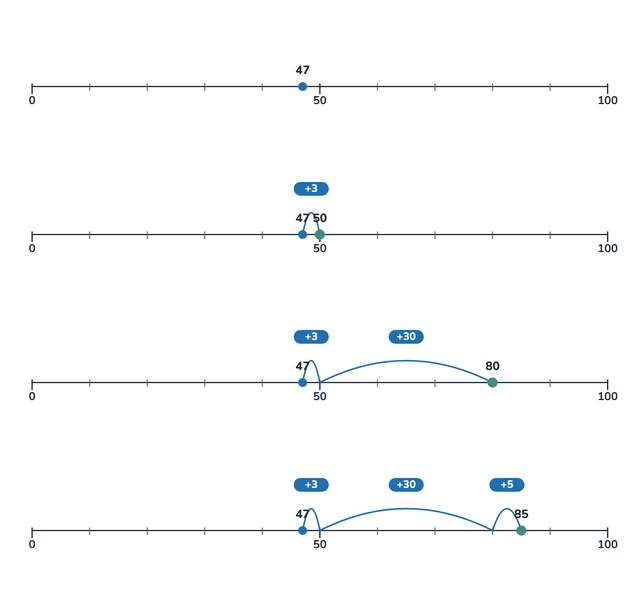
Addition begins as combining sets, then the plus and equals symbols land and pupils write their first number sentences. The block builds the addition-fact toolkit within 20 (bonds to 10, counting on, turnarounds, doubles, near doubles, making ten) and closes with story problems and a facts round-up.
Subtraction begins as taking away, then the minus symbol and full take-away sentences land, completing the number-sentence story. The block opens subtraction's second meaning (difference), links every take-away back to bonds, binds addition and subtraction in fact families, and closes with story problems and a facts round-up.
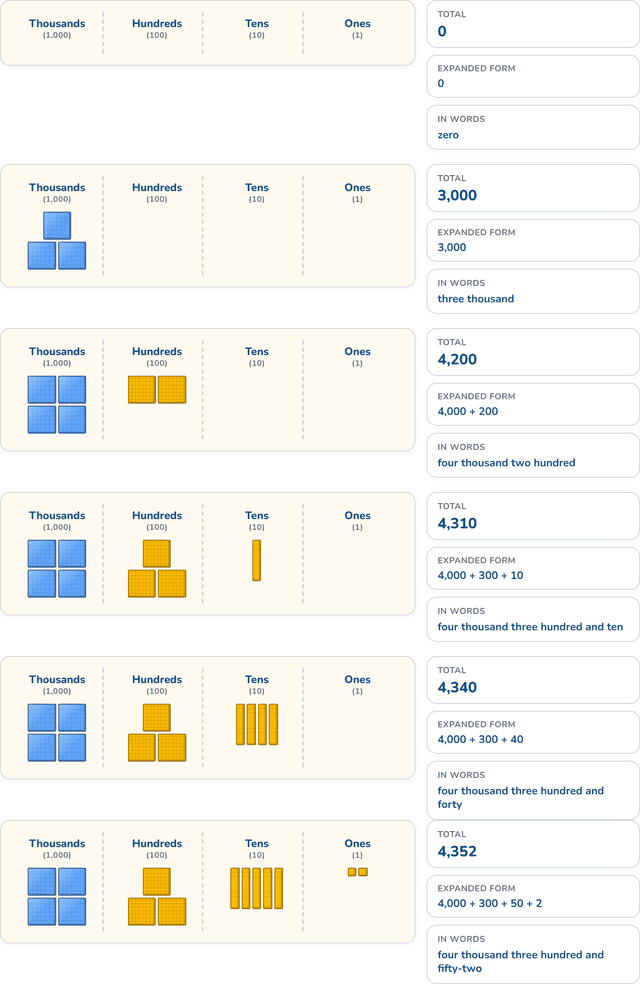
The biggest idea of the year: ten loose units bundle into one ten, and where a digit sits decides its value. Pupils trade units for ten-rods, rebuild the teens, climb the decade numbers, build every number to 99, and use the hundred square as a number map for one more, one less, ten more, ten less. Comparing by tens and estimate-group-count close the block.
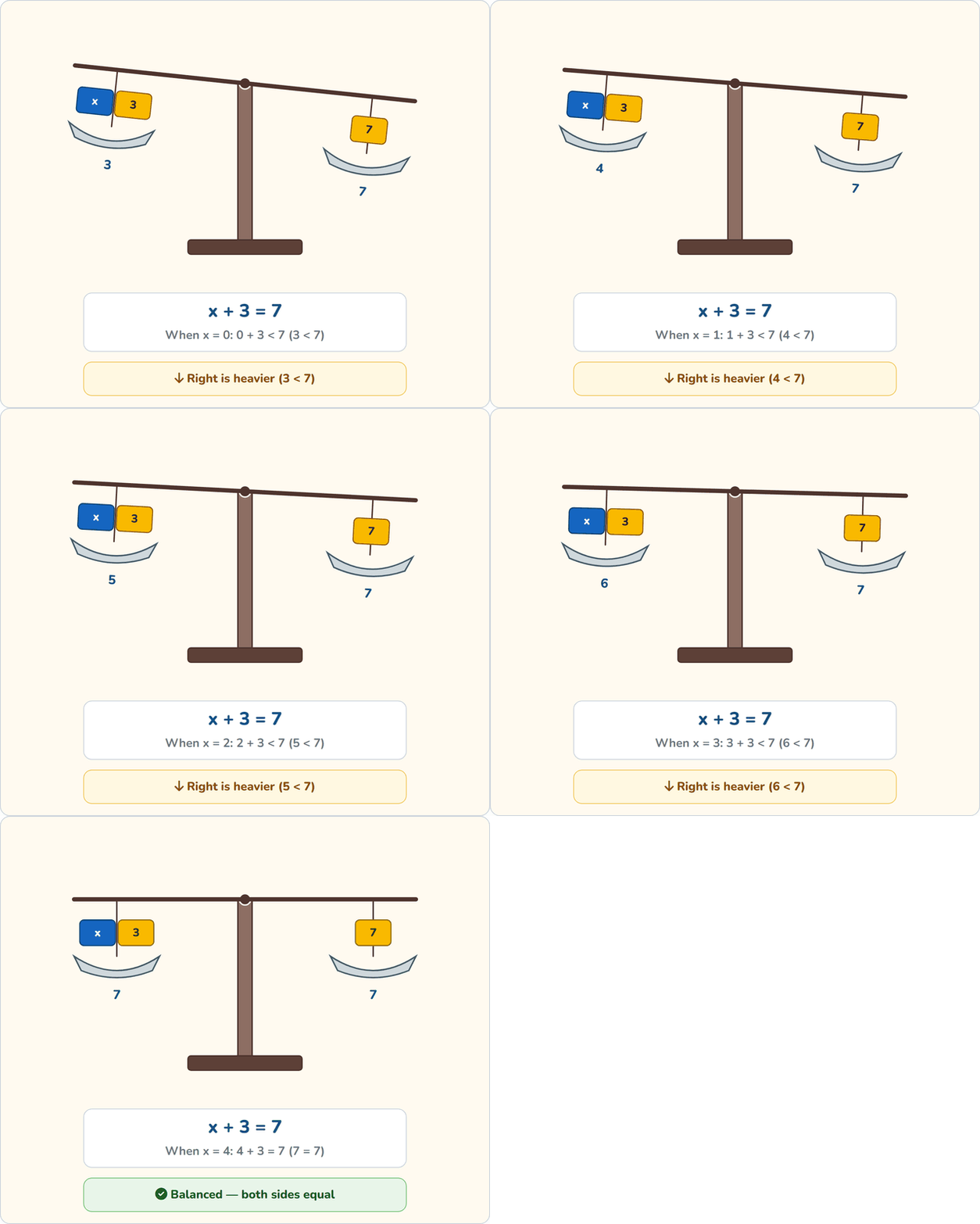
Pattern thinking turns counting into early algebra. Pupils copy, continue and mend repeating patterns and name the unit of repeat, build growing staircases, then discover skip counting in 2s, 5s and 10s on the hundred square and number line. Missing-number puzzles and a pattern-detective review close the block.
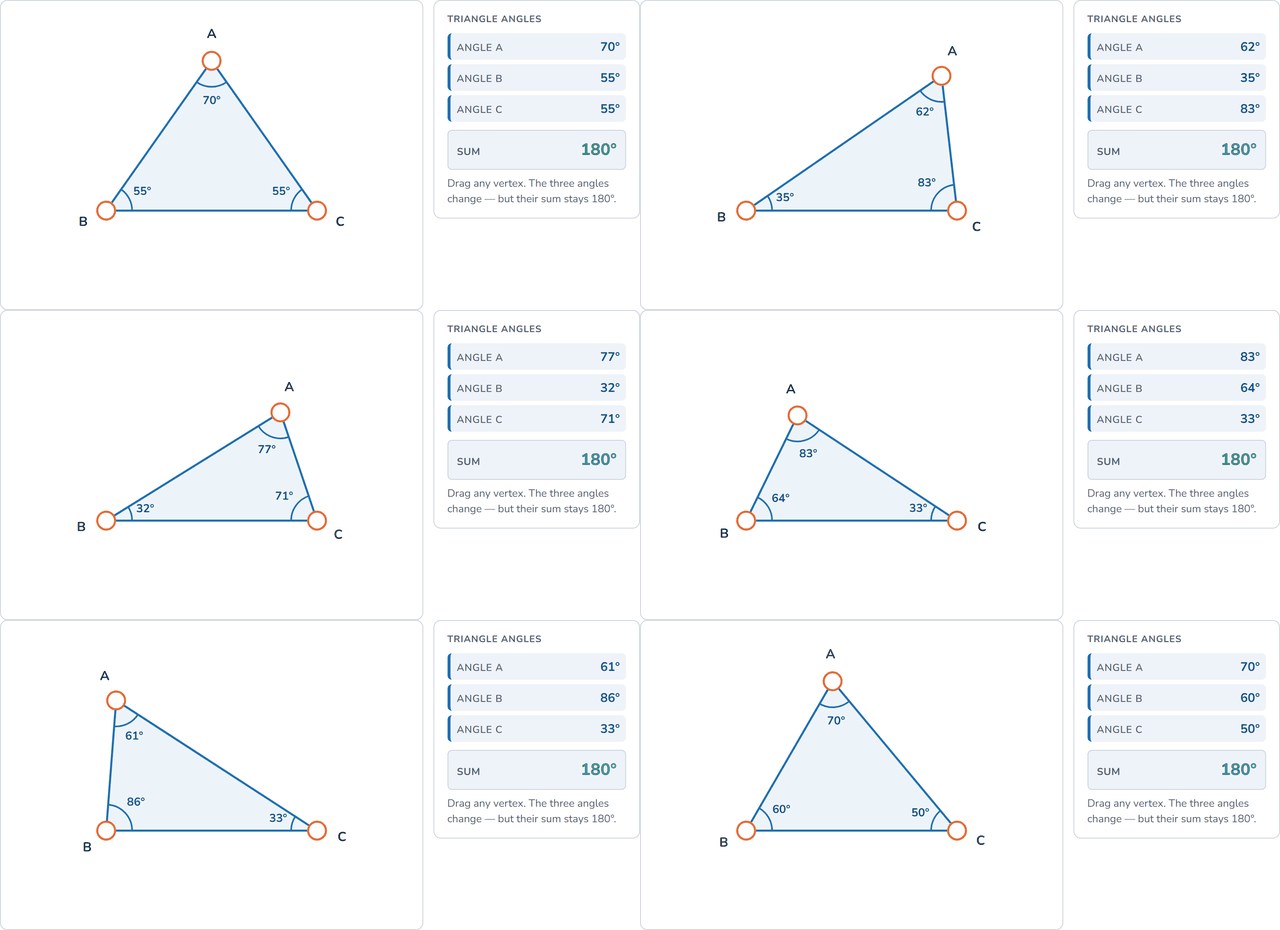
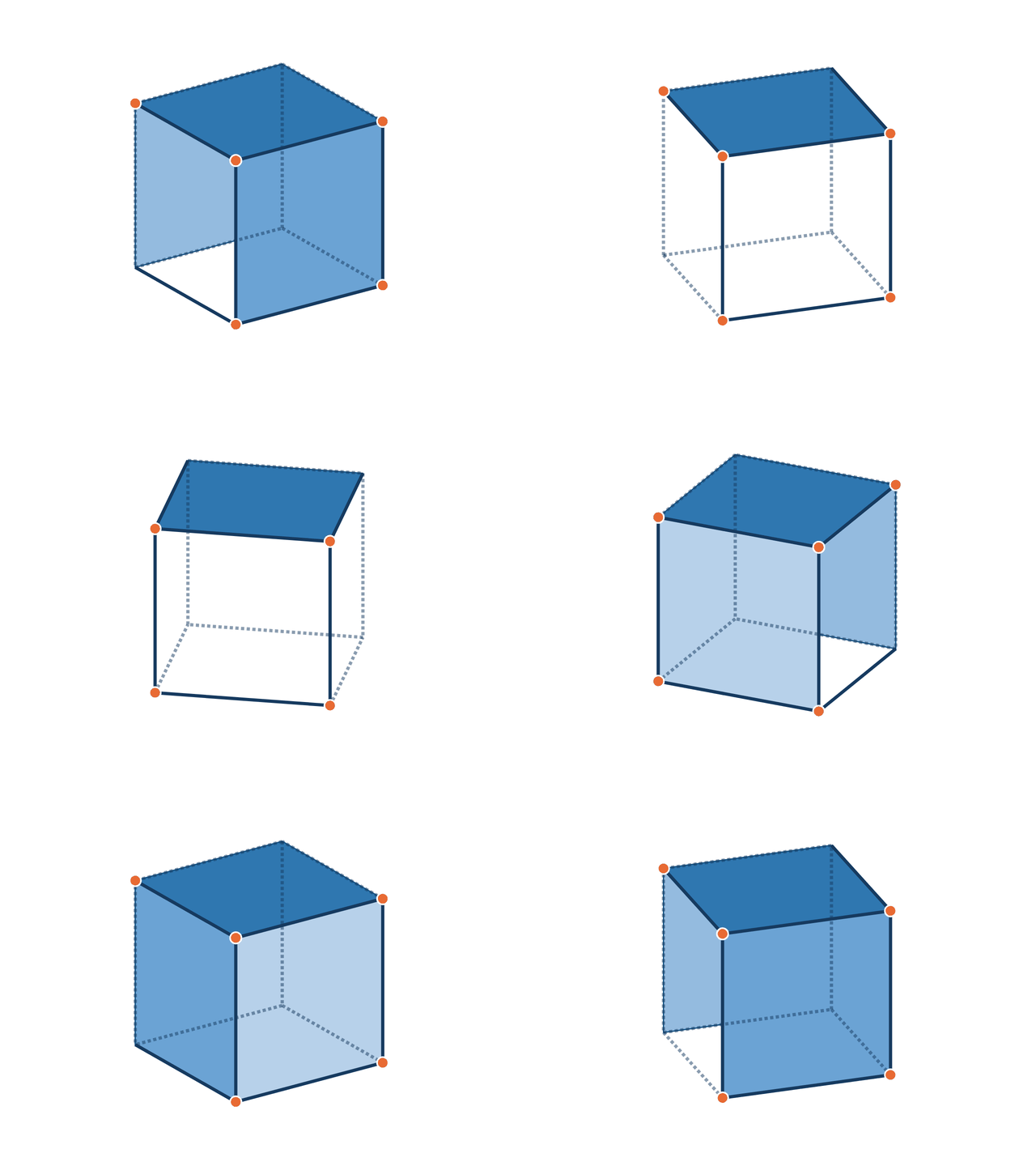
Shape opens the geometric eye. The block names and describes flat shapes by sides and corners, builds new shapes from old, picks up the solid shapes and finds the flat faces hiding on them. Position words, routes on a grid, and the first slides, flips and turns close the block.
Measuring turns comparing into counting. Pupils compare and order lengths, weights and capacities directly, measure with their own units, and discover why everyone's answer disagrees, before standard units arrive: the metre and centimetre with a real ruler, the kilogram on the balance, and the litre on the label. Estimate-then-measure runs through the whole block, and the ruler joins core kit from here.
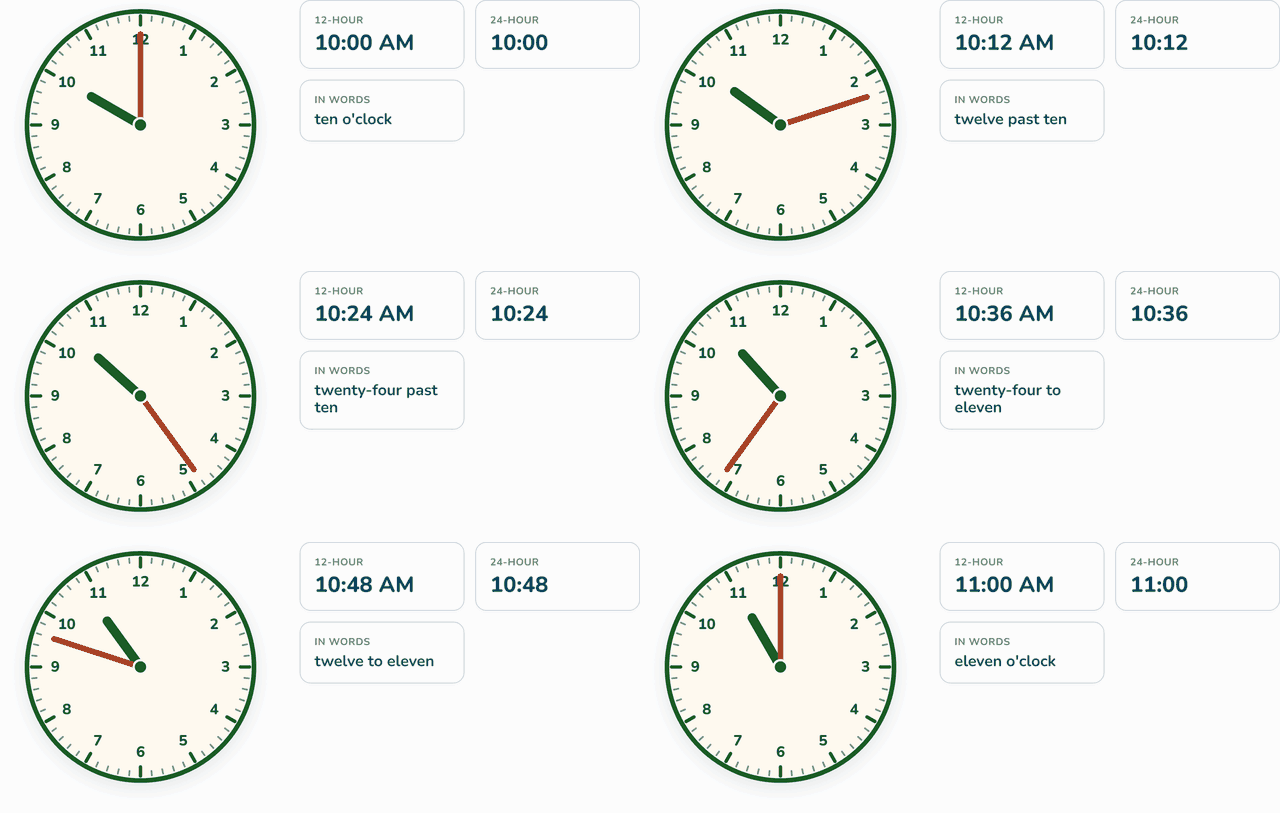
Time begins with the rhythms pupils live: the days of the week, yesterday and tomorrow, the months and seasons, and which jobs take a moment or a long time. Then the clock face arrives with its two hands, o'clock read off the hour hand, and, late in the block, half past. A sort-the-clocks review closes the module.
Money puts numbers to work in the class shop. Pupils meet the cent coins from 1c to 50c, learn to sort them by value not size, count on from the biggest coin to total a purse, make the same amount in more than one way, and reach totals to 50c. The euro arrives as a coin worth a hundred cent, and a class-shop review has pupils pay exact prices.
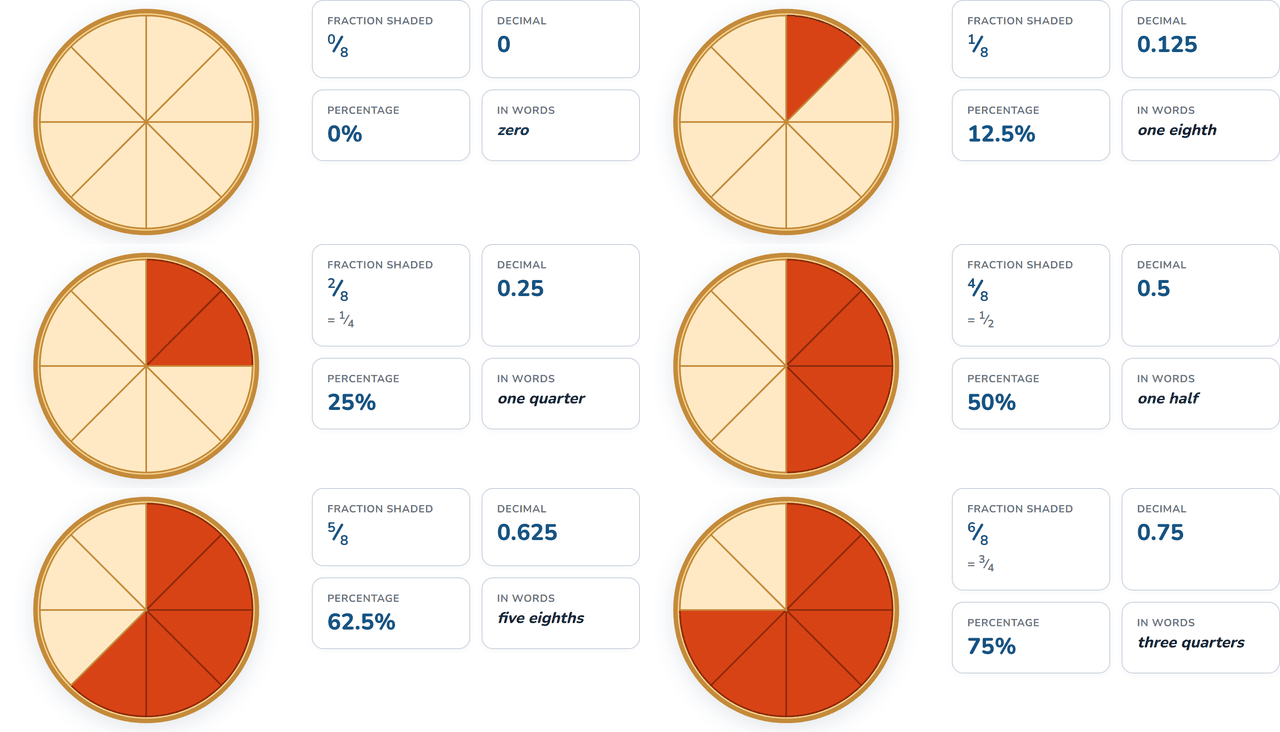
Fractions begin with fair sharing between two. Pupils cut a whole into two equal parts and name one a half, learn that only equal parts count as halves, and see that two halves rebuild the whole. Halving reaches beyond shapes to a group of objects and to halves spotted around the classroom, and a three-ways review closes the block.
Data lets the class answer its own questions with evidence. Pupils sort things into groups, keep count with tally marks and the five-bar gate, pose a question and tally the answers, then read the tally to find the most and fewest. The same data is shown three ways, and a data-detectives review ties the strand together.
Open the year and Stage 2 by making every number to 20 an old friend. Re-anchor counting and numerals to 10, meet the teen numbers as a ten and some more on the ten-frame, then read, write, compare and order every number to 20 on the number line, with the hundred square in the closing review.
Addition begins as combining sets, then the plus and equals symbols land and pupils write their first number sentences. The block builds the addition-fact toolkit within 20 (bonds to 10, counting on, turnarounds, doubles, near doubles, making ten) and closes with story problems and a facts round-up.
Subtraction begins as taking away, then the minus symbol and full take-away sentences land, completing the number-sentence story. The block opens subtraction's second meaning (difference), links every take-away back to bonds, binds addition and subtraction in fact families, and closes with story problems and a facts round-up.
The biggest idea of the year: ten loose units bundle into one ten, and where a digit sits decides its value. Pupils trade units for ten-rods, rebuild the teens, climb the decade numbers, build every number to 99, and use the hundred square as a number map for one more, one less, ten more, ten less. Comparing by tens and estimate-group-count close the block.
Pattern thinking turns counting into early algebra. Pupils copy, continue and mend repeating patterns and name the unit of repeat, build growing staircases, then discover skip counting in 2s, 5s and 10s on the hundred square and number line. Missing-number puzzles and a pattern-detective review close the block.
Shape opens the geometric eye. The block names and describes flat shapes by sides and corners, builds new shapes from old, picks up the solid shapes and finds the flat faces hiding on them. Position words, routes on a grid, and the first slides, flips and turns close the block.
Measuring turns comparing into counting. Pupils compare and order lengths, weights and capacities directly, measure with their own units, and discover why everyone's answer disagrees, before standard units arrive: the metre and centimetre with a real ruler, the kilogram on the balance, and the litre on the label. Estimate-then-measure runs through the whole block, and the ruler joins core kit from here.
Time begins with the rhythms pupils live: the days of the week, yesterday and tomorrow, the months and seasons, and which jobs take a moment or a long time. Then the clock face arrives with its two hands, o'clock read off the hour hand, and, late in the block, half past. A sort-the-clocks review closes the module.
Money puts numbers to work in the class shop. Pupils meet the cent coins from 1c to 50c, learn to sort them by value not size, count on from the biggest coin to total a purse, make the same amount in more than one way, and reach totals to 50c. The euro arrives as a coin worth a hundred cent, and a class-shop review has pupils pay exact prices.
Fractions begin with fair sharing between two. Pupils cut a whole into two equal parts and name one a half, learn that only equal parts count as halves, and see that two halves rebuild the whole. Halving reaches beyond shapes to a group of objects and to halves spotted around the classroom, and a three-ways review closes the block.
Data lets the class answer its own questions with evidence. Pupils sort things into groups, keep count with tally marks and the five-bar gate, pose a question and tally the answers, then read the tally to find the most and fewest. The same data is shown three ways, and a data-detectives review ties the strand together.
Everything you need to plan and teach the course, ready to download and print.
These are for teachers. Sign in to download them.
See exactly how this course maps to official curriculum specifications
The curriculum does not include official reference codes for individual learning outcomes, so we have assigned a code scheme to make it easier to identify and track coverage.
Equipment used in some of the lessons in this course. Items can be shared among students.
Get in touch to discuss pricing and ordering for your school.