A complete year of Maths, delivered by teacher-led interactive-whiteboard lessons, a printed pupil Activity Book, and a Teacher Resource Book, built to the NCCA Primary Mathematics Curriculum.
Click any lesson with to preview it
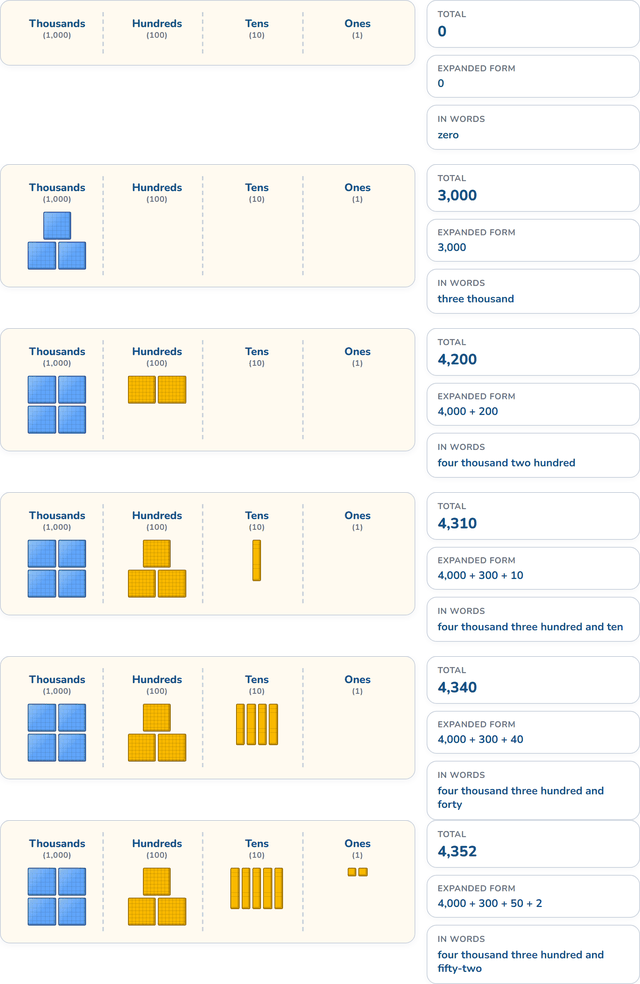
Extend place value to decimals to thousandths and large whole numbers, comparing, ordering and expressing numbers in related terms with confidence.
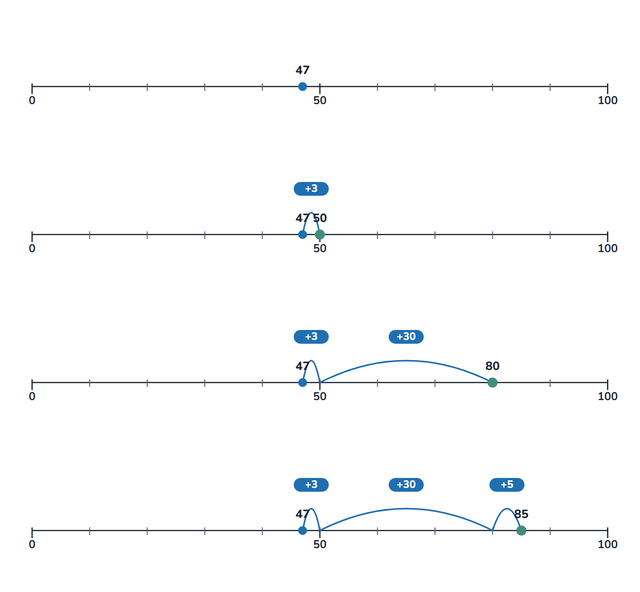
Select and apply efficient strategies across the four operations with whole numbers and decimals, including multi-step problems.
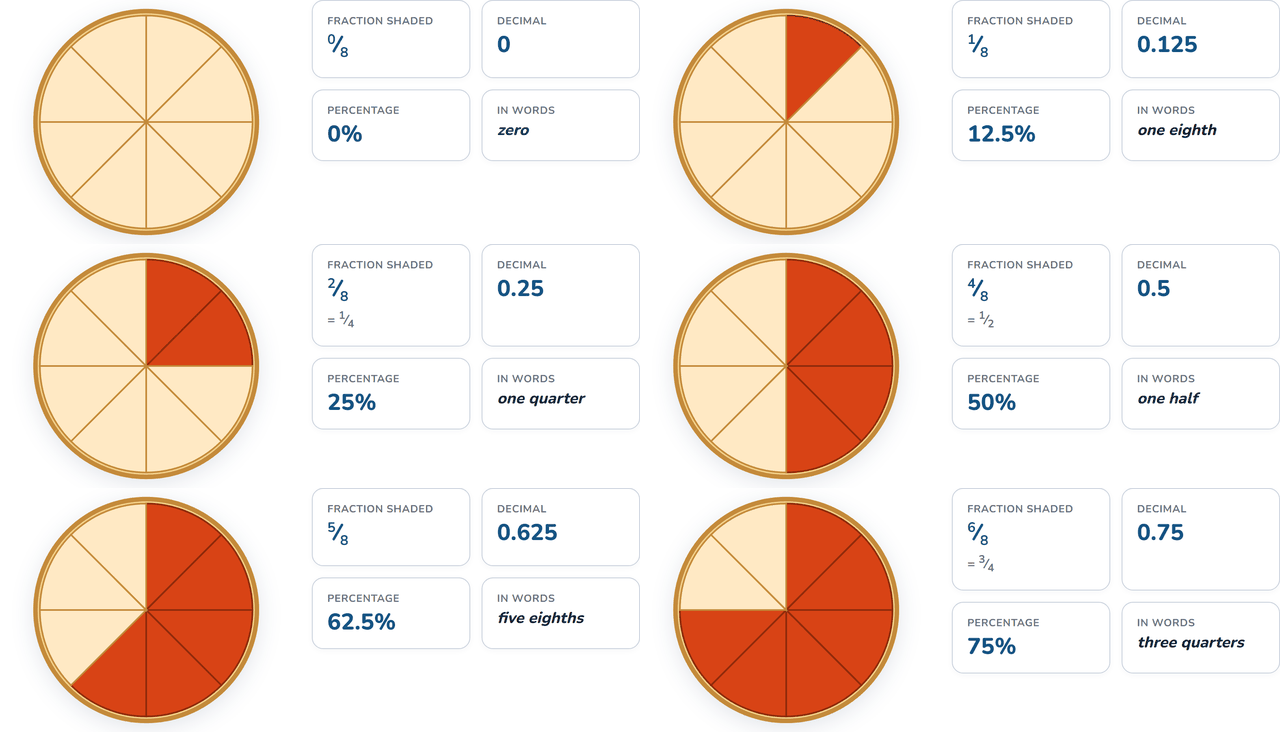
Achieve fluent equivalence between fractions, decimals and percentages and apply each form flexibly in problem contexts.
Investigate proportionality and ratios of quantities, sharing and scaling amounts to solve practical problems.
Calculate measures in fractional and decimal form, deriving and applying formulae for perimeter, area and volume with increasing precision, and reason about the relationships that link the metric units.
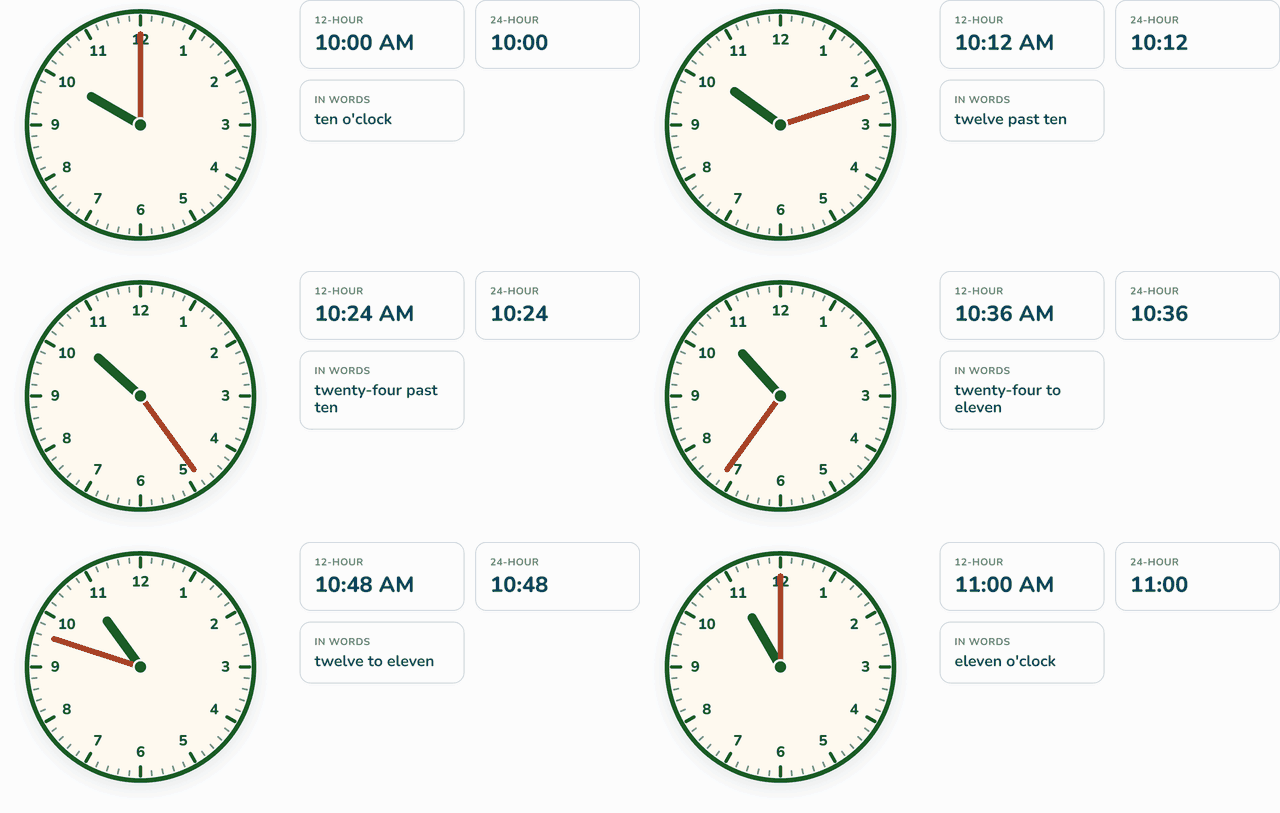
Interpret and calculate time across formats and zones, and make informed judgements about transactions and financial plans.
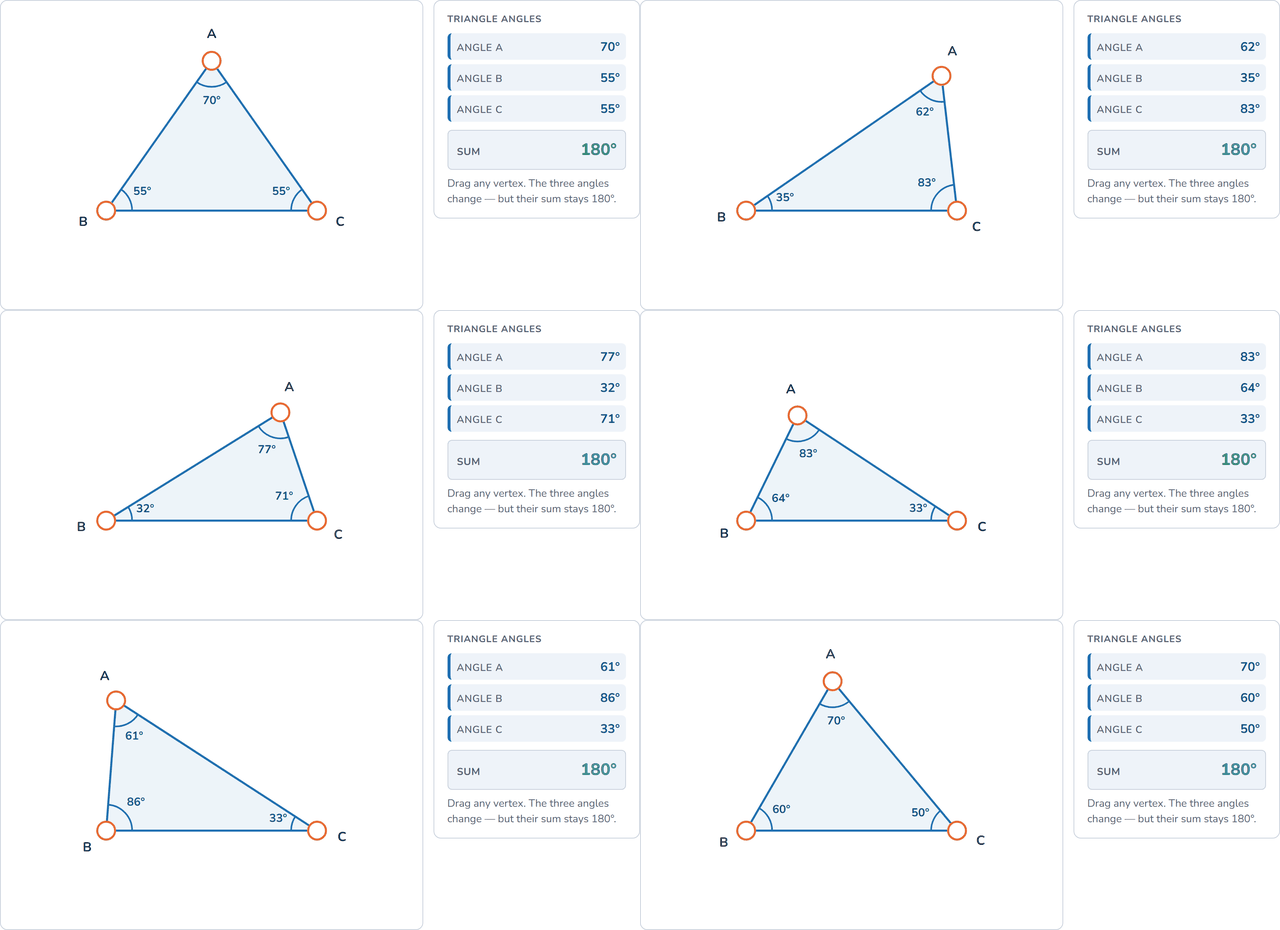
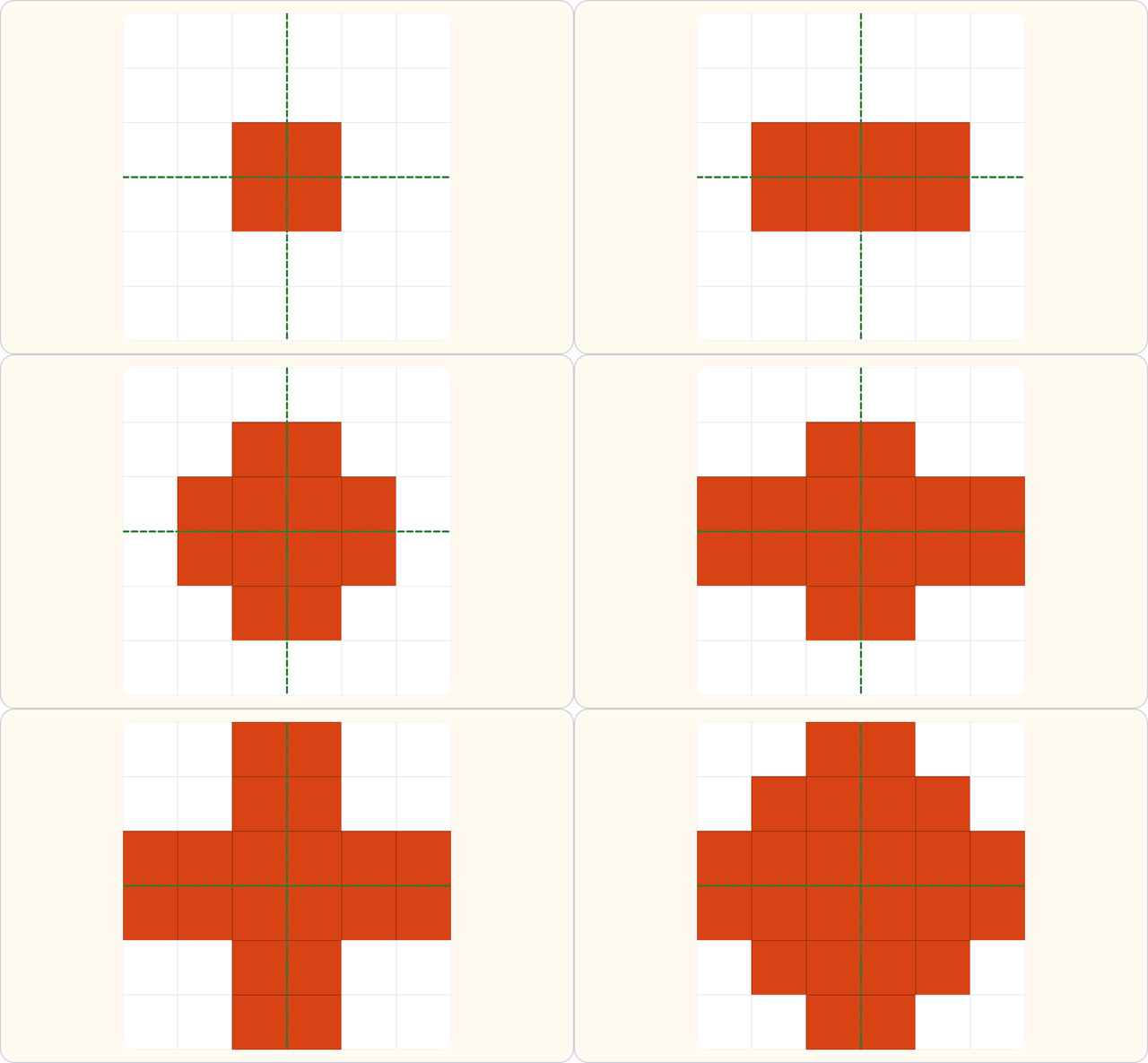
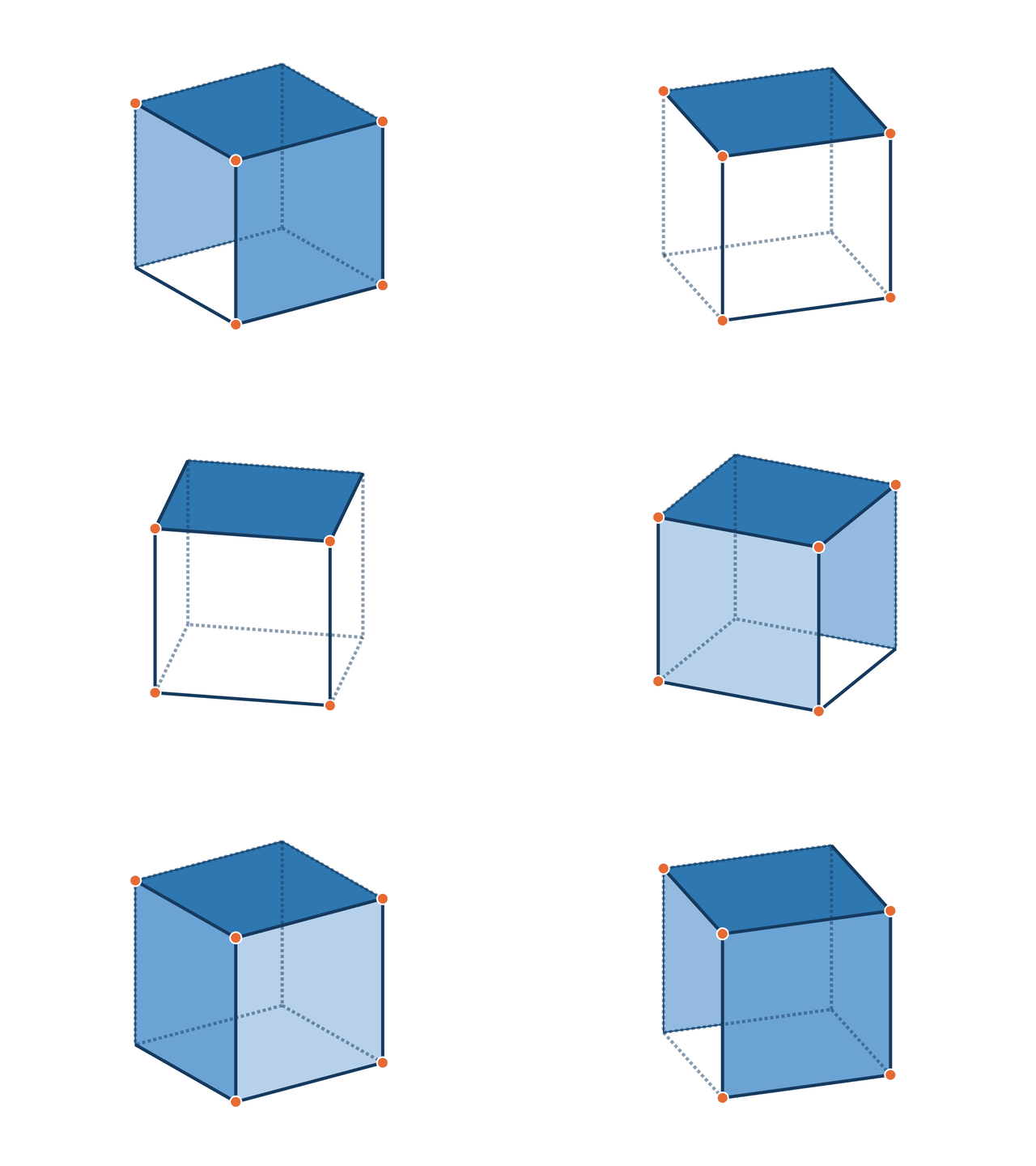
Construct 2-D and 3-D shapes to given conditions and formally measure, construct and reason about angles with precision.
Describe location on the full four-quadrant co-ordinate plane, interpret scale maps and create scale drawings, and perform transformations including enlargement.
Pose questions, collect and represent data selectively, analyse measures of centre, and express probability in different forms to make predictions.
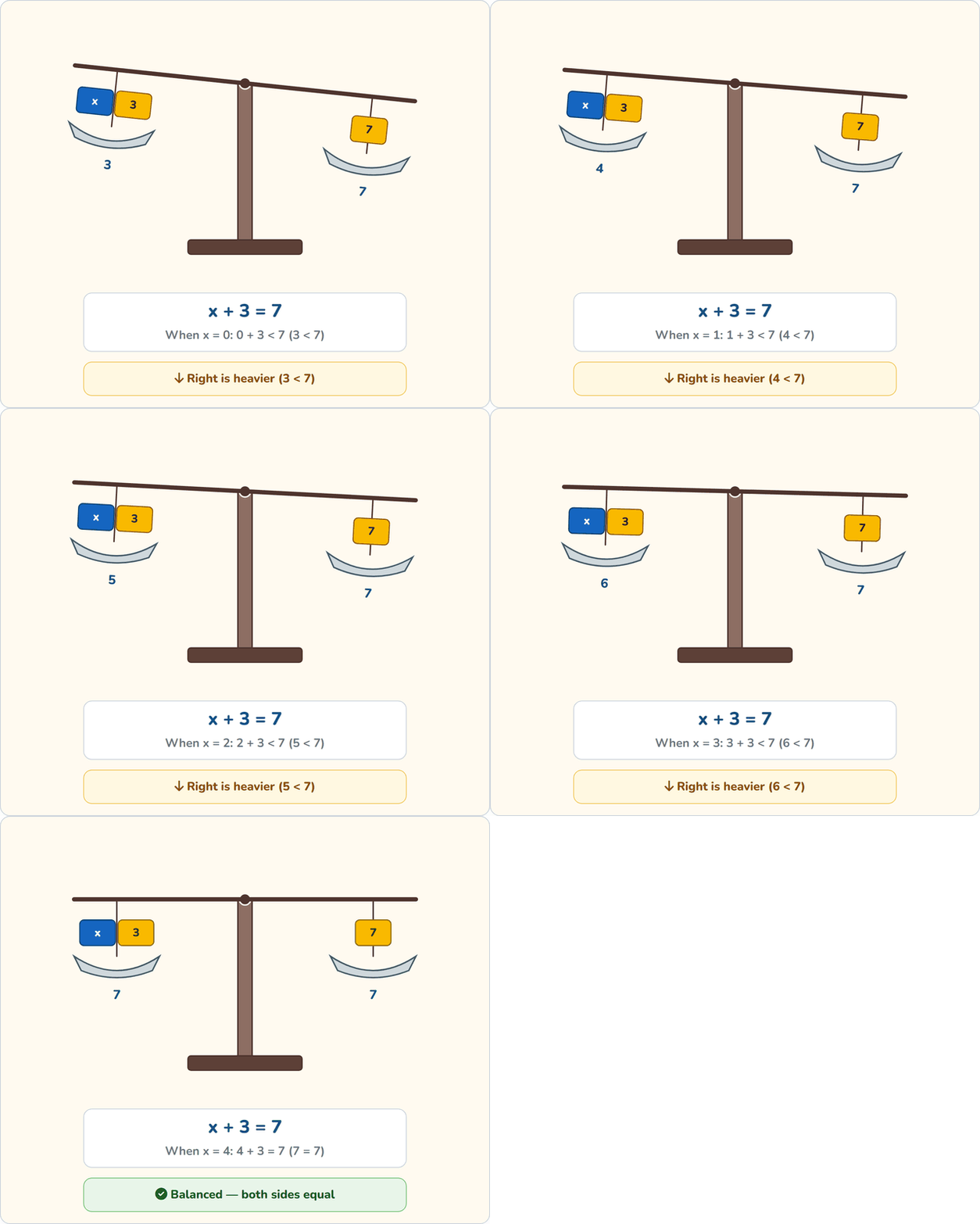
Generalise patterns and properties of operations, and represent and solve situations using letter-symbol expressions and equations.
Close primary maths with a five-strand recap, two open-ended modelling projects, a journal self-review and a class maths fair, completing the gradual release of agency.
Extend place value to decimals to thousandths and large whole numbers, comparing, ordering and expressing numbers in related terms with confidence.
Select and apply efficient strategies across the four operations with whole numbers and decimals, including multi-step problems.
Achieve fluent equivalence between fractions, decimals and percentages and apply each form flexibly in problem contexts.
Investigate proportionality and ratios of quantities, sharing and scaling amounts to solve practical problems.
Calculate measures in fractional and decimal form, deriving and applying formulae for perimeter, area and volume with increasing precision, and reason about the relationships that link the metric units.
Interpret and calculate time across formats and zones, and make informed judgements about transactions and financial plans.
Construct 2-D and 3-D shapes to given conditions and formally measure, construct and reason about angles with precision.
Describe location on the full four-quadrant co-ordinate plane, interpret scale maps and create scale drawings, and perform transformations including enlargement.
Pose questions, collect and represent data selectively, analyse measures of centre, and express probability in different forms to make predictions.
Generalise patterns and properties of operations, and represent and solve situations using letter-symbol expressions and equations.
Close primary maths with a five-strand recap, two open-ended modelling projects, a journal self-review and a class maths fair, completing the gradual release of agency.
See exactly how this course maps to official curriculum specifications
The curriculum does not include official reference codes for individual learning outcomes, so we have assigned a code scheme to make it easier to identify and track coverage.
Equipment used in some of the lessons in this course. Items can be shared among students.
Get in touch to discuss pricing and ordering for your school.